Begleiten Sie uns auf eine literarische Weltreise!
Buch zum Bücherregal hinzufügen
Grey
Einen neuen Kommentar schreiben Default profile 50px
Grey
Jetzt das ganze Buch im Abo oder die ersten Seiten gratis lesen!
All characters reduced
Cracks In Capitalism - cover

Cracks In Capitalism

Sophia Curie

Übersetzer A AI

Verlag: Publifye

  • 0
  • 0
  • 0

Beschreibung

"Cracks in Capitalism" presents a comprehensive examination of modern capitalism's inherent tensions and vulnerabilities, offering a balanced analysis of how free-market systems both drive prosperity and generate instability. The book uniquely combines historical evidence, empirical data, and interdisciplinary research to reveal how market dynamics, wealth concentration, and consumer behavior interact to create systemic challenges in contemporary economies.

 
Through a careful examination of economic data spanning the past century, the text illuminates how unchecked market forces can transform productive capitalism into "extractive capitalism." This transformation occurs through mechanisms that concentrate wealth and create self-reinforcing cycles of economic inequality. The analysis is particularly compelling in its exploration of how consumer psychology and marketing practices intersect with broader market dynamics, leading to patterns that can destabilize both household and national economies.

 
The book progresses from theoretical foundations through practical applications, examining historical case studies and drawing insights from various economic models, including Nordic social democracies. Rather than simply criticizing the system, it presents a constructive framework for "sustainable capitalism" that balances free-market principles with social stability. This evidence-based approach, combined with accessible explanations of complex economic concepts, makes the book particularly valuable for readers seeking to understand both the strengths and weaknesses of modern capitalist economies.
Verfügbar seit: 08.01.2025.
Drucklänge: 114 Seiten.

Weitere Bücher, die Sie mögen werden

  • Terra Viva - My Life in a Biodiversity of Movements - cover

    Terra Viva - My Life in a...

    Vandana Shiva

    • 0
    • 0
    • 0
    Vandana Shiva has been described in many ways: the “Gandhi of Grain,” “a rock star” in the battle against GMOs, and “the most powerful voice” for people of the developing world. For over four decades, she has vociferously advocated for diversity, indigenous knowledge, localization, and real democracy; she has been at the forefront of seed saving, food sovereignty, and connecting the dots between the destruction of nature, the polarization of societies, and indiscriminate corporate greed. In Terra Viva, Dr. Shiva shares her most memorable campaigns, alongside some of the world’s most celebrated activists and environmentalists, all working toward a livable planet and healthier democracies. For the very first time, she also recounts the stories of her childhood in post-partition India?the influence of the Himalayan forests she roamed; her parents, who saw no difference in the education of boys and girls at a time when this was not the norm; and the Chipko movement, whose women were “the real custodians of biodiversity-related knowledge.” Throughout, Shiva’s pursuit of a unique intellectual path marrying quantum physics with science, technology, and environmental policy will captivate listeners. Terra Viva is a celebration of a remarkable life and a clear-eyed assessment of the challenges we face moving forward?including those revealed by the COVID crisis, the privatization of biotechnology, and the commodification of our biological and natural resources.
    Zum Buch
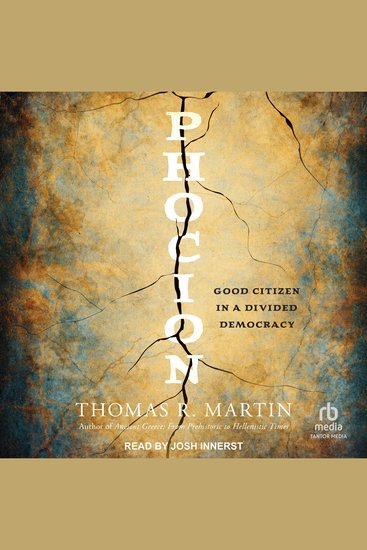
  • Phocion - Good Citizen in a Divided Democracy - cover

    Phocion - Good Citizen in a...

    Thomas R. Martin

    • 0
    • 0
    • 0
    "Elegant and enlightening." —Dominic Green, Wall Street Journal 


    Phocion (402–318 BCE) won Athens's highest public office by direct democratic election an unmatched forty-five times and was officially honored as a "Useful Citizen." A student at Plato's Academy, Phocion gained influence and power during a time when Athens faced multiple crises stemming from Macedonia's emergence as an international power under Philip II and his son Alexander the Great. Following Athens's defeat by Macedonia, Phocion unsuccessfully sought mild terms of surrender. Oligarchy was imposed on democratic Athens, and more than twelve thousand "undesirable" Athenians were exiled. When the oligarchic regime was overthrown and the exiles returned, dispossessed Athenians took out their volcanic anger on Phocion, who throughout his career had often been a harsh critic of the citizens' political decisions. His inflammatory rhetoric contributed to the popular conclusion that he lacked a genuine sense of belonging to the community he wished so desperately to preserve. When he was eighty-four, the Athenians convicted him of treason and condemned him to die by hemlock. In this fresh biography, Thomas R. Martin explores how and why Phocion ultimately failed as a citizen and as a leader. His story offers unsettling lessons for citizens in democracies today.
    Zum Buch
  • Henry Harrison Brown: Dollars want me - The new road to opulence: The ultimate treatise on financial success - cover

    Henry Harrison Brown: Dollars...

    Henry Harrison Brown, Jürgen...

    • 0
    • 0
    • 0
    As a member of the "New Thought" movement, Henry Harrison Brown (1840 - 1918) founded the periodical "NOW". In this magazine, he first published his most famous essay "Dollars want me!" Brown presented positive affirmations which  inevitably attract money and financial independence. Easy, concise, to the point: Brown states that without man, money is nothing. Therefore, money seeks man to fulfill its duty. All man needs to do is to prepare mentally - and financial freedom will be the result. Extremely interesting and highly entertaining!
    Zum Buch
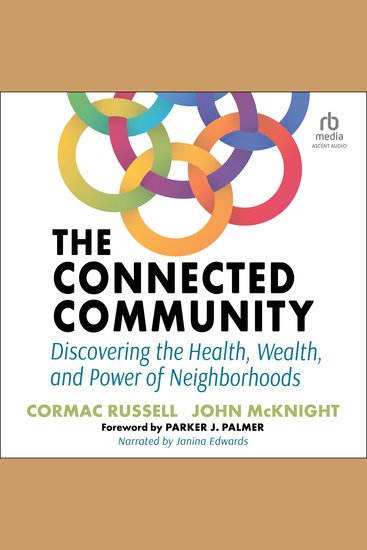
  • The Connected Community - Discovering the Health Wealth and Power of Neighborhoods - cover

    The Connected Community -...

    John McKnight, Cormac Russell,...

    • 0
    • 0
    • 0
    Find out how to uncover the hidden talents, assets, and abilities in your neighborhood and bring them together to create a vibrant and joyful community. It takes a village! 
     
    We may be living longer, but people are more socially isolated than ever before. As a result, we are hindered both mentally and physically, and many of us are looking for something concrete we can do to address problems like poverty, racism, and climate change. What if solutions could be found on your very doorstep or just two door knocks away? 
     
    Cormac Russell is a veteran practitioner of asset-based community development (ABCD), which focuses on uncovering and leveraging the hidden resources, skills, and experience in our neighborhoods. He and John McKnight, the cooriginator of ABCD, show how anyone can discover this untapped potential and connect with his or her neighbors to create healthier, safer, greener, more prosperous, and welcoming communities. They offer a wealth of illustrative examples from around the world that will inspire you to explore your own community and discover its hidden treasures. 
     
    You will learn to take action on what you already deeply know-that neighborliness is not just a nice-to-have personal characteristic but essential to living a fruitful life and a powerful amplifier of community change and renewal.
    Zum Buch
  • Founding Fanatics - Extremism and the Formation of American Democracy - cover

    Founding Fanatics - Extremism...

    Noah Eber-Schmid

    • 0
    • 0
    • 0
    Scholars and citizens have often assumed that dispassionate rationality, reciprocity, and nonviolent tolerance are necessary conditions for the sustained development of democracy. Accordingly, they reject oppositional parties that spurn consensus and terms of mutual respect—and often use force to accomplish their political goals—denouncing extremists as antidemocratic.Founding Fanatics questions this understanding, examining how moments of tension, violence, and extremism in the US have sometimes served the pursuit of political equality. Noah Eber-Schmid focuses his analysis on the American Founding era, presenting case studies of the early memorialization of the Boston Massacre, popular debates over Shays' Rebellion, the thought and practices of the Democratic Societies, and the use of the French Revolution in political discourse. From this account of popular politics in the Founding era, Eber-Schmid draws new insights for theoretical approaches to contemporary American democracy, challenging assumptions that extremism is always a negative or antidemocratic force. By recognizing the role that democratic extremism has played in the development of American popular democracy, political theorists and citizens will better understand how such movements may contribute to the struggle to deepen and expand political equality and participation that continues today.
    Zum Buch
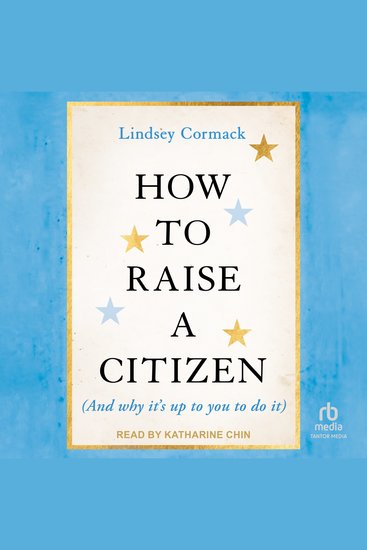
  • How To Raise A Citizen (And Why It's Up to You to Do It) - cover

    How To Raise A Citizen (And Why...

    Lindsey Cormack

    • 0
    • 0
    • 0
    An essential guide to nurturing the next generation of responsible, informed citizens 


    Lindsey Cormack's book, How to Raise a Citizen (And Why It's Up to You to Do It), speaks directly to an America in which civic knowledge is alarmingly sparse and many people dread politics. It's a tool for parents, educators, and anyone eager to fill this gap. In the book, Cormack offers an engaging and practical approach to discussing political issues and the inner workings of the US government with children. She explains why our schools can no longer be the sites of civic education that they used to be and provides parents with strategies and necessary know-how to be able to impart these lessons to their children. From the intricacies of the voting process to the foundational principles of democracy and the significance of key government documents like the Constitution, the author demystifies complex topics with clarity and insight. 


    How to Raise a Citizen is a roadmap to a future where political dialogue and civic engagement are not just encouraged but celebrated in our homes. With actionable advice and easy-to-understand explanations, it empowers listeners to instill a sense of civic responsibility and curiosity in the young minds they influence.
    Zum Buch