Begleiten Sie uns auf eine literarische Weltreise!
Buch zum Bücherregal hinzufügen
Grey
Einen neuen Kommentar schreiben Default profile 50px
Grey
Jetzt das ganze Buch im Abo oder die ersten Seiten gratis lesen!
All characters reduced
Leibniz’s Monads - Because Particles with Feelings Totally Make Sense - cover

Leibniz’s Monads - Because Particles with Feelings Totally Make Sense

Sophia Blackwell

Verlag: Cogito Ergo Nope

  • 0
  • 0
  • 0

Beschreibung

Ever wondered what reality is made of? If you're thinking atoms, molecules, or maybe regret and caffeine, think again. According to Gottfried Wilhelm Leibniz—17th-century genius, calculus co-inventor, and metaphysical madlad—the universe is made of tiny, windowless soul-particles called monads. They don’t touch, don’t talk, and yet still manage to reflect the entire cosmos like cosmic disco balls of divine insight.In Leibniz’s Monads: Because Particles with Feelings Totally Make Sense, Sophia Blackwell (author of Kant You Not) returns with another brutally honest, laugh-out-loud, actually-informative tour through one of philosophy’s weirdest, most ambitious systems. From the problem of evil to quantum physics, ecology to ethics, this book unpacks Leibniz’s windowless wonders and shows how his soul-marbles still haunt modern science, spirituality, and your existential crisis at 2am.Perfect for students, armchair philosophers, or anyone who wants to understand metaphysics without crying in German.Inside, you’ll learn:
 
What monads are (and why they’re basically metaphysical Tamagotchis)
 
Why your soul is pre-synced with the universe like a divine group project
 
How this is somehow the best possible world (yes, even with all of… this)
 
What quantum physics, computer science, and modern consciousness studies owe to a guy who never left Leipzig
 
And why Leibniz remains philosophy’s most lovable, logic-obsessed optimist
 
If you like philosophy that doesn’t take itself too seriously—but still takes ideas seriously—this book is for you.Warning: May cause sudden belief in soul-particles. Or at least very polite existential confusion.
Verfügbar seit: 16.04.2025.
Drucklänge: 51 Seiten.

Weitere Bücher, die Sie mögen werden

  • The Stillwater Tragedy - cover

    The Stillwater Tragedy

    Thomas Bailey Aldrich

    • 0
    • 0
    • 0
    "The Stillwater Tragedy" by Thomas Bailey Aldrich is a fictional novel likely written in the late 19th century. The story delves into the dark and mysterious atmosphere surrounding a murder in the seemingly idyllic village of Stillwater. As the narrative unfolds, it reveals the tumultuous and often harsh lives of the townsfolk, with a particular focus on several key characters, including the recently deceased wealthy man, Mr. Lemuel Shackford, and his estranged cousin, Richard Shackford. 
    The story opens with a chilling tone just before daybreak in Stillwater, where the body of Mr. Shackford lies dead, the victim of a violent crime. As the sun rises, the village awakens to its daily rhythm while grappling with the shock of the murder. Young Mary Hennessey, whose delayed milk delivery leads her to discover the crime scene, unwittingly becomes the center of attention as gossip spreads throughout the town. 
    Shortly after the discovery, the townspeople gather in anxiety and suspicion, prompting an investigation led by local authorities. Through vivid descriptions and evocative character portrayals, the beginning of the novel establishes an unsettling mood as it explores themes of violence, greed, and the fragile nature of community bonds in the face of tragedy.
    Zum Buch
  • For the Boys - The True Account of a Combat Nurse in Patton's Third Army - cover

    For the Boys - The True Account...

    N.C.R. Davis

    • 0
    • 0
    • 0
    A month after her 24th birthday, Lt. Mary Elizabeth Balster collapses among the rubble of a shelled supply room. On the night of November 30, 1944, holed up in the Heinrich Himmler Barracks in Morhange, France, Lt. Balster's evac receives a typical patient load, but this time one of the admissions is a 19-year-old tanker she'd nursed back to health five months before in Normandy. The charge nurse on Surgical gently informs the lieutenant that the private is critical. Rising determined to save him, Balster limps toward the shelled supply room determined to search for any blood plasma bottles still intact. 


    Recaptured from her mother's reminiscences and letters home, N. C. R. Davis takes listeners through every heat-of-battle harrowing moment as Balster lived it, achieving a rare glimpse of one nurse's point of view during the latter part of the European conflict. 


    The book mixes Lt. Balster's observations, memories, and dreams to tell the story of a richly rebellious woman trying to navigate her life while nursing wounded and dying frontline soldiers. Her strong-willed, beguiling personality fosters the grit necessary for her success as a combat nurse, but these same characteristics cause two men to fall in love with her. And the personal cost of war comes to a heartrending conclusion, as she must choose one man over the other.
    Zum Buch
  • Chola Empire : 9th to 12th Century - cover

    Chola Empire : 9th to 12th Century

    Saurabh Kumar

    • 0
    • 0
    • 0
    The book takes us through the era of the Great Chola Empire between the 9th and 12th centuries and also throws light on the era of Rajaraja and Rajendra I.
    Zum Buch
  • Battle of Lützen The: The History and Legacy of Gustavus Adolphus’ Last Battle during the Thirty Years’ War - cover

    Battle of Lützen The: The...

    Editors Charles River

    • 0
    • 0
    • 0
    The Thirty Years' War was one of the most horrific conflicts in history, and though it is widely viewed as a religious struggle, that was only part of the complicated war. Calvinists and Lutherans did not get along, and both persecuted some of the more radical Anabaptist sects. At the same time, one major motivation behind the war was Holy Roman Emperor Ferdinand II’s determination to rule all of the empire and not be just a figurehead. There were struggles between rulers and their estates over power, and Catholic France later entered the war on the side of the Protestants in order to counter the Habsburgs’ power.  
    	The Battle of Breitenfeld, fought in September 1631, was the first major Protestant victory and widely considered the crowning achievement of Swedish King Gustavus Adolphus’ military career. Through his establishment of communication and supply lines at strategic points across the Baltic Sea, the securing of Protestant alliances, and his use of combined arms, amongst his other trademark techniques, the Swedish forces, against all odds, defeated their rivals. Such was the devastation inflicted upon their opponents that the Count of Tilly, the chief commander of the Catholic League's armies, had no other choice but to retreat. 6,000 or so Catholic soldiers were captured, many of them later incorporated into the Protestant forces. Whatever remained of the survivors vanished into the dark of the night.   
    	Gustavus’s triumph at Breitenfeld was a great victory that permanently affected the war, and for a time the Swedes were the most powerful military force in Central Europe, but Gustavus’s life ended slightly more than a year after the battle. On November 16, 1632, the king led a Protestant army of Swedes and German allies against Wallenstein’s army near Lützen in Saxony, and during a hard-fought Protestant victory that forced Wallenstein to retreat, Gustavus was killed while leading a cavalry charge.
    Zum Buch
  • George Soros - A Life In Full - cover

    George Soros - A Life In Full

    Peter L. W. Osnos

    • 0
    • 0
    • 0
    The name George Soros is recognized around the world. Universally known for his decades of philanthropy, progressive politics, and investment success, he is equally well known as the nemesis of the far right—the target of sustained attacks from nationalists, populists, authoritarian regimes, and anti-Semites—because of his commitment to open society, freedom of the press, and liberal democracy. At age ninety-one, Soros still looms large on the global stage, and yet the man himself is surprisingly little understood. 


    Biographers have attempted to tell the story of George Soros, but no single account of his life can capture his extraordinary, multifaceted character. Now, in this ambitious and revealing new book, Soros's longtime publisher, Peter L. W. Osnos, has assembled an intriguing set of contributors from a variety of different perspectives—public intellectuals (Eva Hoffman, Michael Ignatieff), journalists (Sebastian Mallaby, Orville Schell), scholars (Leon Botstein, Ivan Krastev), and nonprofit leaders (Gara LaMarche, Darren Walker)—to paint a full picture of the man beyond the media portrayals. 


    Through this kaleidoscope of viewpoints emerges a vivid and compelling portrait of this remarkable man's unique and consequential impact. It has truly been a life in full.
    Zum Buch
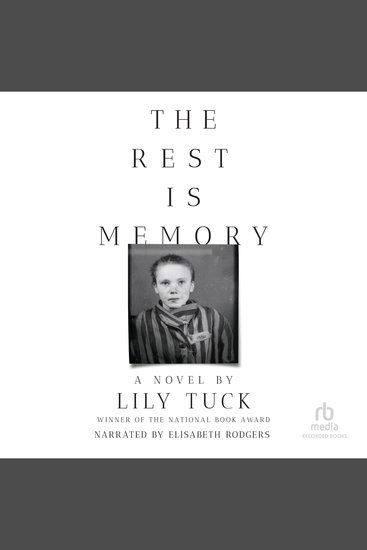
  • The Rest Is Memory - cover

    The Rest Is Memory

    Lily Tuck

    • 0
    • 0
    • 0
    THE HEARTBREAKING STORY OF A YOUNG CATHOLIC GIRL TRANSPORTED TO AUSCHWITZ BECOMES A RASHOMON-LIKE RONDO BY ONE OF OUR GREATEST NOVELISTS. 
     
    First glimpsed riding on the back of a boy’s motorcycle, fourteen-year-old Czeslawa comes to life in this mesmerizing novel by Lily Tuck, who imagines her upbringing in a small Polish village before her world imploded in late 1942.  
     
    Stripped of her modest belongings, shorn, and tattooed number 26947 on arriving at Auschwitz, Czeslawa is then photographed. Three months later, she is dead. 
     
    How did this happen to an ordinary Polish citizen? This is the question that Tuck grapples with in this haunting novel, which frames Czeslawa’s story within the epic tragedy of six million Poles who perished during the German occupation. A decade prior to writing The Rest Is Memory, Tuck read an obituary of the photographer Wilhelm Brasse, who took more than 40,000 pictures of the Auschwitz prisoners. Included were three of Czeslawa Kwoka, a Catholic girl from rural southeastern Poland. Tuck cut out the photos and kept them, determined to learn more about Czeslawa, but she was only able to glean the barest facts: the village she came from, the transport she was on, that she was accompanied by her mother and her neighbors, her tattoo number, and the date of her death. From this scant evidence, Tuck’s novel becomes a remarkable kaleidoscopic feat of imagination, something only our greatest novelists can do. 
     
    “Beautifully written, all the while instilling a sense of horror” (Susanna Moore), Tuck’s language swirls about, yet not a word is out of place. The subtly rotating images tumble out at us, accelerating as we learn about Czeslawa’s tragic stay in Auschwitz, the lives of real people such as the barbaric Commandant Rudolf Höss; his unconscionable wife, Hedwig; the psychiatrist and child rescuer Janusz Korczak; and the mordant Polish short story writer Tadeusz Borowski. 
     
    Although we are certain of Czeslawa’s fate, we have no choice but to keep turning the pages, thoroughly mesmerized by Tuck’s near otherworldly prose. 
     
    In Lily Tuck’s hands, The Rest Is Memory becomes an unforgettable work of historical reclamation that rescues an innocent life, one previously only recalled by a stark triptych of photographs. 
     
    “The Rest Is Memory is a literary resurrection, as shattering as it is astonishing. Lily Tuck has done the impossible; from darkness and hideous cruelty, she has woven an unforgettable paean to hope, to life, to justice.”—Junot Diaz
    Zum Buch