Begleiten Sie uns auf eine literarische Weltreise!
Buch zum Bücherregal hinzufügen
Grey
Einen neuen Kommentar schreiben Default profile 50px
Grey
Jetzt das ganze Buch im Abo oder die ersten Seiten gratis lesen!
All characters reduced
Arrowsmith - cover

Arrowsmith

Sinclair Lewis

Verlag: Classica Libris

  • 0
  • 0
  • 0

Beschreibung

Published in 1925, Arrowsmith is the story of Martin Arrowsmith, a gifted scientist making his way from a small Midwestern town to the apex of the scientific community. Arrowsmith follows the titular character from medical school through stints as a small-town doctor and regional health official to his discovery of a virus that destroys bacteria.Arrowsmith was awarded the 1926 Pulitzer Prize for Fiction, but the award was declined by the author. It has been adapted for radio, film and television.
Verfügbar seit: 12.09.2022.

Weitere Bücher, die Sie mögen werden

  • Von Kempelen And His Discovery - cover

    Von Kempelen And His Discovery

    Edgar Allan Poe

    • 0
    • 0
    • 0
    A newspaper article which claims that a man by the name of Von Kempelen has discovered the alchemical process by which to turn iron into pure gold.
    Zum Buch
  • Anathema - From their pens to your ears genius in every story - cover

    Anathema - From their pens to...

    Alexander Kuprin

    • 0
    • 0
    • 0
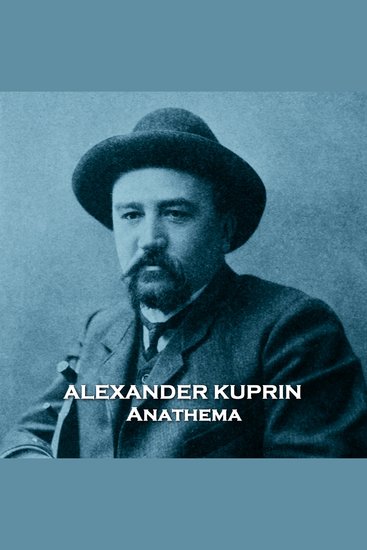
    Alexander Kuprin was born in Narovchat, Penza in Russia on 7th September 1870. 
    At 3 his Father died and he and mother moved to Moscow. By 10 he was enrolled at the Second Moscow Military High School and there his interest in literature began. The Alexander Military Academy followed and two years later he was a sub-lieutenant and posted to an Infantry Regiment for a further four years. 
    Despite his duties he was a now a keen writer and published his first short story at this time. His military duties also garnered him experiences for his breakthrough work ‘The Duel’.  Leaving the military he left for Kiev to work for local newspapers.  He continued to publish both stories and novels and by 1901 he was in St Petersburg becoming part of a group that included Chekhov, Ivan Bunin, Maxim Gorky and Leonid Andreyev.  
    In the years that followed further controversial works and acclaim followed.  His comments on the regime meant he was also put under secret police surveillance.   
    As World War I erupted, Kuprin opened a military hospital but was then given command of an infantry company in Finland. He was soon discharged on grounds of ill health.  
    The October Revolution saw him praise Lenin, but he warned that the Bolsheviks threatened Russian culture and might cause further widespread suffering to the peasants.  As Civil War raged he took his family to Helsinki and then on to Paris. 
    Exile saw his talents decline further and his succumbing to alcoholism. He became lonely and withdrawn. The family's poverty increased his malaise.   
    In May 1937, the Kuprin’s returned to Moscow.  He now saw his work published but wrote almost nothing new.  In 1938 his health rapidly deteriorated.  Already suffering from a kidney problems and sclerosis, he had now developed cancer of the oesophagus.  
    Alexander Kuprin died on 25th August 1938.
    Zum Buch
  • Pride and Prejudice - A timeless battle of wits wealth and the stubborn nature of the human heart - cover

    Pride and Prejudice - A timeless...

    Jane Austen

    • 0
    • 0
    • 0
    It is a truth universally acknowledged that Pride and Prejudice remains one of the most beloved romances in the history of literature. 
    When the wealthy and amiable Mr. Bingley rents the sprawling Netherfield Park, the quiet countryside village of Longbourn is sent into a flurry of breathless anticipation. For Mrs. Bennet, a frantic mother of five unwed daughters, his arrival is the answer to her most fervent prayers. But it is the introduction of Bingley's formidable friend, the haughty and unfathomably rich Mr. Darcy, that truly upends the Bennet household. 
    Sparks fly and societal expectations shatter when Darcy's proud, aloof demeanor clashes with the razor-sharp wit and fierce independence of Elizabeth Bennet. What begins as mutual disdain soon tangles into a complicated web of stolen glances, scandalous family drama, and unspoken desires. 
    Jane Austen's masterpiece is far more than a simple romance—it is a brilliant, biting satire of class, marriage, and the foolish assumptions we make about one another. Will Elizabeth's prejudice and Darcy's pride keep them forever apart, or will they surrender to a love that defies all odds? 
    Brought elegantly to life by narrator Andre Reaves, this audiobook invites you to step into the ballrooms of 19th-century England and fall in love with the Bennet sisters all over again.
    Zum Buch
  • Passage To India - cover

    Passage To India

    E. M. Forster

    • 0
    • 0
    • 0
    "A Passage to India" is a novel written by E.M. Forster and published in 1924. It explores the complexities of human relationships and the clash of cultures during the British Raj in India. The novel revolves around the experiences of various characters, both British and Indian, in the fictional city of Chandrapore. The main plot follows Dr. Aziz, a young Indian Muslim physician, and his interactions with a British schoolteacher named Adela Quested. 
     
    One of the most significant events in the book is the alleged assault of Adela in the Marabar Caves during a trip with Aziz. This incident sparks controversy and leads to a highly publicized trial, which highlights the tensions and prejudices between the British colonizers and the Indian population. 
     
    Throughout the novel, Forster delves into themes such as racism, cultural misunderstandings, imperialism, and the struggle for personal and cultural identity. He explores the power dynamics between the British and Indians, examining the impact of colonization on both the colonizers and the colonized. 
     
    "A Passage to India" is known for its nuanced portrayal of characters and its exploration of human connection and empathy complexities. Forster raises questions about the limitations of understanding different cultures and the difficulty of bridging the gap between them. 
     
    The novel ends on a note of ambiguity, emphasizing the challenges of genuine communication and the lasting effects of colonization. It remains a significant work of literature that continues to be studied and analyzed for its social and political commentary.
    Zum Buch
  • Classic Love Stories - cover

    Classic Love Stories

    Mary E. Wilkins Freeman, Anton...

    • 0
    • 0
    • 0
    Classic Love Stories - Short Stories 
     
    Track List 
     
    1) An Object of Love by Mary E. Wilkins Freeman 
    2) The Lady with the Dog by Anton Chekhov 
    3) The Stolen Dream by Richard Le Gallienne 
    4) The Friendship of Amis and Amile by William Morris
    Zum Buch
  • To the Lighthouse - cover

    To the Lighthouse

    Virginia Woolf

    • 0
    • 0
    • 0
    Set on an island off the Scottish coast, To the Lighthouse minutely examines the fleeting impressions of a large cast of family, friends, lovers, and hangers-on. Who can we be, Virginia Woolf invites us to ask, if no one can ever know our hearts - if they're unknowable even to ourselves? To the Lighthouse remains one of the most important Modernist novels, exquisitely composed by one of the most gifted writers of the Modernist movement.
    The opening section follows the passage of a day with a thwarted objective: to go to the nearby lighthouse. The concluding section revisits this expedition a decade later, when so much is irrevocably changed, as a chance to glimpse interpersonal understandings and connections. The novel provides a brilliant example of stream-of-consciousness writing, and raises questions that provoke us still: questions about whether children are the fullest realization of one's posterity, how women artists are regarded socially, and how money and status enable - or close off - networks, relationships, and the dreams we hold most dear.
    As masterful as its technique is, however, the lasting value of this novel for twenty-first-century readers may be its sharp representation of the emotional labor that people - particularly women - perform in order to manage the needs and expectations of others. Woolf wrote in an age when women's participation in society was tightly restricted by class norms and stultifying domesticity. Nearly a century later, scholars still have a great deal to say about Mrs. Ramsay, Lily Briscoe, and the tension between Mr. Ramsay and his son James.
    Woolf's fifth novel, and one of her most successful books both critically and commercially, To the Lighthouse was originally published in 1927, simultaneously in England and the United States. Due to a quirk in the management and correction of the proofs, according to scholar Hans Walter Gabler, the two editions were "not identical, since in a significant number of instances Virginia Woolf marked up the first proofs differently" for her two publishers.
    Zum Buch