Begleiten Sie uns auf eine literarische Weltreise!
Buch zum Bücherregal hinzufügen
Grey
Einen neuen Kommentar schreiben Default profile 50px
Grey
Jetzt das ganze Buch im Abo oder die ersten Seiten gratis lesen!
All characters reduced
Scientific Approaches - cover

Wir entschuldigen uns! Der Herausgeber (oder Autor) hat uns beauftragt, dieses Buch aus unserem Katalog zu entfernen. Aber kein Grund zur Sorge, Sie haben noch mehr als 500.000 andere Bücher zur Auswahl!

Scientific Approaches

Simone Malacrida

Verlag: BookRix

  • 0
  • 0
  • 0

Beschreibung

Mathematics, physics and science are seen, too thickly, as abstruse, complicated and suitable only for insiders.In reality, this is not the case, and this is due, primarily, to a miscommunication of content that tends more toward formalism than arousing interest.How then to arouse this interest in what is pervasive in today's world and constantly surrounding us?This handbook brings some examples on how to engage the audience, making science and what is related to it interesting and enticing.
Verfügbar seit: 22.12.2023.
Drucklänge: 43 Seiten.

Weitere Bücher, die Sie mögen werden

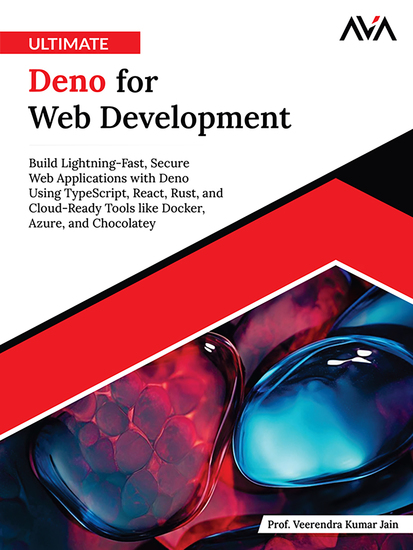
  • Ultimate Deno for Web Development - Build Lightning-Fast Secure Web Applications with Deno Using TypeScript React Rust and Cloud-Ready Tools like Docker Azure and Chocolatey - cover

    Ultimate Deno for Web...

    Prof. Veerendra Jain

    • 0
    • 0
    • 0
    Master Modern Web App Development with Deno, TypeScript, and Rust
    Book Description
    Deno is a modern, secure runtime for JavaScript and TypeScript, offering developers a simplified, efficient way to build high-performance web applications with built-in tooling and a robust standard library.
    In Ultimate Deno for Web Development, you'll dive deep into the Deno ecosystem—from setting up the runtime and understanding its architecture to mastering TypeScript, integrating Rust modules, and leveraging Deno’s security-first execution model.
    You'll progressively build full-stack applications using modern tools like React, Next.js, and Visual Studio Code, while learning to manage dependencies with Chocolatey and deploy seamlessly with Docker and Microsoft Azure. Real-world examples guide you through creating RESTful APIs, managing users, implementing robust testing strategies, and preparing your applications for production. Each chapter builds upon the last, ensuring a seamless learning journey from fundamentals to deployment.
    Whether you're a student, freelancer, or professional developer, this book equips you to harness Deno’s full potential and build secure, scalable web applications with confidence. Don’t get left behind—step into the future of web development with Deno today.
    Table of Contents
    1. Introduction to Deno-Based Web Development
    2. The Deno Toolchain Ecosystem, Components, and Architecture
    3. TypeScript, JavaScript, and Rust
    4. Introduction to Node.js and Deno versus Node.js
    5. Using Visual Studio Code
    6. Standard Library, Rust, and LSP
    7. The Stateful of Web Frameworks on Deno
    8. React, HTML, and Next.js
    9. Using Microsoft Azure with Deno
    10. Deno Web Development Using Chocolatey
    11. Adding Users and Migrating to Oak
    12. Testing in Deno
    13. Web (HTTP) Server
    14. Deploying Deno Applications, Websites and Projects      
    
    Index
    Zum Buch

  • Machine Learning System Design for Beginners - Building Machine Learning Systems A Beginner's Guide to Design and Implementation - cover

    Machine Learning System Design...

    James Ferry

    • 0
    • 0
    • 0
    Designing and building machine learning (ML) systems can seem daunting for beginners, but understanding the foundational steps and principles can simplify the process. At its core, ML system design involves a series of well-defined steps that guide the transformation of raw data into valuable insights through predictive models. Here’s a beginner’s guide to understanding and implementing these steps effectively. 
    The first step in designing an ML system is problem definition. Clearly defining the problem you aim to solve is crucial. This involves understanding the business context, identifying the goals, and determining the type of problem—whether it is classification, regression, clustering, or another ML task. A well-defined problem ensures that the subsequent steps are aligned with the desired outcomes. 
    Once the problem is defined, the next step is data collection and preprocessing. Data is the backbone of any ML system, and its quality significantly impacts the performance of the models. Collect data from various sources and ensure it is relevant to the problem. Data preprocessing involves cleaning the data to handle missing values, removing duplicates, and normalizing the data. It also includes feature engineering, which involves selecting, modifying, or creating new features that enhance the predictive power of the model. 
    Finally, the deployment and monitoring phase ensures that the ML model is operational and continues to perform well over time. Deploy the model to a production environment where it can make real-time predictions or be used in batch processing. Implement monitoring systems to track the model’s performance and detect any drift in data distribution that might require retraining the model. Regularly update the model with new data to maintain its accuracy and relevance. 
     
    Zum Buch
  • The Black Death - Plague and Transformation - cover

    The Black Death - Plague and...

    Harris Ropes

    • 0
    • 0
    • 0
    The story of the Black Death begins long before it reached the shores of Europe. At the heart of the devastation was a bacterium called Yersinia pestis, the microorganism responsible for one of the deadliest pandemics in human history. This pathogen is believed to have originated in the arid plains of Central Asia, where it lived in a natural reservoir within rodent populations, particularly marmots. These animals, though mostly isolated in remote areas, became the starting point for a chain of transmission that would eventually span continents. 
    Early outbreaks of plague-like illnesses were recorded in China and other parts of Asia as early as the 13th century, suggesting that the bacterium was already circulating in the region. However, it was the growing network of trade routes, especially the Silk Road, that allowed the disease to move rapidly from one community to another. Merchants, caravans, and travelers unknowingly carried infected fleas and rats from one trading hub to the next, creating a direct path for the disease to follow. 
    One of the most significant early episodes linked to the Black Death's arrival in Europe occurred during the Mongol siege of the Crimean city of Caffa (modern-day Feodosiya) in 1346. According to some historical accounts, the Mongols, after suffering an outbreak in their own ranks, used the infected corpses of their dead as biological weapons by catapulting them over the city walls. While the historical accuracy of this account is debated, it symbolizes the critical role Caffa played as a point of transmission. From this port city, fleeing Genoese merchants are believed to have carried the disease back to Italy by ship, bringing the plague directly into European trading centers.
    Zum Buch
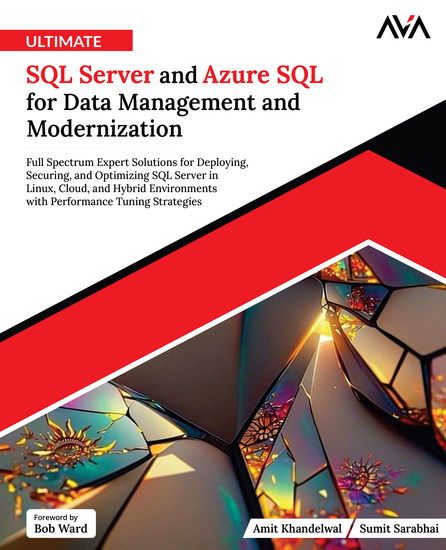
  • Ultimate SQL Server and Azure SQL for Data Management and Modernization - Full Spectrum Expert Solutions for Deploying Securing and Optimizing SQL Server in Linux Cloud and Hybrid Environments with Performance Tuning Strategies - cover

    Ultimate SQL Server and Azure...

    Amit Khandelwal

    • 0
    • 0
    • 0
    An Encyclopedic Guide to Data Management and Modernization with SQL Server
    Book Description
    SQL Server 2022 marks a major advancement in data management technology, offering features that empower organizations to harness their data like never before. Ultimate SQL Server 2022 Data Management and Modernization is your comprehensive guide to mastering this powerful tool. 
    You will explore SQL Server 2022’s latest features, including support for Linux, containerization, and Kubernetes deployments—skills essential in today’s evolving data landscape. As you navigate these innovations, you will examine critical areas like security, business continuity, performance tuning, and optimization. Each chapter is crafted to illustrate practical applications in both on-premises and cloud environments, ensuring you grasp their significance. 
    Building on this foundation, you will uncover best practices and modernization techniques tailored for Windows and Linux systems. The book also includes insights from the authors' extensive experience with the Microsoft SQL Server support team, equipping you with effective troubleshooting methods to address performance challenges directly. 
    By the end of this book, you will have a thorough understanding of SQL Server deployments, empowering you to make strategic decisions and maximize its capabilities. 
    Table of Contents
    
    1. SQL Server – The Fundamentals
    2. Realms of SQL – Part 1
    3. Realms of SQL - Part 2
    4. SQL Server and Security Hand in Glove
    5. Business Continuity Strategies for SQL Offerings
    6. Accelerate SQL Server Modernization
    7. Achieving SQL Brilliance Through Best Practices
    8. Monitoring, Performance Tuning, and Optimization  
    Index
    Zum Buch
  • The Ransomware Threat Landscape - Prepare for recognise and survive ransomware attacks - cover

    The Ransomware Threat Landscape...

    Alan Calder

    • 0
    • 0
    • 0
    The fastest-growing malware in the world
    The core functionality of ransomware is two-fold: to encrypt data and deliver the ransom message. This encryption can be relatively basic or maddeningly complex, and it might affect only a single device or a whole network.
    Ransomware is the fastest-growing malware in the world. In 2015, it cost companies around the world $325 million, which rose to $5 billion by 2017 and is set to hit $20 billion in 2021. The threat of ransomware is not going to disappear, and while the number of ransomware attacks remains steady, the damage they cause is significantly increasing.  
    It is the duty of all business leaders to protect their organisations and the data they rely on by doing whatever is reasonably possible to mitigate the risk posed by ransomware. To do that, though, they first need to understand the threats they are facing.
    The Ransomware Threat Landscape
    This book sets out clearly how ransomware works, to help business leaders better understand the strategic risks, and explores measures that can be put in place to protect the organisation. These measures are structured so that any organisation can approach them. Those with more resources and more complex environments can build them into a comprehensive system to minimise risks, while smaller organisations can secure their profiles with simpler, more straightforward implementation.
    Suitable for senior directors, compliance managers, privacy managers, privacy officers, IT staff, security analysts and admin staff – in fact, all staff who use their organisation's network/online systems to perform their role – The Ransomware Threat Landscape: Prepare for, recognise and survive ransomware attacks will help readers understand the ransomware threat they face.
    From basic cyber hygiene to more advanced controls, the book gives practical guidance on individual activities, introduces implementation steps organisations can take to increase their cyber resilience, and explores why cyber security is imperative. Topics covered include:
    
    - Introduction
    - About ransomware
    
    - Basic measures
    
    - An anti-ransomware
    
    - The control framework
    - Risk management
    - Controls
    - Maturity
    
    - Basic controls
    - Additional controls for larger organiations
    - Advanced controls
    Don't delay – start protecting your organisation from ransomware and buy this book today!
    About the author
    Alan Calder is the Group CEO of GRC International Group plc, the AIM-listed company that owns IT Governance Ltd. Alan is an acknowledged international cyber security guru, and a leading author on information security and IT governance issues. He has been involved in the development of a wide range of information security management training courses that have been accredited by IBITGQ (International Board for IT Governance Qualifications).
    Alan has consulted for clients across the globe and is a regular media commentator and speaker.
    Zum Buch
  • Chakra Healing Sleep Meditation - cover

    Chakra Healing Sleep Meditation

    Inner Light

    • 0
    • 0
    • 0
    Drift into deep, restorative sleep while realigning your energy centers with Chakra Healing Sleep Meditation—a soothing, guided journey designed to balance your chakras as you rest. This powerful audiobook blends calming narration, gentle music, and intentional visualization to guide your subconscious through each of the seven chakras, helping to clear blockages, release tension, and promote energetic harmony. 
    Perfect for ending your day on a peaceful, healing note, this meditation allows your body to relax while your energy field is gently cleansed and restored. Whether you're feeling emotionally stuck, energetically depleted, or just need a reset, Chakra Healing Sleep Meditation offers a nightly ritual to bring mind, body, and spirit into alignment. 
    You don’t need prior knowledge of chakras—just press play, close your eyes, and allow the healing process to unfold naturally as you fall asleep. Wake up feeling lighter, clearer, and more grounded. 
    Let this be your sacred space for rest, recovery, and renewal—night after night. 
    Reconnect. Rebalance. Rest deeply.
    Zum Buch