Join us on a literary world trip!
Add this book to bookshelf
Grey
Write a new comment Default profile 50px
Grey
Subscribe to read the full book or read the first pages for free!
All characters reduced
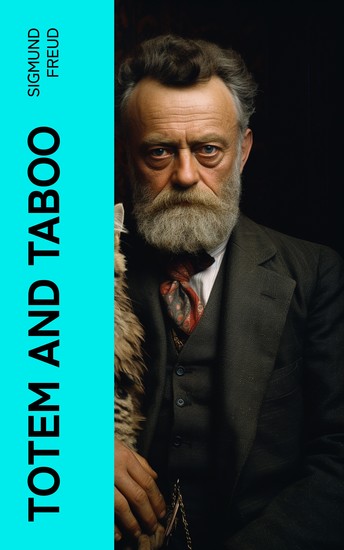
Totem and Taboo - Resemblances Between the Psychic Lives of Savages and Neurotics - cover

Totem and Taboo - Resemblances Between the Psychic Lives of Savages and Neurotics

Siegmund Freud

Translator A. A. Brill

Publisher: e-artnow

  • 0
  • 0
  • 0

Summary

"Totem and Taboo": is a 1913 book by the founder of psychoanalysis, Sigmund Freud, in which he applies his theory to the fields of archaeology, anthropology, and the study of religion. It consists of four essays inspired by the work of Wilhelm Wundt and Carl Jung: "The Horror of Incest," "Taboo and Emotional Ambivalence," "Animism, Magic and the Omnipotence of Thoughts," and "The Return of Totemism in Childhood."
Available since: 11/20/2023.
Print length: 308 pages.

Other books that might interest you

  • Black Voices from the Ivory Tower - cover

    Black Voices from the Ivory Tower

    Khalid White

    • 0
    • 0
    • 0
    Centering the invaluable experience and expertise that Black scholar-practitioners possess in advancing equity, inclusion, belonging, and transformative, systemic change.  
    The Black Voices provide steps, suggestions, and solutions to move your institution from 
    anti-Black towards anti-racist.  
    These are the Black Voices From the Ivory Tower. 
    This book is a great resource in supporting: 
    Student success 
    Anti-racism work 
    Ethnic Studies 
    Critical Race Theory 
    Educators, Classified Professionals, Administrators 
    Allies, accomplices, contributors 
    Addressing workplace issues and challenges 
    Professional development 
    Diversity, equity, inclusion goals 
    Closing equity gaps 
    Cultural affinity groups 
    Solutions-oriented leadership 
    Human Resources employees 
    Equal Employment Opportunities employees 
    Employee on-boarding 
    Leaders in development 
    Disrupting the system 
    Corporate workplace climate and culture 
    And so much more!
    Show book
  • Best Things First - cover

    Best Things First

    Bjorn Lomborg

    • 0
    • 0
    • 0
    Selected as one of the Best Books of 2023 by The Economist. 
    In this urgent, thought-provoking book, Bjorn Lomborg presents the 12 most efficient solutions for the world's poorest and our global SDG promises. • If you want to make the world better, Best Things First is the book to read. 
    World leaders have promised everything to everyone. But they are failing. The UN’s Sustainable Development Goals are supposed to be delivered by 2030. The goals literally promise everything, like eradicating poverty, hunger and disease; stopping war and climate change, ending corruption, fixing education along with countless other promises. This year, the world is at halftime for its promises, but nowhere near halfway. Together with more than a hundred of the world’s top economists, Bjorn Lomborg has worked for years to identify the world’s best solutions. Based on 12 new, peer-reviewed papers, forthcoming in Cambridge University Press’ Journal of Benefit-Cost Analysis, this book highlights the world’s best policies.
    Show book
  • Kensuke's Kingdom by Michael Morpurgo (Book Analysis) - Detailed Summary Analysis and Reading Guide - cover

    Kensuke's Kingdom by Michael...

    Bright Summaries

    • 0
    • 0
    • 0
    Unlock the more straightforward side of Kensuke's Kingdom with this concise and insightful summary and analysis!This engaging summary presents an analysis of Kensuke's Kingdom by Michael Morpurgo, an exciting adventure novel in which a young boy named Michael is swept overboard during a storm while sailing around the world with his family, and left stranded on a desert island with his pet dog. However, he soon crosses paths with the island's only other inhabitant: an irascible Japanese man named Kensuke. Despite the many differences between them, Michael and Kensuke soon become fast friends, but both of them will have to choose between their peaceful life on the island and the uncertainty of returning to civilisation… Michael Morpurgo is one of Britain's most popular and prolific writers of children's fiction, and served as the Children's Laureate between 2003 and 2005.Find out everything you need to know about Kensuke's Kingdom in a fraction of the time!This in-depth and informative reading guide brings you:• A complete plot summary• Character studies• Key themes and symbols• Questions for further reflectionWhy choose BrightSummaries.com?Available in print and digital format, our publications are designed to accompany you in your reading journey. The clear and concise style makes for easy understanding, providing the perfect opportunity to improve your literary knowledge in no time.See the very best of literature in a whole new light with BrightSummaries.com!
    Show book
  • The Golden Sayings - cover

    The Golden Sayings

    Epictetus

    • 0
    • 0
    • 0
    "The Golden Sayings" is a collection of practical teachings and advice by Epictetus, a Stoic philosopher who lived in the first century AD. The book emphasizes the importance of self-mastery, rationality, and living a virtuous life according to Stoic principles. Epictetus emphasizes that true wealth comes from having few wants, and that one must be in control of oneself to truly be free. He also emphasizes the importance of responding to events in a rational manner, focusing on what one can control rather than what one cannot. The book encourages humility, the practice of self-reflection, and an attitude of gratitude towards what one has rather than lamenting what one lacks. Read in English, unabridged.
    Show book
  • Bad Things - The Nature and Normative Role of Harm - cover

    Bad Things - The Nature and...

    Neil Feit

    • 0
    • 0
    • 0
    Bad Things addresses various philosophical questions about the nature and moral relevance of harm. The most basic question is this: under what conditions does an event harm a given individual? Neil Feit focuses primarily on the metaphysics of harm, and he both defends and extends the counterfactual comparative account of harm. On this account, in its most basic form, an act or event harms an individual provided that she would have been better off if it had not occurred. The counterfactual comparative account is widely accepted but also widely criticized. Feit provides detailed and thorough responses to the most challenging objections. He argues that an adequate theory of harm should entail the counterfactual comparative account but also make room for a certain kind plural harm, where two or more events together harm an individual although neither one by itself is harmful. These harmful events are bad things, collectively, even if no single event is itself a bad thing. Feit sets out and defends a detailed account of plural harm, addressing issues about the magnitude and the time of the harm suffered by the victim. The primary focus of the book is on the metaphysics of harm, but issues concerning its normative or moral relevance are addressed.
    Show book
  • Cannibal Capitalism - How our System is Devouring Democracy Care and the Planet – and What We Can Do About It - cover

    Cannibal Capitalism - How our...

    Nancy Fraser

    • 0
    • 0
    • 0
    A trenchant look at contemporary capitalism's insatiable appetite—and a rallying cry for everyone who wants to stop it from devouring our world 


    Capital is currently cannibalizing every sphere of life—guzzling wealth from nature and racialized populations, sucking up our ability to care for each other, and gutting the practice of politics. In this tightly argued and urgent volume, leading Marxist feminist theorist Nancy Fraser charts the voracious appetite of capital, tracking it from crisis point to crisis point, from ecological devastation to the collapse of democracy, from racial violence to the devaluing of care work. These crisis points all come to a head in Covid-19, which Fraser argues can help us envision the resistance we need to end the feeding frenzy. 


    What we need, she argues, is a wide-ranging socialist movement that can recognize the rapaciousness of capital—and starve it to death.
    Show book