¡Acompáñanos a viajar por el mundo de los libros!
Añadir este libro a la estantería
Grey
Escribe un nuevo comentario Default profile 50px
Grey
Suscríbete para leer el libro completo o lee las primeras páginas gratis.
All characters reduced
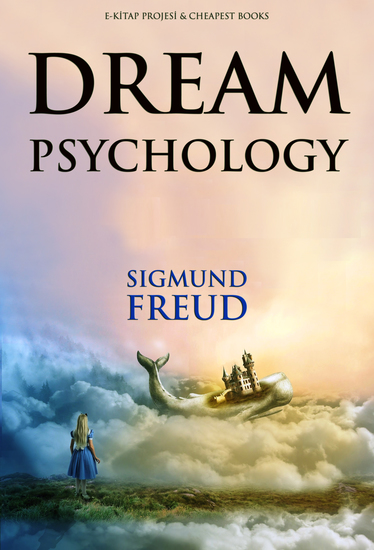
Dream Psychology - cover

Dream Psychology

Sigmund Freud

Editorial: E-Kitap Projesi & Cheapest Books

  • 0
  • 0
  • 0

Sinopsis

In creating psychoanalysis, a clinical method for treating psychopathology through dialogue between a patient and a psychoanalyst, Freud developed therapeutic techniques such as the use of free association (in which patients report their thoughts without reservation and in whichever order they spontaneously occur) and discovered transference (the process in which patients displace on to their analysts feelings derived from their childhood attachments), establishing its central role in the analytic process. Freud's redefinition of sexuality to include its infantile forms led him to formulate the Oedipus complex as the central tenet of psychoanalytical theory.

His analysis of his own and his patients' dreams as wish-fulfillments provided him with models for the clinical analysis of symptom formation and the mechanisms of repression as well as for elaboration of his theory of the unconscious as an agency disruptive of conscious states of mind. Freud postulated the existence of libido, an energy with which mental processes and structures are invested and which generates erotic attachments, and a death drive, the source of repetition, hate, aggression and neurotic guilt. In his later work Freud drew on psychoanalytic theory to develop a wide-ranging interpretation and critique of religion and culture.

Psychoanalysis remains influential within psychotherapy, within some areas of psychiatry, and across the humanities. As such it continues to generate extensive and highly contested debate with regard to its therapeutic efficacy, its scientific status and as to whether it advances or is detrimental to the feminist cause. Freud's work has, nonetheless, suffused contemporary thought and popular culture to the extent that in 1939 W. H. Auden wrote, in a poem dedicated to him:

"To us he is no more a person / now but a whole climate of opinion / under whom we conduct our different lives".
Disponible desde: 10/02/2024.
Longitud de impresión: 300 páginas.

Otros libros que te pueden interesar

  • Fervent Freedom Fighters - Anthology of Pamphleteers from the 16th to the 20th Century - cover

    Fervent Freedom Fighters -...

    Daniel Cosculluela

    • 0
    • 0
    • 0
    This anthology brings to light the richness of the pamphleteer tradition in France, between the 16th and 20th centuries. Though satirists and pamphleteers have emerged out of various political backgrounds down through the centuries, what they have in common is irreverence, courage and insubordination to all forms of power. Among them: Blanqui, Bloy, Desmoulins, Libertad, Proudhon, Rivarol, Séverine Vallès and Zo d'Axa.
    At a time when freedom of expression is increasingly questioned, Daniel Cosculluela wanted to resurrect the fighting spirit of those who acted and wrote, often at the risk of their lives. Many of these fighters for freedom of speech and thought had to flee their countries to avoid prison or assassination. 
    The author wanted to engage in a dialogue with those who live on through our thoughts, dreams and revolts. His choices are personal, but the writers selected have all played a major role in the movement of ideas which inspire, consciously or not, the commitment and the choises of millions of men and women today.
    Ver libro
  • All the Ways Our Dead Still Speak - A Funeral Director on Life Death and the Hereafter - cover

    All the Ways Our Dead Still...

    Caleb Wilde

    • 0
    • 0
    • 0
    What if our dead remain with us? What if closure is not the goal? No matter what you believe about the afterlife, what if the hereafter intersects with the here and now? 


    Caleb Wilde, author of the acclaimed memoir Confessions of a Funeral Director, was a skeptic. The baffling stories people told him—deathbed visions of long-dead parents, visits from the other side—must be hallucinations or wishful thinking, he thought. But the more stories he heard, and the more he learned about non-Western understandings of body and spirit, the less sure he was. 


    All the Ways Our Dead Still Speak takes listeners on a lyrical and tender quest to encounter the hereafter. As Wilde picks up bodies, organizes funerals, and meets with grieving families in a small town in Pennsylvania, those who remain share with him—and us—what they experience in the thin places between life and death. Entwining these stories with his own as a sixth-generation funeral director, and with the findings of neuroscience and the solace of faith, Wilde creates a searching, reverent inquiry into all the ways our dead remain with us. In the process, he takes on prevailing dogmas about death: from a narrow Christian view of heaven and hell, to secular assumptions that death is the end, to pop-psychology maxims that say we all need "closure" after our loved ones die.
    Ver libro
  • Famous Campaigns of World War I The: The History of the Great War’s Most Important Battles - cover

    Famous Campaigns of World War I...

    Charles River Editors

    • 0
    • 0
    • 0
    World War I, also known in its time as the “Great War” or the “War to End all Wars”, was an unprecedented holocaust in terms of its sheer scale. Fought by men who hailed from all corners of the globe, it saw millions of soldiers do battle in brutal assaults of attrition which dragged on for months with little to no respite. Tens of millions of artillery shells and untold hundreds of millions of rifle and machine gun bullets were fired in a conflict that demonstrated man’s capacity to kill each other on a heretofore unprecedented scale, and as always, such a war brought about technological innovation at a rate that made the boom of the Industrial Revolution seem stagnant.  
    	The enduring image of World War I is of men stuck in muddy trenches, and of vast armies deadlocked in a fight neither could win. It was a war of barbed wire, poison gas, and horrific losses as officers led their troops on mass charges across No Man’s Land and into a hail of bullets. While these impressions are all too true, they hide the fact that trench warfare was dynamic and constantly evolving throughout the war as all armies struggled to find a way to break through the opposing lines. 
    	Though World War I is almost synonymous with trench warfare, that method of combat was nothing new. There had been extensive use of trenches during the later stages of the American Civil War (1864-1865), and trench warfare was constant during the Second Boer War (1899-1902), the Russo-Japanese War (1904-1905), and the Balkan Wars (1912-1913). These conflicts showed that modern firepower combined with entrenched positions gave a decisive advantage to the defender, yet European observers failed to learn any lessons from these conflicts, and the scale of trench warfare in World War I far eclipsed anything seen before or since, especially on the Western Front.
    Ver libro
  • ELECTORAL COLLEGE THE - A Biography of America's Peculiar Creation Through the Eyes of the People Who Shaped It - cover

    ELECTORAL COLLEGE THE - A...

    Thomas E. Weaver

    • 0
    • 0
    • 0
    A timely look at how the Electoral College has changed US history and why it endures—told through the lenses of specific people who both influenced the process and were impacted by the results. 


    "Over the years, no feature of the Constitution has attracted more criticism than that strange creature called the Electoral College. Thomas E. Weaver has made that history into a story with an intriguing cast of characters, some familiar, several new to me. If you want to know why it is so hard to do away with this long-standing anachronism, Weaver's story will help you understand." —JOSEPH J. ELLIS, Professor Emeritus of History, Mount Holyoke College, author of Pulitzer Prize–winning Founding Brothers: The Revolutionary Generation 


    "Those who think that throwing stones at political institutions is the same as reasoned debate should take some lessons from this carefully researched book. With a cast of colorful characters in tow, Weaver examines the long-standing controversies surrounding the EC and sets out numerous proposals for reform, which range from outright abolition to removing the "plus two" clause. Weaver brings a wealth of historical research to the task, writing with authority and clarity." —Kirkus
    Ver libro
  • Emotional Power: Helping Kids and Society Thrive - Empower Kids with Emotional Strength! Discover impactful audio guides for societal growth - cover

    Emotional Power: Helping Kids...

    Graham Thornevale

    • 0
    • 0
    • 0
    Emotional Power: Helping Kids and Society Thrive 
    Are you looking to progress in your career and solidify your knowledge by nurturing emotional strength for a thriving future? 
    Seeking a comprehensive guide that provides all necessary elements to nurture emotional strength for a thriving future? 
    Your search ends here! 
    This guide serves as your definitive companion for deepening your understanding, applying your skills, and engaging in hands-on exercises. With this, you're geared for success. 
    Updated for the latest techniques and methodologies in fostering emotional strength. 
    Key features of this enriched guide: 
    - Profound insights about nurturing emotional strength for a thriving future 
    - Detailed explanation of emotional resilience and strength 
    - Fruitful strategies for preparation and application 
    Our guide distinguishes itself through comprehensive coverage, which is essential for your success. Concepts aren't merely skimmed; they are delved into with precision. 
    Please note that this guide is not affiliated with any official entity and is purely an independent resource for your benefit. 
    Designed with a clear structure and easy-to-understand language, our guide ensures smooth transitions between topics. Say goodbye to dense jargon and welcome clear, precise, and technically accurate content. 
    So, why wait? Click the BUY NOW button, secure your guide, and begin your journey to nurturing emotional strength for a thriving future!
    Ver libro
  • Lessons from Past Heroes - How the rejection of victimhood dogmas will save South Africa - cover

    Lessons from Past Heroes - How...

    Phumlani M Majozi

    • 0
    • 0
    • 0
    What can be learned from black South Africans who achieved success before South Africa became a democracy in 1994? What are the challenges they faced, and how did they overcome them? And, today, how have South Africans benefited from the country's democratic system of governance?
    These are the questions Phumlani M. Majozi explores and attempts to answer in Lessons from Past Heroes.
    He traces black people's success and political activity back to the early 1900s; successful men and women who spearheaded the struggle against the segregationist, colonialist government and devoted their lives to advancing the interests of their communities. Phumlani explores the careers, challenges, and successes of people such as Pixley ka Isaka Seme, John Langalibalele Dube, Sol Plaatje and Josiah Tshangana Gumede.
    During the apartheid years, South Africa produced black men and women who overcame the odds to succeed in their fields of business, entertainment, science, and politics. They excelled in the face of an oppressive government system, and their stories should inspire every South African today.
    After exploring the history of South Africa, Phumlani delves into the present and the future; evaluating the challenges South Africans face and proposes solutions that can speed up their economic progress.
    He argues that much of South Africa's history has portrayed the majority as victims of the minority, and that the inspirational stories of those people who overcame adversity are not being told widely enough.
    These stories must be told to inspire future generations.
    If black South Africans could succeed in the pre-1994 era, what can stop them today? The answer is nothing, Phumlani writes.
    Phumlani M. Majozi is a business and macroeconomics analyst, writer and commentator on economic, political and global issues. He is a Senior Fellow at African Liberty and sits on the boards of four organisations: Chartered Institute of Business Accountants (CIBA), South African Institute of Race Relations (IRR), Social Research Foundation (SRF) and Organisation Undoing Tax Abuse (OUTA).
    Ver libro