Begleiten Sie uns auf eine literarische Weltreise!
Buch zum Bücherregal hinzufügen
Grey
Einen neuen Kommentar schreiben Default profile 50px
Grey
Jetzt das ganze Buch im Abo oder die ersten Seiten gratis lesen!
All characters reduced
Totem & Taboo - cover

Totem & Taboo

Siegmund Freud

Übersetzer A. A. Brill

Verlag: DigiCat

  • 0
  • 0
  • 0

Beschreibung

In "Totem and Taboo," Sigmund Freud embarks on an ambitious exploration of the intersection between primitive culture and contemporary psychology. Utilizing a blend of anthropological theory and psychoanalytic insights, Freud examines the significance of totems—sacred symbols representing clans or tribes—and taboos—prohibitive social behaviors that arise from these symbols. The work is distinguished by Freud's innovative approach to linking the visceral rituals of early societies with the unconscious workings of the modern mind, creating a rich tapestry of thought that intertwines psychoanalysis with cultural critique. Set against the backdrop of burgeoning fields of anthropology and psychology in the early 20th century, this book stands as a seminal text in understanding the origins of social norms and human behavior. Freud, a neurologist and the father of psychoanalysis, drew inspiration from a diverse array of influences, including anthropology, mythology, and his own clinical observations. His deep investigations into the psyche were fueled by a desire to comprehend the roots of human civilization and the complexities of familial relations. "Totem and Taboo" reflects Freud's fascination with the intersections of the primitive and the civilized, as he sought to decode the psychological underpinnings of societal structures. This groundbreaking work is highly recommended for those interested in the foundations of psychology, anthropology, and cultural studies. Freud's provocative theories invite readers to contemplate the enduring impact of ancestral beliefs on contemporary societal constructs. Readers will find themselves engaging with timeless questions about identity, morality, and the unconscious as they navigate through Freud's compelling prose.
Verfügbar seit: 11.10.2022.
Drucklänge: 134 Seiten.
Weitere Bücher, die Sie mögen werden

  • The Shaking Woman or A History of My Nerves - cover

    The Shaking Woman or A History...

    Siri Hustvedt

    • 0
    • 0
    • 0
    While speaking at a memorial event in 2006, Siri Hustvedt suffered a violent seizure from the neck down. Despite her flapping arms and shaking legs, she continued to speak clearly and was able to finish her speech. It was as if she had suddenly become two people: a calm orator and a shuddering wreck. Then the seizures happened again and again. The Shaking Woman tracks Hustvedt's search for a diagnosis, one that takes her inside the thought processes of several scientific disciplines, each one of which offers a distinct perspective on her paroxysms but no ready solution. In the process, she finds herself entangled in fundamental questions: What is the relationship between brain and mind? How do we remember? What is the self? 


    During her investigations, Hustvedt joins a discussion group in which neurologists, psychiatrists, psychoanalysts, and brain scientists trade ideas to develop a new field: neuropsychoanalysis. She volunteers as a writing teacher for psychiatric in-patients at the Payne Whitney clinic in New York City and unearths precedents in medical history that illuminate the origins of and shifts in our theories about the mind-body problem. Hustvedt synthesizes her experience and research into a compelling mystery: Who is the shaking woman? In the end, the story she tells becomes, in the words of George Makari, "a brilliant illumination for us all."
    Zum Buch
  • Goodbye Transylvania - A Romanian Waffen-SS Soldier in WWII - cover

    Goodbye Transylvania - A...

    Sigmund Heinz Landau

    • 0
    • 0
    • 0
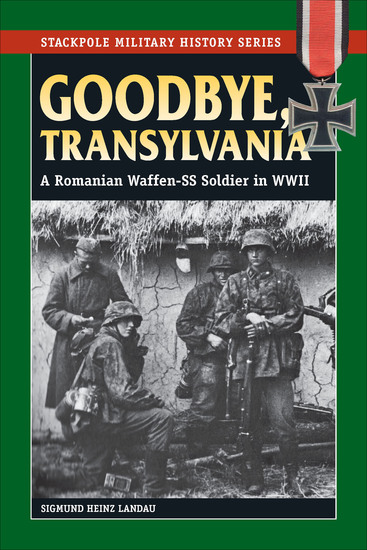
    A Romanian soldier details serving for Germany on the Eastern Front during World War II in this memoir, featuring firsthand accounts of combat. German by ancestry, born and raised in the ethnic welter of post-World War I Romania, Sigmund Heinz Landau left his home to volunteer for the Third Reich during World War II. Serving on the Eastern Front, he saw nearly six years of continuous fighting with a Luftwaffe Flak unit and eventually in the Waffen-SS, from sentry duty to desperate attacks against Soviet T-34s, from the siege of Budapest to the final campaign for Berlin in 1945. Landau’s memoir, written from a unique perspective, offers rare insight into what motivated soldiers to fight—and die—for Nazi Germany.
    Zum Buch
  • Post-Traumatic Parenting - Break the Cycle and Become the Parent You Always Wanted to Be - cover

    Post-Traumatic Parenting - Break...

    Robyn Koslowitz PhD

    • 0
    • 0
    • 0
    Every good parent wants to create relationships with their children that are filled with joy, connection, and healthy attachment. Yet well-meaning but traumatized parents—those who suffered as children or who are dealing with traumatic events as adults—tend to see the world from a survival point of view. If that's you, you might suspect that your own trauma is negatively influencing your parenting behaviors. Where can you turn for support and wisdom? 


    Post-Traumatic Parenting goes far beyond the fad social-media trends like "gentle" and "responsive" parenting to provide a clear, easy-to-follow, and substantive guide, offering both what to do and why it works, so traumatized parents can create the kind of relationship they want with their children of any age. 


    Experienced, renowned traumatic parenting expert, workshop leader, speaker, and founder of the Center for Psychological Growth, Dr. Robyn Koslowitz directly explains exactly how every post-traumatic parent can reverse the damage from their own traumas and forge a strong, healthy relationship with their children. Finally, you can find true joy in the day-to-day of parenting. This book features easy-to-follow instructions, along with simple tools, to help you effectively parent your children, no matter what happened in the past.
    Zum Buch
  • The Witches of Scotland - True Accounts From the Scottish Witch-Trials (1537-1727) - cover

    The Witches of Scotland - True...

    Eliza Lynn Linton

    • 0
    • 0
    • 0
    Witch-hunting plagued much of Europe throughout the 16th and 17th centuries, but Scotland’s witch hunts were among the most severe. Combining eyewitness accounts with actual trial transcripts, British journalist Elizabeth Lynn Linton provides a fascinating glimpse into the black magic and fairy lore behind Scotland's infamous witch trials.
    Zum Buch
  • The Holy Roman Empire - A Complex Realm - cover

    The Holy Roman Empire - A...

    Harris Ropes

    • 0
    • 0
    • 0
    The Holy Roman Empire traces its origins to a time of shifting power dynamics, spiritual authority, and the enduring legacy of Rome. It was neither wholly holy, Roman, nor an empire in the traditional sense, but it stood as a significant political and spiritual entity in European history for nearly a millennium. The story begins with the fall of the Western Roman Empire in 476 CE, which left a power vacuum in Europe. Centuries later, Charlemagne, King of the Franks, would revive the idea of a Roman imperium in the West. In the year 800, Pope Leo III crowned Charlemagne as Emperor of the Romans, symbolically linking his rule to the legacy of ancient Rome and establishing a precedent for divine sanction of imperial authority. 
    While Charlemagne’s empire did not last beyond his heirs, his imperial title endured in memory and ambition. The true foundations of the Holy Roman Empire, however, are often credited to Otto I, Duke of Saxony, who became King of East Francia in 936. Through military successes and strong alliances with the Church, Otto consolidated his power. In 962, he was crowned Emperor by Pope John XII, an act widely regarded as the formal beginning of the Holy Roman Empire. Otto’s coronation re-established the notion of a Christian emperor in the West and initiated a tradition that would persist for centuries. 
    This early period also marked the beginning of what would become a recurring struggle between secular rulers and the papacy for supremacy. The Investiture Controversy, though it would fully erupt later, had its roots in the growing tensions between emperors who believed they had the right to appoint bishops and popes who insisted on spiritual independence. This rivalry between church and state would shape the development of the empire’s political structure, often blurring the lines between religious and secular authority.
    Zum Buch
  • Rich Traditions - Exploring the diversity of Cultural Practices - cover

    Rich Traditions - Exploring the...

    Joseph Arston

    • 0
    • 0
    • 0
    Cultural traditions are the backbone of societies, shaping identities, fostering unity, and preserving the past for future generations. These traditions encompass a vast array of practices, from rituals and customs to art and language, each carrying deep significance within a community. Understanding the foundation of cultural traditions requires exploring their origins, the role of storytelling, and the importance of rituals in maintaining societal cohesion. 
    The origins of cultural practices date back to early human civilizations, where communities developed customs to mark significant life events, seasonal changes, and social hierarchies. Many traditions emerged as a means of survival, guiding agricultural practices, hunting techniques, and community governance. Over time, these customs evolved, influenced by migration, conquests, and technological advancements. Despite these changes, the essence of cultural traditions remains rooted in the need for connection, identity, and continuity. Oral traditions, written records, and archaeological discoveries have provided valuable insights into how ancient societies passed down knowledge and customs, ensuring that cultural heritage persisted through generations. 
    Storytelling has played a crucial role in preserving and transmitting cultural traditions. Before the widespread use of writing, oral narratives served as a primary means of educating younger generations about their history, beliefs, and values. Folktales, myths, and legends not only entertained but also reinforced moral lessons and social norms. In many indigenous cultures, storytelling was a communal activity, where elders shared wisdom through spoken word, music, and performance. Even today, literature, films, and digital media continue to serve as powerful tools for maintaining cultural identity, adapting traditional narratives to modern contexts while keeping their essence alive.
    Zum Buch