

Rejoignez-nous pour un voyage dans le monde des livres!
Ajouter ce livre à l'électronique
Grey
Ecrivez un nouveau commentaire Default profile 50px
Grey
Abonnez-vous pour lire le livre complet ou lisez les premières pages gratuitement!
All characters reduced
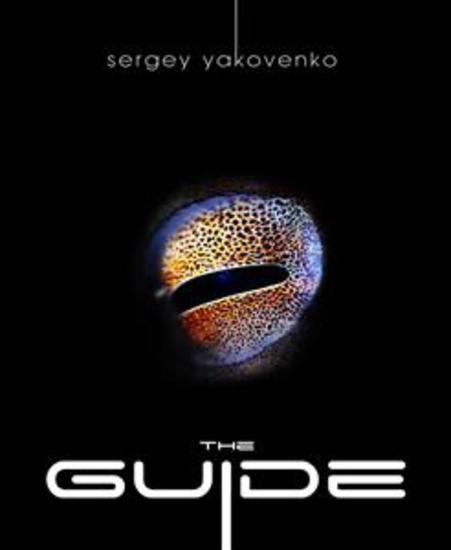
The guide - cover

The guide

Serhii Yakovenko

Maison d'édition: BookRix

  • 0
  • 0
  • 0

Synopsis

In the house of an elderly, dying-from-sarcoma oligarch Silin, an unusual guest arrives. He introduces himself as a professor of neurobiology and offers to transplant the old man's consciousness into a young clone. However, there is a catch: during the transplantation, donors experience monstrous, hellish pain that no one can endure. No one, except for the conduit - a free human consciousness that once lost its own body. To make everything work, the conduit's consciousness will have to be implanted into Silin's brain...
Disponible depuis: 21/12/2023.
Longueur d'impression: 110 pages.
D'autres livres qui pourraient vous intéresser

  • Death Waits at Sundown - A Wild West Showdown Between the Good the Bad and the Deadly - cover

    Death Waits at Sundown - A Wild...

    L. Ron Hubbard

    • 0
    • 0
    • 0
    Lynn Taylor and his kid brother Frank have landed on the wrong side of a corrupt lawman. Frank's been framed for murder, and it's up to Lynn to make sure his brother doesn't end up guest of dishonor at a hanging party. Lynn's got a plan, but it means going outlaw himself, and if he's caught, it'll be his neck on the line. Catch the snap of a whip and the crack of a Colt .45 as the audio version of Death Waits at Sundown delivers non-stop Wild West action.
    Voir livre
  • Seasons of Purgatory - cover

    Seasons of Purgatory

    Shahriar Mandanipour

    • 0
    • 0
    • 0
    The first English-language story collection from "one of Iran's most important living fiction writers" (Guardian) 


    In Seasons of Purgatory, the fantastical and the visceral merge in tales of tender desire and collective violence, the boredom and brutality of war, and the clash of modern urban life and rural traditions. Mandanipour, banned from publication in his native Iran, vividly renders the individual consciousness in extremis from a variety of perspectives: young and old, man and woman, conscript and prisoner. While delivering a ferocious social critique, these stories are steeped in the poetry and stark beauty of an ancient land and culture.
    Voir livre
  • Edna Ferber: The Woman Who Tried To Be Good - Before she tried to be a good woman she had been a very bad woman - cover

    Edna Ferber: The Woman Who Tried...

    Edna Ferber

    • 0
    • 0
    • 0
    "Before she tried to be a good woman she had been a very bad woman—so bad that she could trail her wonderful apparel up and down Main Street, from the Elm Tree Bakery to the railroad tracks, without once having a man doff his hat to her or a woman bow. You passed her on the street with a surreptitious glance, though she was well worth looking at—in her furs and laces and plumes. She had the only full-length mink coat in our town, and Ganz's shoe store sent to Chicago for her shoes. Hers were the miraculously small feet you frequently see in stout women. 
    For she owned the House with the Closed Shutters, near the freight depot—did Blanche Devine".
    Voir livre
  • Twenty-Six Men and a Girl - From their pens to your ears genius in every story - cover

    Twenty-Six Men and a Girl - From...

    Maxim Gorky

    • 0
    • 0
    • 0
    Alexei Maximovich Peshkov was born on 28th March 1868, in Nizhny Novgorod, Russia. 
    Better known as Maxim Gorky he was orphaned at 11 and ran away from home at 12.  At 19 he had already attempted suicide and thereafter travelled, by foot, across the Russian Empire for 5 years. 
    His first book ‘Essays & Stories’ in 1898 was a sensation and so began a long career as an author of short stories, novels and plays.  Gorky saw writing as a moral and political act that would help to change the unjust world around him.  He was an ardent early advocate of the emerging Marxist movement and publicly opposed the Tsarist regime leading several times to his arrest.  
    In 1904 he began his own theatre but the censor banned every play and Gorky was forced to abandon the project. 
    But Gorky was a financially successful author, editor, and playwright and gave monies to political parties as well as for civil rights and social reform.  The brutal shooting of workers, which set in motion the Revolution of 1905, pushed Gorky more decisively toward radical solutions.  
    In 1906 he went to the United States to raise funds for the Bolsheviks. Those experiences including a scandal over travelling with his lover and not his wife deepened his contempt for the ‘bourgeois soul.’ 
    Gorky now moved to Capri in Italy, both for health reasons and to escape the increasingly repressive times in Russia.  
    An amnesty for the 300th anniversary of the Romanov dynasty saw him return to Russia in 1914. His politics remained close to the Bolshevik cause.  But soon, after the 1918 revolution, his essays referred to Lenin as a tyrant for his senseless arrests and repression.  He was soon appealing to the outside world for food aid after the catastrophic crop failure. 
    In October 1921 Gorky returned to Italy, now in Fascist hands, and settled in Sorrento until 1932.  His health worsened with the onset of tuberculosis. 
    He wrote several successful books there but now decided to find an understanding with the communist regime. Stalin invited him home and his return was hailed as a major propaganda victory.  He was decorated with the Order of Lenin, and a province, a park, and various streets re-named in his honour. 
    But he had his faults too.  In 1933, Gorky co-edited a book on the White Sea-Baltic Canal and denied even a single prisoner died during its construction, but thousands had. As well, knowing that some Nazis were homosexual, a phrase was attributed to him that said ‘exterminate all homosexuals and fascism will vanish’.  Although he was himself was quoting another he was decidedly homophobic. 
    With the increase of Stalinist repression in 1935 Gorky was placed under unannounced house arrest. 
    Maxim Gorky died on the 18th June 1936 from pneumonia.  He was 68. 
    Stalin and Molotov were among those who carried Gorky's urn of ashes at his funeral.
    Voir livre
  • Partners in Crime - cover

    Partners in Crime

    Agatha Christie

    • 0
    • 0
    • 0
    Partners in Crime is a collection of short stories featuring Tommy and Tuppence Beresford, a couple who own and manage Blunt's International Detective Agency.
    
    In their previous adventure Tommy and Tuppence rescued the pink pearl against all odds. Now the best and brightest are at their door, and throughout these 15 storiues we see them crack cases from the mysterious to the murderous.
    
    The short stories included in this collection are:
    
    - A Fairy in the Flat
    - A Pot of Tea
    - The Affair of the Pink Pearl
    - The Adventure of the Sinister Stranger
    - Finessing the King/The Gentleman Dressed in Newspaper
    - The Case of the Missing Lady
    - Blindman's Buff
    - The Man in the Mist
    - The Crackler
    - The Sunningdale Mystery
    - The House of Lurking Death
    - The Unbreakable Alibi
    - The Clergyman's Daughter / The Red House
    - The Ambassador's Boots
    - The Man Who Was No. 16
    Agatha Christie (1890 – 1976) was an English author. She was a prolific writer, most famous for her detective novels and short story collections which centred around the iconic characters of Hercule Poirot and Miss Marple. Renowned as the 'Queen of Crime', she remains the bestselling novelist of all time, with her sales only second to the Bible.
    This audiobook is fully indexed. Once downloaded, each story will be listed so you can easily navigate to the individual section.
    Voir livre
  • The Moving Finger - An detective story that brings mystery and revelation by occult means - cover

    The Moving Finger - An detective...

    Rose Champion de Crespigny

    • 0
    • 0
    • 0
    Annie Rose Charlotte Key was born on 9th November 1859 in Kensington, London. 
     
    With a privileged background—her father was an admiral, her mother a Lady, Rose began her creative life as a painter before a stab at writing local history settled her into popular fiction. 
     
    Her works were solidly written and often described as having a ‘certain graceful facility’. 
     
    Her marriage to Philip Augustus Champion de Crespigny in 1878 resulted in a family of 4 children and a name of status. 
     
    Rose was a leading member of the Ridley Art Club, the Lyceum Club in Piccadilly, and of the British College of Psychic Science.  Victorian society had a particular fascination with spiritualism and in ‘The Moving Finger’ Rose uses the theme as a background to introduce her popular occult detective Norton Vyse into her series of short stories.  
     
    Rose Champion de Crespigny died on 10th February 1935.  She was 75.
    Voir livre
