
Begleiten Sie uns auf eine literarische Weltreise!
Buch zum Bücherregal hinzufügen
Grey
Einen neuen Kommentar schreiben Default profile 50px
Grey
Jetzt das ganze Buch im Abo oder die ersten Seiten gratis lesen!
All characters reduced
Solar Powered Vehicles - cover

Solar Powered Vehicles

Serena Vaughn

Übersetzer A AI

Verlag: Publifye

  • 0
  • 0
  • 0

Beschreibung

"Solar Powered Vehicles" explores the exciting possibilities of using solar energy for transportation, addressing how we can reduce reliance on fossil fuels. It dives into the science of converting sunlight into power, the engineering needed to build solar vehicles, and the policies that can help this technology grow, offering a comprehensive look at a future powered by the sun. The book uniquely combines technical details with economic and social factors to fully understand the potential and hurdles of solar transportation.

 
The book shows how far solar technology has come, moving from simple toys to potentially powering cars, buses, and even trains. Imagine vehicles silently running on sunlight, reducing pollution and offering a sustainable alternative. It begins by explaining how solar cells and energy storage work, then moves on to how these technologies are being used in different types of vehicles. Later chapters tackle the technical challenges of making solar vehicles efficient and affordable, concluding with the impact of government policies and the environmental benefits of solar transportation.
Verfügbar seit: 12.03.2025.
Drucklänge: 80 Seiten.

Weitere Bücher, die Sie mögen werden

  • Monkey to Man - The Evolution of the March of Progress Image - cover

    Monkey to Man - The Evolution of...

    Gowan Dawson

    • 0
    • 0
    • 0
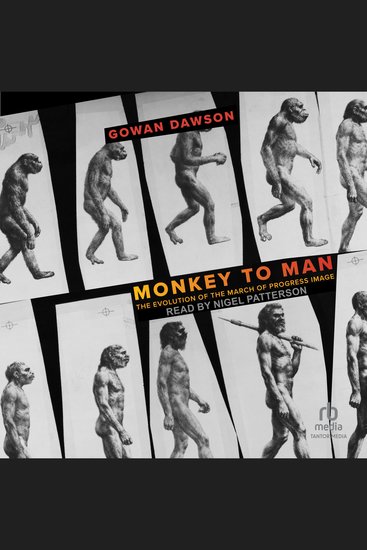
    The first book to examine the iconic depiction of evolution, the "march of progress," and its role in shaping our understanding of how humans evolved 


    We are all familiar with the "march of progress," the representation of evolution that depicts a series of apelike creatures becoming progressively taller and more erect before finally reaching the upright human form. Its emphasis on linear progress has had a decisive impact on public understanding of evolution, yet the image contradicts modern scientific conceptions of evolution as complex and branching. 


    This book is the first to examine the origins and history of this ubiquitous and hugely consequential illustration. In a story spanning more than a century, from Victorian Britain to America in the Space Age, Gowan Dawson traces the interconnected histories of the two most important versions of the image: the frontispiece to Thomas Henry Huxley's Evidence as to Man's Place in Nature (1863) and "The Road to Homo Sapiens," a fold-out illustration in the bestselling book Early Man (1965). Dawson explores how the recurring appearances of this image pointed to shifting scientific and public perspectives on human evolution, as well as indicated novel artistic approaches, and advancements in technology.
    Zum Buch
  • Saturn's Strategy Statement And Plan Suggestion From A Scholar - cover

    Saturn's Strategy Statement And...

    Trevor Clinger

    • 0
    • 0
    • 0
    This paper, originally crafted for a senior-level college class, earned a perfect score. It delves into foundational concepts of strategy statements and plans within organizational strategy, using Saturn as a case study. The focus remains concise to encourage readers to extrapolate using their own examples. Exploring Saturn's distinctive business practices within the automobile industry was particularly enlightening for the author, who holds an Associates Degree in Business Management Technology and a Bachelor's Degree in Business Administration.
    Zum Buch
  • Plato’s Revenge - The New Science of the Immaterial Genome - cover

    Plato’s Revenge - The New...

    David Klinghoffer

    • 0
    • 0
    • 0
    First there was the genetic revolution—the discovery that physical structures in the cell, including DNA and RNA, shape every organism. Now, says evolutionary biologist Richard Sternberg, we are overdue for another and more profound revolution. 
    Recent findings reveal that genetic and even epigenetic sources alone cannot account for the rich dynamism of life—not even close. Some other informational source is required. 
    The idea was anticipated 2,400 years ago in Plato’s Timaeus and periodically revisited in the ensuing centuries. Sidelined by scientific materialism, it is now reasserting itself on the strength of cutting-edge molecular biology, higher mathematics, and commonsense reasoning. 
    In Plato’s Revenge, science writer David Klinghoffer takes Sternberg’s profound explorations and weaves them into a lively and accessible account of a most remarkable realization: At every moment, we owe our lives to a genome that is more than matter and to an informational source that is immaterial, transcomputational, and beyond space and time.
    Zum Buch
  • Building the Future - Big Teaming for Audacious Innovation - cover

    Building the Future - Big...

    Susan Salter Reynolds, Amy...

    • 0
    • 0
    • 0
    Innovation within an organization is no longer sufficient; in a growing number of businesses, collaboration between companies and even industries is critical to success. A respected Harvard professor and a journalist team up to show how one creative startup exemplifies this new, intensely interactive form of leadership. 
     
     
    Niccolò Machiavelli famously wrote: "There is nothing more difficult to take in hand, more perilous to conduct, or more uncertain in its success than to take the lead in the introduction of a new order of things." 
     
    Constructing a new order of things, which Edmondson and Reynolds call "building the future," is the focus of this book. It explores how to bring complex new systems into being, particularly systems that transform human experience and make the world more livable and sustainable. Intense collaboration across professions and industries is vital to come up with new ideas and innovative solutions. This requires practicing new forms of leadership that enable complex, team-based, whole-system innovation. 
     
    To reveal how pioneers build the future, Edmondson and Reynolds study a startup's long and innovative journey in the smart-city industry, which uses digital, information and communication technologies to enhance the quality and performance of urban services, They follow the leaders in this company, Living PlanIT, through cycles of hope, exhaustion, disillusionment, pragmatism, and renewal in creating the city of the future.
    Zum Buch
  • Silurian Period The: The History of the Prehistoric Era When Life Formed on Land - cover

    Silurian Period The: The History...

    Editors Charles River

    • 0
    • 0
    • 0
    The early history of Earth covers such vast stretches of time that years, centuries, and even millennia become virtually meaningless. Instead, paleontologists and scientists who study geochronology divide time into periods and eras.  
    The Silurian Age occurred during the mid-Paleozoic, and despite its relative brevity, the era developed some interesting features that promulgated life on Earth. Roderick J. Murchison, a British geologist, named a sequence of rocks after a group of indigenous people called the Silures living in Wales during the mid-19th century. Despite their absence in the Silurian Age, the name was bestowed to honor the tribe. 
    Murchison was inspired by close friend Adam Sedgwick, who named the Cambrian Age, employing the Latin word for Wales. In 1835, the two presented a paper together entitled On the Silurian and Cambrian Systems. Their separate categorizing systems caused a serious enough disagreement over chronology that the friendship ended bitterly. The alternative name for Siluria was Gotlandia after the Baltica island of Gotland. 
    What ultimately precipitated these subdivisions in the chronology was a “famous unconformity” on the River Onny in Shropshire. It indicated a natural break within “classic Silurian on its own home territory.” The timeline for beginning and end dates has remained imprecise, but the order of fossilized discoveries has proven correct. Joachim Barrande, a French paleontologist, geologist, and botanist, pursued the same issue in the Prague Basin of Bohemia. Studying the Paleozoic trilobite for a period of 10 years, his extensive work was published in his Silurian System of Central Bohemia. Altogether, he identified and analyzed over 4,000 new fossil species, producing the enormous Encyclopedia of Fossils, numbering over 6,000 pages.
    Zum Buch
  • History of Moon Mission - cover

    History of Moon Mission

    Introbooks Team

    • 0
    • 0
    • 0
    The Moon has held the imaginations of the human beings since the advent of the modern world. However, it is the only in the modern times that the humans have visited the lunar surface. Initially, this was achieved by the robotic machines and then it was achieved by the astronauts. The exploration of the moon and the landing of the humans on its surface have taught the humans much about the evolution of the Solar System and life on Earth. The humans have known for centuries about the effect on the biological cycles and tides from the waning and waxing Moon. But it had taken the space-age exploration and the landing of the Moon has revealed the connection of the existence of the human beings on a very fundamental level. 
    Zum Buch