Begleiten Sie uns auf eine literarische Weltreise!
Buch zum Bücherregal hinzufügen
Grey
Einen neuen Kommentar schreiben Default profile 50px
Grey
Jetzt das ganze Buch im Abo oder die ersten Seiten gratis lesen!
All characters reduced
South Pacific - cover

South Pacific

Sebastian Farnham

Übersetzer A AI

Verlag: Publifye

  • 0
  • 0
  • 0

Beschreibung

The South Pacific, seemingly a collection of isolated island nations, holds surprising strategic importance in global geopolitics. South Pacific explores this complex landscape, revealing how historical colonialism, military bases, and foreign powers have shaped the region's present and future, influencing global power dynamics.

 
The book emphasizes the tension between national sovereignty and external influence, highlighting the islands as vital strategic assets and a microcosm for understanding broader global power competition.

 
The book examines the legacies of colonial exploitation and contemporary neo-colonial practices. For example, the arbitrary drawing of colonial boundaries often disregarded existing cultural and political structures, leading to lasting conflicts. Furthermore, the establishment of military bases, while providing some economic benefits, has also sparked controversy due to their impact on local communities and regional stability.

 
The book progresses chronologically, beginning with an introduction to the region's geography and cultures before delving into colonial history and the rise of new geopolitical actors. South Pacific provides a comprehensive overview by drawing upon archival documents, firsthand accounts, and economic data. It analyzes the increasing involvement of actors like the United States and China, and the growing debt burden of many island states.

 
Concluding chapters synthesize these analyses, considering climate change implications and potential pathways toward self-determination and sustainable development. The book offers a balanced perspective, acknowledging the agency of South Pacific islanders while recognizing external constraints.
Verfügbar seit: 20.03.2025.
Drucklänge: 67 Seiten.

Weitere Bücher, die Sie mögen werden

  • Mars and Venus in Love - cover

    Mars and Venus in Love

    John Gray

    • 0
    • 0
    • 0
    Straight from the heart—real-life couples share inspiring, edifying stories of Mars and Venus in love. 
    Millions of readers have learned about relationships from John Gray's previous bestsellers, such as Men Are from Mars, Women Are from Venus; Mars and Venus on a Date; and Mars and Venus in the Bedroom. Inspired by this enthusiasm, Gray asked a number of readers to share their own stories of how they've put his principles to work in their relationships. The result is this amazing collection of first-person accounts—along with Gray's own enlightening commentary—that will have you laughing, crying, and nodding in recognition. 
    Gray's contributors answer such questions as:What problems have you had in your relationship, and how have you overcome them?What special things do you and your partner do for each other?How do you best communicate with each other?How do you practice what you've learned?How does your love feel different now from how it felt before? 
    Their answers illustrate more eloquently than any textbook how to use Gray's advice and counsel to create your own fulfilling, healthy, and loving relationships.
    Zum Buch
  • Beyond Racial Division - A Unifying Alternative to Colorblindness and Antiracism - cover

    Beyond Racial Division - A...

    George A. Yancey

    • 0
    • 0
    • 0
    Christianity Today Book Award—Politics and Pubilc Life
    Efforts at colorblindness and antiracism have not been very effective in addressing racial tensions in the United States. Colorblindness ignores the realities of race and the history of injustice. On the other hand, antiracism centers racial concerns and in so doing often alienates people who need to be involved in the process. Sociologist George Yancey offers an alternative approach to racial relations where all parties contribute and are mutually accountable to one another for societal well-being. He provides empirical rationale for how collaborative conversations in a mutual accountability model can reduce racial division. History and societal complexity mean that different participants may have different kinds of responsibility, but all are involved in seeking the common good for all to thrive. Avoiding unilateral decisions that close off dialogue, Yancey casts a vision for moving beyond racial alienation toward a lifestyle and movement of collaborative conversation and mutuality.
    Zum Buch
  • The Catastrophic Worrier - Why You Worry and How to Stop - cover

    The Catastrophic Worrier - Why...

    PhD Graham Davey

    • 0
    • 0
    • 0
    Do you turn all your molehills into insurmountable mountains? This accessible and engaging book will guide you along the path to stop catastrophizing so that you can reclaim control, achieve your goals, and live a happier life. 


    Is your worrying keeping you up all night, eroding your self-confidence, paralyzing your ability to make decisions, and harming your physical health? Excessive worrying is a problem that affects everyone at some point in their lives, but for some people it can become a lifelong affliction. Catastrophic worry can turn even imagined setbacks into a cascade of devastating events, impacting your sleep, self-confidence, decision making, problem solving, ability to cope, and overall health. 


    In this guide, leading worry expert Graham Davey explains the science of why we worry, and offers a clear path to stopping catastrophic worry so you can regain control and live a happier life. Focusing first on the psychological processes that contribute to catastrophizing, you'll gain a solid, research-based understanding of where your worry comes from, with insight into how it can snowball. You'll also learn how to assess your own level of catastrophic worrying, and find exercises that directly address those processes to help you establish healthy habits, manage your mood and anxiety, and make decisions with confidence.
    Zum Buch
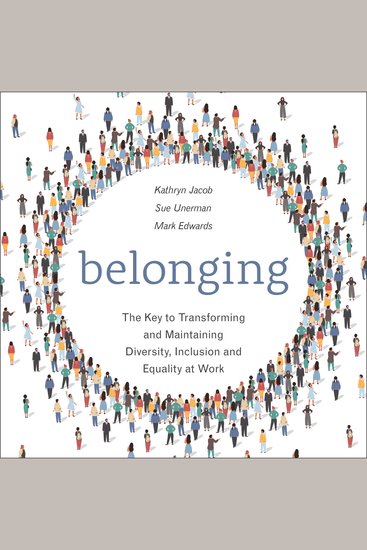
  • Belonging - The Key to Transforming and Maintaining Diversity Inclusion and Equality at Work - cover

    Belonging - The Key to...

    Anonym

    • 0
    • 0
    • 0
    There's never been more discussion around diversity and inclusion in the workplace. From gender pay gaps to the #MeToo movement, it seems that every organization has finally recognized that change needs to happen. 


    Despite this, true progress towards more inclusive workspaces has been excruciatingly slow and, in some cases, has grinded to a halt. Following extensive research and interviews at over 200 international businesses, Kathryn Jacob, Sue Unerman, and Mark Edwards have discovered the major problem that is holding back the move towards greater diversity: where are all the men? 


    Most men are not engaged with D&I initiatives in the workplace—at one extreme they may be feeling actively hostile and threatened by the changing cultural landscape. But others may be unmotivated to change—recognizing the abstract benefits of diversity but not realizing what's in it for them. Built upon this seemingly counterintuitive approach of bringing men into the conversation, Belonging is an accessible and comprehensive guide to achieving diversity that lasts.
    Zum Buch
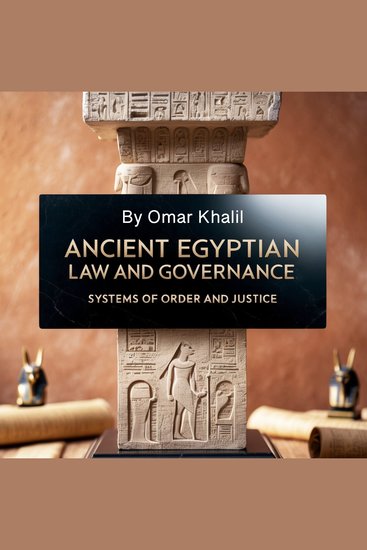
  • Ancient Egyptian Law and Governance - Systems of Order and Justice - cover

    Ancient Egyptian Law and...

    Omar Khalil

    • 0
    • 0
    • 0
    Ancient Egyptian law was deeply rooted in the concept of Ma’at, the divine order that governed the universe and ensured balance, truth, and justice. This principle was not just a philosophical ideal but a practical guide for governance and social conduct. The legal system in Egypt was designed to maintain harmony within society, regulate disputes, and uphold the authority of the ruling elite. Unlike modern legal frameworks based on written statutes, Egyptian law was a combination of tradition, royal decrees, and religious doctrines. It was adaptable, relying on the wisdom of judges and officials rather than rigid legal codes. 
    The origins of legal traditions in ancient Egypt can be traced back to the early dynastic period when the first centralized state emerged. As society became more complex, a structured system of governance was necessary to manage resources, trade, and interpersonal conflicts. The earliest evidence of legal practice comes from administrative records, tomb inscriptions, and temple documents, which indicate that law was an integral part of daily life. While no single codified legal text has survived, references to decrees issued by pharaohs suggest that laws were issued and enforced at the highest levels of authority. 
    At the heart of Egyptian governance was the role of Ma’at, which extended beyond ethical conduct to legal proceedings. Ma’at represented a cosmic balance that rulers were duty-bound to uphold. The pharaoh, as the earthly representative of the gods, was seen as the ultimate source of justice. His decrees and judgments set legal precedents, shaping the administration of law across the kingdom. This divine connection made Egyptian law unique, as it blended religious principles with practical governance, ensuring that justice was not only a human responsibility but also a sacred duty.
    Zum Buch
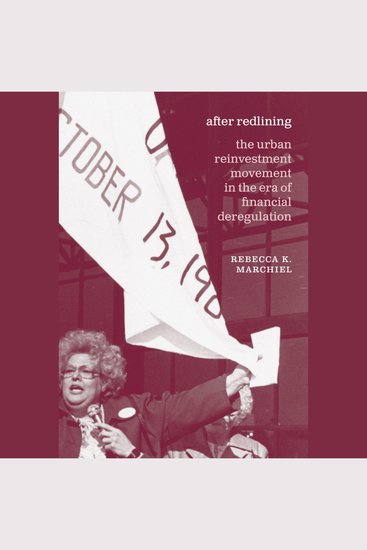
  • After Redlining - The Urban Reinvestment Movement in the Era of Financial Deregulation - cover

    After Redlining - The Urban...

    Rebecca K. Marchiel

    • 0
    • 0
    • 0
    Focusing on Chicago’s West Side, After Redlining illuminates how urban activists were able to change banks’ behavior to support investment in communities that they had once abandoned. 
     
    American banks, to their eternal discredit, long played a key role in disenfranchising nonwhite urbanites and, through redlining, blighting the very city neighborhoods that needed the most investment. Banks long showed little compunction in aiding and abetting blockbusting, discrimination, and outright theft from nonwhites. They denied funds to entire neighborhoods or actively exploited them, to the benefit of suburban whites—an economic white flight to sharpen the pain caused by the demographic one. 
     
    And yet, the dynamic between banks and urban communities was not static, and positive urban development, supported by banks, became possible. In After Redlining, Rebecca K. Marchiel illuminates how, exactly, urban activists were able to change some banks’ behavior to support investment in communities that they had once abandoned. The leading activists arose in an area hit hard by banks’ discriminatory actions and politics: Chicago’s West Side. A multiracial coalition of low- and moderate-income city residents, this Saul Alinsky–inspired group championed urban reinvestment. And amazingly, it worked: their efforts inspired national action, culminating in the federal Home Mortgage Disclosure Act and the Community Reinvestment Act. 
    ​ 
    While the battle for urban equity goes on, After Redlining provides a blueprint of hope.
    Zum Buch