Begleiten Sie uns auf eine literarische Weltreise!
Buch zum Bücherregal hinzufügen
Grey
Einen neuen Kommentar schreiben Default profile 50px
Grey
Jetzt das ganze Buch im Abo oder die ersten Seiten gratis lesen!
All characters reduced
Secret Missions - cover

Secret Missions

Sebastian Farnham

Übersetzer A AI

Verlag: Publifye

  • 0
  • 0
  • 0

Beschreibung

"Secret Missions" explores the hidden world of covert operations conducted by governments, revealing their impact on international relations and national security. It examines how these secret missions, often justified as necessary, can undermine democracy and international stability. The book delves into the planning, execution, and consequences of covert actions, using historical context such as the Cold War to illustrate their proliferation and impact on political landscapes.

 
The book analyzes case studies from various countries and eras, from the CIA's activities to Soviet interventions, dissecting their objectives, methods, and long-term repercussions. These examples highlight how intelligence agencies navigate international law, often pushing its boundaries in the name of political science and national security.

 
Supported by declassified documents and primary accounts, "Secret Missions" maintains a balanced approach, avoiding sensationalism while providing insights into the ethical dilemmas and the future of covert actions in an increasingly interconnected world. Beginning with the theoretical underpinnings of covert operations, the book progresses through detailed case studies to an analysis of future trends like cyber espionage and drone warfare.

 
This comprehensive overview offers valuable perspectives for anyone interested in military history, politics, and the hidden forces shaping global events. It challenges readers to consider the true costs of government secrecy and the balance between national interests and ethical responsibilities.
Verfügbar seit: 21.03.2025.
Drucklänge: 74 Seiten.
Weitere Bücher, die Sie mögen werden

  • Spinoza - Freedom's Messiah - cover

    Spinoza - Freedom's Messiah

    Ian Buruma

    • 0
    • 0
    • 0
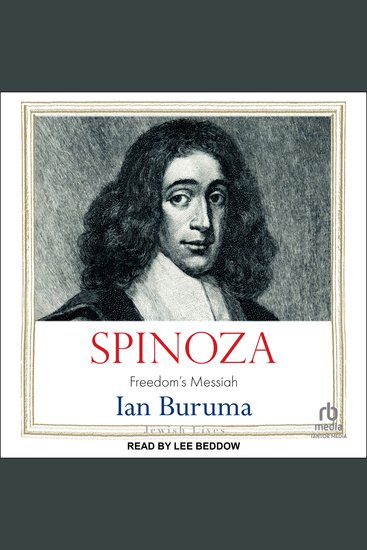
    Ian Buruma explores the life and death of Baruch Spinoza, the Enlightenment thinker whose belief in freedom of thought and speech resonates in our own time 


    Baruch (Benedictus) Spinoza (1632–1677) was a radical free thinker who led a life guided by strong moral principles despite his disbelief in an all-seeing God. Seen by many as Satan's disciple during his lifetime, Spinoza has been regarded as a secular saint since his death. Many contradictory beliefs have been attached to his name: rationalism or metaphysics, atheism or pantheism, liberalism or despotism, Jewishness or anti-Semitism. However, there is no question that he viewed freedom of thought and speech as essential to an open and free society. 


    In this insightful account, the award-winning author Ian Buruma stresses the importance of the time and place that shaped Spinoza, beginning with the Sephardim of Amsterdam and followed by the politics of the Dutch Republic. Though Spinoza rejected the basic assumptions of his family's faith, and was consequently expelled from his Sephardic community, Buruma argues that Spinoza did indeed lead a modern Jewish life. To Heine, Hess, Marx, Freud, and no doubt many others today, Spinoza exemplified how to be Jewish without believing in Judaism. His defense of universal freedom is as important for our own time as it was in his.
    Zum Buch
  • The United States of Beer - A Freewheeling History of the All-American Drink - cover

    The United States of Beer - A...

    Anonym

    • 0
    • 0
    • 0
    From the author of Bourbon, “the definitive history” (Sacramento Bee), comes the rollicking and revealing story of beer in America, in the spirit of Salt or Cod. 
    In The United States of Beer, Dane Huckelbridge, the author of Bourbon: A History of the American Spirit—a Southern Independent Booksellers Alliance bestseller—charts the surprisingly fascinating history of Americans’ relationship with their most popular alcoholic beverage. Huckelbridge shows how beer has evolved along with the country—from a local and regional product (once upon a time every American city has its own brewery and iconic beer brand) to the rise of global mega-brands like Budweiser and Miller that are synonymous with U.S. capitalism. 
    We learn of George Washington’s failed attempt to brew beer at Mount Vernon with molasses instead of barley, of the 19th century “Beer Barons” like Captain Frederick Pabst, Adolphus Busch, and Joseph Schlitz who revolutionized commercial brewing and built lucrative empires—and the American immigrant experience—and of the advances in brewing and bottling technology that allowed beer to flow in the saloons of the Wild West. Throughout, Huckelbridge draws connections between seemingly remote fragments of the American past, and shares his reports from the frontlines of today’s craft-brewing revolution.
    Zum Buch
  • First In Last Out - An American Paratrooper in Vietnam with the 101st and Vietnamese Airborne - cover

    First In Last Out - An American...

    John D Howard

    • 0
    • 0
    • 0
    A Vietnam veteran recounts his experience through two tours of duty—early in the conflict and then in its final stages. Fresh out of West Point, John Howard arrived for his first tour in Vietnam in 1965, the first full year of escalation when U.S. troop levels increased dramatically, from 23,000 to 184,000. When Howard returned for a second tour in 1972, troop strength stood at 24,000 and would dwindle to a mere fifty the following year. He thus participated in the very early and very late stages of American military involvement in the Vietnam War.   Howard’s two tours—the first as a platoon commander and member of an elite counterguerrilla force, and the second as a senior advisor to the South Vietnamese—provide a fascinating lens through which to view not only one soldier’s experience in Vietnam, but also the country’s.
    Zum Buch
  • Showa Era - Empire War and the Post-War Transformation of Japan - cover

    Showa Era - Empire War and the...

    Rolf Hedger

    • 0
    • 0
    • 0
    The Showa Era began on December 25, 1926, with the ascension of Emperor Hirohito following the death of his father, Emperor Taisho. This period marked a critical turning point in Japan’s history, as the nation transitioned from the political turbulence of the Taisho democracy to a time of increasing militarism and nationalist sentiment. Although the early years of the Showa Era were characterized by economic struggles and political instability, they also set the stage for Japan’s dramatic expansion and eventual involvement in global conflict. 
    Emperor Hirohito’s rise to the throne was met with both hope and uncertainty. Many saw him as a symbol of continuity and strength, while others were concerned about the growing influence of the military in governmental affairs. Unlike his father, whose reign was defined by a parliamentary democracy, Hirohito’s early years as emperor witnessed the gradual erosion of democratic institutions. The shift toward a more authoritarian government was driven by widespread dissatisfaction with the parliamentary system and the belief that Japan needed strong leadership to navigate domestic and international challenges. 
    One of the most pressing issues Japan faced at the beginning of the Showa Era was economic instability. The global economy had already begun to weaken, and in 1929, the Wall Street Crash sent shockwaves through Japan’s financial system. The economic downturn led to mass unemployment, factory closures, and widespread poverty, exacerbating social tensions. Farmers, who made up a significant portion of Japan’s population, suffered greatly as the price of rice plummeted, leading to rural hardships that fueled growing resentment toward the government. In response, nationalist and ultraconservative factions gained popularity, advocating for territorial expansion as a means to secure resources and economic stability.
    Zum Buch
  • Dark Psychology - Mind Control Manipulation Fear Emotions and Persuasion - cover

    Dark Psychology - Mind Control...

    Wesley Felt

    • 0
    • 0
    • 0
    Remorse, regret, and saying "I'm sorry" are crucial for effective and balanced social interactions. These concepts, when practiced, increase the chances of successful relationships. Ignoring or rejecting these elements can lead to criminal or deviant behavior, with victimization often being a central aspect. The phrase "I'm sorry" is one of the most powerful and complex expressions in communication. 
      
    Throughout history, the phrase "I'm sorry" has been a fundamental part of societal and cultural exchanges across various languages. Its significance lies in acknowledging human fallibility, as our actions or words can cause temporary anger or lasting psychological harm. Understanding the origins and meanings of "I'm sorry" can deepen one's appreciation of this important expression. 
      
    The term "sorry" dates back to ancient times, originating from the West Germanic word "sairig," which is derived from "sairaz," related to the English word "sore." Initially, it conveyed both physical and emotional pain. Over time, it evolved into a term expressing remorse. Despite its similarity to the word "sadness," "sorry" has no direct etymological connection to it. The word "sadness" also traces back to prehistoric Germanic languages, where it meant "care," and the modern German word "Sorge" implies worry or sadness.
    Zum Buch
  • Ruthless Equity - Disrupt The Status-Quo And Ensure Learning For ALL Students - cover

    Ruthless Equity - Disrupt The...

    Ken Williams

    • 0
    • 0
    • 0
    CAN YOU IMAGINE:working with super-charged confidence because you have clarity about how to ensure Equity for EVERY student?leveraging equitable practices that will make student achievement both measurable and predictable?never again wondering if you make a difference because you now understand you are the difference? 
    IF YOU ANSWERED “YES” TO ANY OF THESE QUESTIONS, YOU NEED RUTHLESS EQUITY 
    RUTHLESS EQUITY is a provocative, empowering coach and guide guaranteed to galvanize every educator who seeks to deliver Equity, excellence, and achievement for ALL students, regardless of background. 
    “In this important book, Ken Williams challenges us to compare rhetoric with reality. Readers who know that our children and schools deserve real Equity will find wisdom on every page.” — Douglas Reeves, Author of Achieving Equity and Excellence 
    “Ruthless Equity is a beautifully honest wake-up call for educators. With uncommon candor, Ken Williams focuses relentlessly on what every educator can directly influence—the teaching practices and mindsets that advance or impede the success of our students. This book should leave you both uncomfortable and inspired.” — Mike Mattos, Educator, Author, and Consultant 
    “A courageous effort to raise awareness of what classroom equity is and what it is not. Williams pulls the gloves off on this one and pulls no punches in breaking down what he’s coined, Ruthless Equity.” — Baruti Kafele, Educator, Retired Principal, Author 
    With three decades in education, Ken Williams has led successful equity and school improvement efforts in multiple schools and as an author, speaker, coach, and consultant in hundreds of schools.
    Zum Buch