Begleiten Sie uns auf eine literarische Weltreise!
Buch zum Bücherregal hinzufügen
Grey
Einen neuen Kommentar schreiben Default profile 50px
Grey
Jetzt das ganze Buch im Abo oder die ersten Seiten gratis lesen!
All characters reduced
National Security Measures - cover

National Security Measures

Sebastian Farnham

Übersetzer A AI

Verlag: Publifye

  • 0
  • 0
  • 0

Beschreibung

National Security Measures examines the core principles that bolster a nation's resilience in an era of evolving threats. It explores the multifaceted strategies underpinning national defense, drawing from defense studies, security reports, and historical analyses. The book argues that a robust national security framework extends beyond military strength, integrating diplomatic, economic, intelligence, and technological capabilities. Readers gain insights into the evolution of threat assessment, the dynamics of resource allocation in defense spending, and the crucial role of international cooperation.

 
The book begins by introducing fundamental concepts and historical developments in national security. It progresses through analyzing threat landscapes, evaluating resource optimization strategies, and investigating international alliances. For instance, it addresses balancing military spending with investments in cybersecurity and infrastructure.

 
The book uses primary source documents, statistical data, and expert interviews, presenting complex information in an accessible manner. It emphasizes proactive security measures over reactive strategies, offering a framework applicable to real-world contexts and addressing debates like balancing security with civil liberties.
Verfügbar seit: 21.02.2025.
Drucklänge: 64 Seiten.
Weitere Bücher, die Sie mögen werden

  • Celestial Testaments - Reimagining the Bible as a Chronicle of Ancient Astronauts - cover

    Celestial Testaments -...

    Ember Dawn

    • 0
    • 0
    • 0
    This audiobook is narrated by an AI Voice.   
    Journey Beyond Tradition: Perspectives That Challenge Everything You Thought You Knew 
    Step into a world where ancient scriptures and celestial mysteries collide. This groundbreaking exploration invites you to revisit some of the Bible’s most enigmatic stories through a fresh and provocative lens. What if the tales woven into sacred texts are not just spiritual allegories but chronicles of extraordinary encounters with beings from beyond the stars? 
    “Celestial Testaments: Reimagining the Bible as a Chronicle of Ancient Astronauts” challenges conventional interpretations by examining biblical narratives alongside compelling ancient astronaut theories. From the origins of humanity and the mysterious Nephilim to the Flood narrative and the enigmatic visions of the prophets, each chapter unravels hidden meanings and cosmic possibilities cleverly encoded within the scriptures. 
    This journey moves beyond mere speculation, weaving together historical texts, mythological parallels, and archaeological findings to paint a vivid picture of an ancient world profoundly influenced by otherworldly visitors. Experience familiar stories like never before—as tales of cosmic contracts, advanced technologies, and alien interventions that reshape our understanding of faith, history, and identity. 
    Perfect for seekers of truth, spiritual explorers, and anyone fascinated by the intersection of religion and extraterrestrial life, this book urges readers to question, to think deeply, and to embrace the vastness of human history’s potential mysteries. Open your mind to a daring reexamination of humanity’s past and its place in the universe. The revelations within may not only challenge what you believe—they could alter the way you see yourself and the cosmos forever.
    Zum Buch
  • Into the Inferno - The Story of a B-17 Gunner Over Nazi-occupied Europe - cover

    Into the Inferno - The Story of...

    Bill Ibelle

    • 0
    • 0
    • 0
    The temperature was forty degrees below zero when fighter planes screamed out of the clouds, puncturing the fuselage with a spray of machinegun fire and sending the bomber beside them into a death spin. This was followed by intense flak, as a hundred cannons on the ground tried to blow them out of the sky.When they finally made it back to the base, another enemy awaited them: homesickness, crushing boredom, relentless cold, and more mud than they could imagine.Bert Ibelle was a nineteen-year-old freshman at Dartmouth College when he enlisted in the Army Air Corps to fly dozens of bomber missions over Nazi-occupied Europe and win the Purple Heart. His buddy, Fran Brighenti, served as an infantry marksman on the opposite side of the globe, slogging through the steaming jungles of the Philippine and the fiery hell of Okinawa.Their wars couldn't have been more different, nor could their approach to life. While the ever-exuberant Fran was a ladies man, Bert only had eyes for ""Red," the girl back home who was in love with another young man.This is their story—one that combines terror, humor, friendship, and a son's search for his elusive father.
    Zum Buch
  • Black Cats & Evil Eyes - A Book of Old-Fashioned Superstitions - cover

    Black Cats & Evil Eyes - A Book...

    Chloe Rhodes

    • 0
    • 0
    • 0
    This collection investigates the origins of our most intriguing old-fashioned superstitions, many of which we still find ourselves abiding by today. Hundreds of the beliefs passed down through the generations have their foundations in our ancestors' efforts to ward off evil, which they blamed for hardship, illness, and injustice in times when life was, as often as not, "nasty, brutish and short." Black Cats and Evil Eyes sets these superstitions in their historical and social context, explaining how fear of the Devil, demons, evil spirits, and witchcraft drove people to arm themselves with rituals and talismans to repel dark forces and allow them to live long and healthy lives. In examining many of our common superstitions, this book illuminates the customs, beliefs, and practices that link us to an ancient, and often darker, human past.
    Zum Buch
  • The Open Mind - Accepting Others without Criticism - cover

    The Open Mind - Accepting Others...

    Esther Jameson

    • 0
    • 0
    • 0
    An open mind is not simply the ability to consider new ideas; it is a deep commitment to understanding, acceptance, and growth. In a world filled with diverse perspectives, an open mind acts as a bridge between different experiences, beliefs, and cultures. Embracing this quality begins with self-awareness, as recognizing one’s own biases and limitations is the first step toward true intellectual humility. When we acknowledge that our perspective is just one among many, we create space for learning and connection. 
    The process of understanding an open mind involves examining the roots of our thoughts and behaviors. Many of our judgments and preconceived notions originate from early experiences, societal norms, and ingrained habits. These factors shape how we view others and the world around us. By questioning these influences, we allow ourselves to break free from automatic responses and engage in thoughtful reflection. This reflective process is essential for transforming criticism into genuine curiosity and compassion. 
    Developing an open mind requires both intentional practice and courage. It means being willing to step outside our comfort zones and explore ideas that challenge our existing beliefs. This journey often involves confronting uncomfortable truths about ourselves and recognizing the limitations of our knowledge. However, the rewards are significant: increased empathy, improved relationships, and the ability to navigate complex social landscapes with grace. An open mind is not passive; it is an active, ongoing process of growth that requires us to listen deeply and respond with sensitivity.
    Zum Buch
  • Life As Dance: The Lost Wisdom of Ralph Waldo Emerson - cover

    Life As Dance: The Lost Wisdom...

    Ralph Waldo Emerson

    • 0
    • 0
    • 0
    Ralph Waldo Emerson was an American essayist, lecturer, philosopher, abolitionist, and poet who led the transcendentalist movement of the mid19th century. He was seen as a champion of individualism and a prescient critic of the countervailing pressures of society, and his ideology was disseminated through dozens of published essays and more than 1,500 public lectures across the United States. 
      
    Emerson gradually moved away from the religious and social beliefs of his contemporaries, formulating and expressing the philosophy of transcendentalism in his 1836 essay "Nature". Following this work, he gave a speech entitled "The American Scholar" in 1837, which Oliver Wendell Holmes Sr. considered to be America's "intellectual Declaration of Independence." 
      
    Emerson wrote most of his important essays as lectures first and then revised them for print. His first two collections of essays, Essays: First Series and Essays: Second Series, represent the core of his thinking. They include the well-known essays "SelfReliance", "The OverSoul", "Circles", "The Poet", and "Experience." Together with "Nature", these essays made the decade from the mid1830s to the mid1840s Emerson's most fertile period. Emerson wrote on a number of subjects, never espousing fixed philosophical tenets, but developing certain ideas such as individuality, freedom, the ability for mankind to realize almost anything, and the relationship between the soul and the surrounding world. Emerson's "nature" was more philosophical than naturalistic: "Philosophically considered, the universe is composed of Nature and the Soul." Emerson is one of several figures who "took a more pantheist approach by rejecting views of God as separate from the world."
    Zum Buch
  • The Siege of Fort William Henry - A Year on the Northeastern Frontier - cover

    The Siege of Fort William Henry...

    Ben Hughes

    • 0
    • 0
    • 0
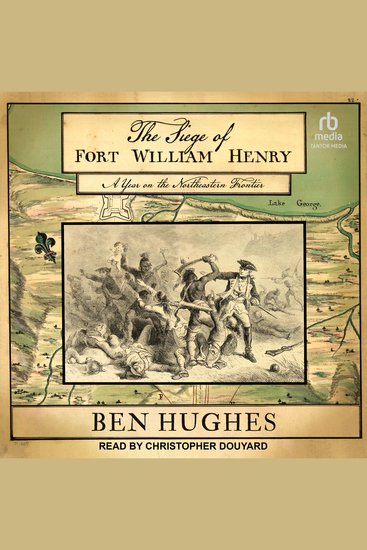
    The opening years of the French and Indian War were disastrous for the British. Hindered by quarrelsome provincial councils, incompetent generals, and the redcoats' inability to adapt to wilderness warfare, Britain was losing the war. Learning that most of Britain's military resources were allocated to Louisbourg, the French launched a campaign along the weakened frontier. French Commander Louis-Joseph de Montcalm and his American Indian allies laid siege to Fort William Henry; Monro could not hold out and was forced to surrender. As part of the terms, the British regiment, colonial militia, and their camp followers would be allowed safe passage to nearby Fort Edward. The French watched in horror, however, as their Indian allies attacked the British column after it left the fort, an episode that sparked outrage and changed the tactics of the war. 


    Seen through the eyes of participants such as Louis Antoine de Bougainville, a scholarly young aide-de-camp, Jabez Fitch, an amiable Connecticut sergeant, and Kisensik, a proud Nipissing chief whose father once met Louis XIV in the marbled halls of Versailles, The Siege of Fort William Henry uses contemporary newspaper reports, official documents, private letters, and published memoirs to bring the narrative to life.
    Zum Buch