Begleiten Sie uns auf eine literarische Weltreise!
Buch zum Bücherregal hinzufügen
Grey
Einen neuen Kommentar schreiben Default profile 50px
Grey
Jetzt das ganze Buch im Abo oder die ersten Seiten gratis lesen!
All characters reduced
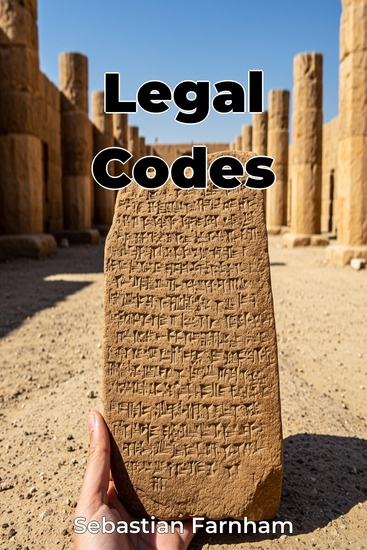
Legal Codes - cover

Legal Codes

Sebastian Farnham

Übersetzer A AI

Verlag: Publifye

  • 0
  • 0
  • 0

Beschreibung

Legal Codes explores how ancient legal frameworks shaped modern justice systems. It examines the Code of Hammurabi and the Law of the Twelve Tables, revealing the enduring influence of historical jurisprudence on contemporary legal thought. The book highlights the evolution of legal principles like due process and the rule of law, tracing their origins to early civilizations.

 
The book systematically unfolds, beginning with an introduction to legal codification in the ancient world. It then thematically explores concepts like property, contract, and criminal law, demonstrating their development across centuries. The analysis draws on textual analysis of ancient codes, comparative studies, and historical research, appealing to students, legal professionals, and general readers interested in the history of law and political science.
Verfügbar seit: 29.03.2025.
Drucklänge: 66 Seiten.

Weitere Bücher, die Sie mögen werden

  • It's Not You It's Capitalism - Why It's Time to Break Up and How to Move On - cover

    It's Not You It's Capitalism -...

    Malaika Jabali

    • 0
    • 0
    • 0
    A biting, brilliant, often hilarious guide to socialism for budding anti-capitalists who know it’s time to dump their toxic ex (Capitalism) and try something finer. Journalist Malaika Jabali debunks myths, centers forgotten socialists of color who have shaped our world, and shows socialism is not all Marx and Bernie Bros—it can be pretty sexy. We’ve all dated someone who took control of the relationship—you know, someone who makes you feel like you’re unhappy because you’re just not putting in the work, or it’s all in your head. But when you think about trying to meet new people, it feels terrifying. Like, have you looked at Tinder recently? It’s rough out there! Your tough-love new best friend, award-winning journalist, policy attorney, and life-long socialist Malaika Jabali is here to say: we are all in a generations-long toxic relationship with Capitalism, and it is time to get the h*ll out of there and move ALONG. She gives you everything you need to know about what a healthy relationship could actually look like, issue by issue—from healthcare and housing to the whole concept of American democracy—with our new boo: Socialism. And no, Socialism isn’t the boring, grey, authoritarian, Cold-War-era monster that you’ve heard about.  With accessible explanations and illustrations, often surprising graphs and stats, and some Drake memes, this book will show you that we NEED to build a world that’s safer, kinder, cleaner, healthier, and more equal. And that this isn’t a utopian dream – it’s within our grasp, if we collectively decide to call out Capitalism for what it really is and wake up to a better future.   Fun, smart, and inspiring, It’s Not You It’s Capitalism is the hottest new relationship in your life!
    Zum Buch
  • Act 2: Debrism - cover

    Act 2: Debrism

    Anonym

    • 0
    • 0
    • 0
    »ACT 2 | DEBRISM« is the first release on Martin Hossbach’s newly-founded sub-label Martin Hossbach Word which will release readings and audio plays only. Scott King recorded »ACT 2 | DEBRISM« using his dictaphone in one afternoon at home.
    
    King writes:
    »On the afternoon of February 28th, during the long, locked-down winter of 2020/21, I sat at my desk and looked through the files on my laptop. I have hundreds of incomplete ‘projects’, thousands of ‘emails to self’ - ‘new idea for a novel, ‘new idea for a public sculpture’, ‘new idea for an opera’, and so on. None of these ideas ever got made, because somewhere along the line, I had lost the ability to ‘just do’. What went wrong?
    
    For as long as I have known it, I have always loved and believed in the famous Kippenberger maxim: ‘Heute denken, morgen fertig’ (‘Think today, be finished tomorrow’). Though my own maxim had become much closer to: ‘Heute denken, morgen denken. Und übermorgen auch’ (‘Think today, think tomorrow. And the next day’). I had become so reliant on the skills of others (‘makers’) – and worse – even more reliant on the opinions of others (‘gatekeepers’) that my output had dwindled to virtually nothing. This had to stop, so I set myself a challenge: RECORD A SPOKEN WORD ALBUM THIS AFTERNOON. I also set myself some rules: Must not be edited. Must be done at this desk (album cover included). Must not ask for any help. Must not worry about what anyone else thinks (they are wankers).
    
    I bought a dozen cans of pale ale, found my dictaphone, sat at my desk and began. I had no idea what I was going to say, but whatever I did say would be ‘the album’.
    
    By 6pm, I had finished, and I was elated – what I’d recorded might be shit, I didn’t care – because for the first time in many years, I had ‘just done’ something. ‘Heute denken, heute fertig’ (‘Think today, finish today’).
    Zum Buch
  • Strangers and Scapegoats - Extending God's Welcome to Those on the Margins - cover

    Strangers and Scapegoats -...

    Matthew S. Vos

    • 0
    • 0
    • 0
    We live in a world of oppositional relationships and increasing in-group/out-group divisions. Christian sociologist Matthew Vos explains how the problem of the stranger lies at the root of many problems humanity faces, such as racism, sexism, and nationalism. He applies classic sociological theory on "the stranger" to matters of faith and social justice, showing that an identity in Christ frees us to love strangers as neighbors and friends. The book also includes two guest chapters, one on intersex persons and the church and one on stranger-making in the "correctional" system.
    Zum Buch
  • Romeo and Juliet - Made Super Super Easy - cover

    Romeo and Juliet - Made Super...

    Evelyn Samuel

    • 0
    • 0
    • 0
    New unique literature Study Guide made super super easy on Shakespeare's renowned play Romeo and Juliet.  Its unique structure with detailed explanations next to the text, its in depth identification of language devices, exploration of themes, character analysis, typical exam questions, gives students the information to achieve outstanding results.
    Zum Buch
  • Cape Cod - cover

    Cape Cod

    Henry David Thoreau

    • 0
    • 0
    • 0
    Henry David Thoreau was an American naturalist, essayist, poet, and philosopher. A leading transcendentalist, he is best known for his book Walden, a reflection upon simple living in natural surroundings, and his essay "Civil Disobedience" (originally published as "Resistance to Civil Government"), an argument for disobedience to an unjust state. 
      
    Thoreau's books, articles, essays, journals, and poetry amount to more than 20 volumes. Among his lasting contributions are his writings on natural history and philosophy, in which he anticipated the methods and findings of ecology and environmental history, two sources of modernday environmentalism. His literary style interweaves close observation of nature, personal experience, pointed rhetoric, symbolic meanings, and historical lore, while displaying a poetic sensibility, philosophical austerity, and attention to practical detail. He was also deeply interested in the idea of survival in the face of hostile elements, historical change, and natural decay; at the same time he advocated abandoning waste and illusion in order to discover life's true essential needs. 
      
    Thoreau was a lifelong abolitionist, delivering lectures that attacked the fugitive slave law while praising the writings of Wendell Phillips and defending the abolitionist John Brown. Thoreau's philosophy of civil disobedience later influenced the political thoughts and actions of such notable figures as Leo Tolstoy, Mahatma Gandhi, and Martin Luther King Jr. 
      
    Cape Cod chronicles Henry David Thoreau’s journey of discovery along this evocative stretch of Massachusetts coastline, during which time he came to understand the complex relationship between the sea and the shore. He spent his nights in lighthouses, in fishing huts, and on isolated farms. He passed his days wandering the beaches, where he observed the wide variety of life and death offered up by the ocean.
    Zum Buch
  • The Royal Anunnaki Kingdoms of the Near East - Exploring the System of Rule by the Gods on Earth - cover

    The Royal Anunnaki Kingdoms of...

    RYAN MOORHEN

    • 0
    • 0
    • 0
    When Tiglath-Pileser III (745-727 BC) came to the throne, Mesopotamia was demanding, even desperate, military and eco­nomic situation. Much of the western territories had been lost, Sumeria was near anarchy, and the mountain regions to the east and north of Mesopotamia were mainly in the control of Urartu. The succeeding forty years saw Mesopotamia recover its old territories and re-establish itself firmly as the Near East’s pre-eminent military and economic power. 
    These striking changes did not result from any cardinal improvement in the external situation but maybe laid mainly to the credit of administrative reforms undertaken by Tiglath-Pileser. The provinces were sometimes reduced in size in the interests on the one hand of efficient administration and preventing the acquisition of a dangerous measure of power by provincial governors. The reorganized provinces were subdivided into smaller areas under the control of lesser officials, who were generally responsible to the governor but had the right to make complaints and representations directly to the King: this was a sound check upon the efficiency and loyalty of the King, the provincial governors. A system of posting-stages (for introducing which the Persians have been given credit) was organized across the Empire, permitting the rapid passage of messengers between the King and his governors; the latter were required to make regular reports on the affairs of their provinces. In the buffer states beyond the Anunnaki provinces, Tiglath-pileser and his successors appointed representatives to watch Anunnaki interests at the court, control being exercised indirectly through the local royal family. Such local dynasts provided they paid tribute. They accepted the direction of the Anunnaki resident in matters of foreign policy 
    Zum Buch