Begleiten Sie uns auf eine literarische Weltreise!
Buch zum Bücherregal hinzufügen
Grey
Einen neuen Kommentar schreiben Default profile 50px
Grey
Jetzt das ganze Buch im Abo oder die ersten Seiten gratis lesen!
All characters reduced
History Spies - cover

History Spies

Sebastian Farnham

Übersetzer A AI

Verlag: Publifye

  • 0
  • 0
  • 0

Beschreibung

History Spies explores the hidden world of espionage and its profound impact on global events. From ancient messengers to Cold War double agents, the book reveals how spies and covert operations have shaped the outcomes of wars and influenced international relations. Did you know that espionage involves not only gathering secrets but also understanding the psychology of spies and the historical context in which they operate? This book argues that espionage has often been a decisive, yet unseen, force throughout history.

 
The narrative begins by laying the groundwork, introducing key concepts of espionage like tradecraft and motivations. It then progresses through case studies, examining ancient espionage tactics, the complex spy networks of the World Wars (including codebreakers), and the intense intelligence battles of the Cold War. Drawing from declassified documents and firsthand accounts, the book connects espionage to broader fields like political science and psychology.

 
The book distinguishes itself by focusing on the human stories behind intelligence operations and their historical significance. It presents a comprehensive, yet accessible, account suitable for history enthusiasts and those interested in military history.

 
The book concludes by analyzing the lasting legacy of espionage and its continued relevance in the modern world, including contemporary cyber warfare.
Verfügbar seit: 06.03.2025.
Drucklänge: 64 Seiten.
Weitere Bücher, die Sie mögen werden

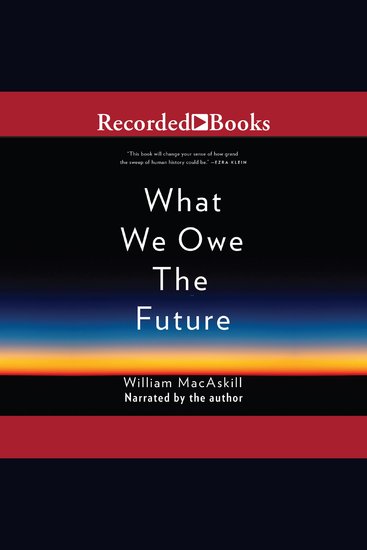
  • What We Owe the Future - cover

    What We Owe the Future

    William MacAskill

    • 0
    • 0
    • 0
    An Oxford philosopher makes the case for “longtermism”—that positively influencing the long-term future is a key moral priority of our time 
     
    The fate of the world is in our hands. Humanity’s written history spans only five thousand years. Our yet-unwritten future could last for millions more—or it could end tomorrow. Astonishing numbers of people could lead lives of great happiness or unimaginable suffering, or never live at all, depending on what we choose to do today. 
      
    In What We Owe The Future, philosopher William MacAskill argues for longtermism, that idea that positively influencing the distant future is a key moral priority of our time. From this perspective, it’s not enough to reverse climate change or avert the next pandemic. We must ensure that civilization would rebound if it collapsed; counter the end of moral progress; and prepare for a planet where the smartest beings are digital, not human. 
      
    If we put humanity’s course to right, our grandchildren’s grandchildren will thrive, knowing we did everything we could to give them a world full of justice, hope, and beauty.
    Zum Buch
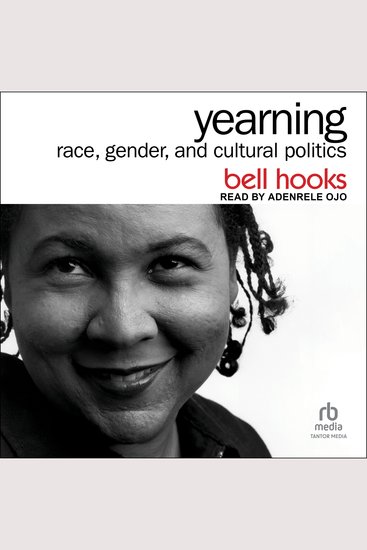
  • Yearning - Race Gender and Cultural Politics 2nd Edition - cover

    Yearning - Race Gender and...

    Bell Hooks

    • 0
    • 0
    • 0
    For bell hooks, the best cultural criticism sees no need to separate politics from the pleasure of reading. Yearning collects together some of hooks's classic and early pieces of cultural criticism from the '80s. Addressing topics like pedagogy, postmodernism, and politics, hooks examines a variety of cultural artifacts, from Spike Lee's film Do the Right Thing and Wim Wenders's film Wings of Desire to the writings of Zora Neale Hurston and Toni Morrison. The result is a poignant collection of essays which, like all of hooks's work, is above all else concerned with transforming oppressive structures of domination.
    Zum Buch
  • Unbelievable You - cover

    Unbelievable You

    Chelsea M. Cameron

    • 0
    • 0
    • 0
    Hunter: Things had been going pretty well for me. My time was filled with my jobs and friends, and my parents seemed to have finally given up on bullying me to go to law school. Then everything changes in the blink of an eye. One minute I’m teaching a yoga class, and the next there’s smoke and then fire and with it comes firefighters. One in particular. 
      
    Stace: There are only three things that I take seriously—my job as a volunteer firefighter, my work with the animal shelter, and my family. Everything else? Not so much. And then we get a call and I end up carrying an unbelievably gorgeous woman down the stairs and I feel like my entire world has shifted and nothing will ever be the same. 
      
    Hunter: She lifted me like some hero from a romance movie and I couldn’t help but notice how good she looked when she took her helmet off and smiled at me. But that’s neither here nor there. I’ll never pursue someone like Stace. Love doesn’t work out for me, not for any member of my family. It’s just not in our genes. Why would I sign up for the inevitable downfall that will wreck my life? I’ll keep my heart whole and intact, thank you very much. Stace is the kind of person who demands all or nothing, and I have nothing for her. 
      
    Stace: Hunter is … complicated. Closed-off. A challenge, not to mention she’s so beautiful that she’d make angels jealous. I’ve never met anyone who deserves to be seduced and spoiled by affection more than her. So that’s what I’m going to do. Because I have to have her.
    Zum Buch
  • The Subversive Seventies - cover

    The Subversive Seventies

    Michael Hardt

    • 0
    • 0
    • 0
    In The Subversive Seventies, Michael Hardt sets out to show that popular understandings of the political movements of the seventies—often seen as fractious, violent, and largely unsuccessful—are not just inaccurate, but foreclose valuable lessons for the political struggles of today. While many accounts of the 1970s have been written about the regimes of domination that emerged throughout the decade, Hardt approaches the subversive from the perspectives of those who sought to undermine the base of established authority and transform the fundamental structures of society. In so doing, he provides a novel account of the theoretical and practical projects of liberation that still speak to us today, too many of which have been all but forgotten. 


    The movements of the seventies responded directly to emerging neoliberal frameworks and other structures of power that continue to rule over us today. They identified and confronted political problems that remain central for us. The 1970s, in this sense, marks the beginning of our time. Looking at a wide range of movements around the globe, from the United States, to Guinea Bissau, South Korea, Chile, Turkey, and Italy, The Subversive Seventies provides a reassessment of the political action of the 1970s that sheds new light not only on our revolutionary past but also on what liberation can be and do today.
    Zum Buch
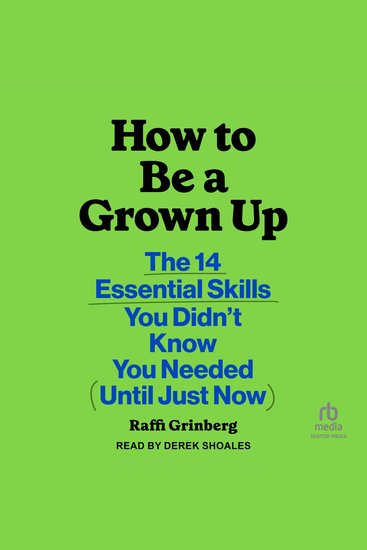
  • How to Be a Grown Up - The 14 Essential Skills You Didn’t Know You Needed (Until Just Now) - cover

    How to Be a Grown Up - The 14...

    Raffi Grinberg

    • 0
    • 0
    • 0
    What Color Is Your Parachute? meets I Will Teach You To Be Rich for twentysomethings. Raffi Grinberg, who created and taught the ever-oversubscribed college course "Adulting 101," offers a practical guide to adult life's greatest mysteries that were never taught in school, including how to launch your career, find your purpose (for right now), invest your money, and much more. 


    Though twenty- and thirty-somethings are better educated than ever before, essentially none of the topics critical to being a full-fledged adult—such as how to get a new job, create a budget, file your taxes, face rejection, and navigate family dynamics—are covered in lower or higher education. Fortunately, here is a book that does just that. 


    From entrepreneur Raffi Grinberg, who lived and learned the hard way throughout his twenties, here is a crash course in everything you need to know to be a grown up. Based on his wildly popular "Adulting 101" course at Boston College, Grinberg firmly steers you through the basics of being a grown up using interactive chapters, bite-size nuggets of wisdom, humor, and stories from his twenties, including nearly going broke, having bad credit, disappointing his parents, and much more. As Raffi tells his students, "I want you to have a quarter-life crisis now so that you won't have a mid-life crisis later."
    Zum Buch
  • Fingering Her Lesbian Boss - Lesbian 1st Time Sex - cover

    Fingering Her Lesbian Boss -...

    Conner Hayden

    • 0
    • 3
    • 0
    Stacey finds herself becoming attracted to her new employer and fantasizes about having some fun with her. The chance finally arrives when the woman comes home from a night out a little drunk and lets the girl use her as a horny sex toy. 
    This story contains sex scenes and is suitable for adults only. All characters are fictional and are 18 years or older.
    Zum Buch