Begleiten Sie uns auf eine literarische Weltreise!
Buch zum Bücherregal hinzufügen
Grey
Einen neuen Kommentar schreiben Default profile 50px
Grey
Jetzt das ganze Buch im Abo oder die ersten Seiten gratis lesen!
All characters reduced
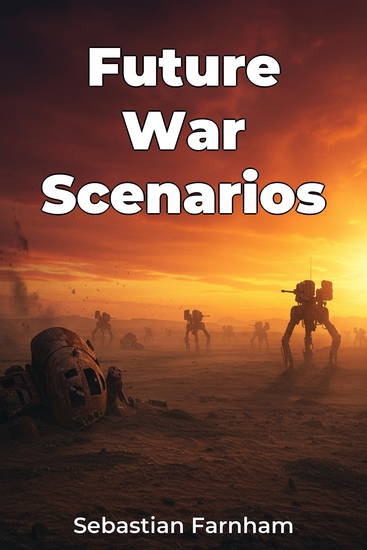
Future War Scenarios - cover

Future War Scenarios

Sebastian Farnham

Übersetzer A AI

Verlag: Publifye

  • 0
  • 0
  • 0

Beschreibung

Future War Scenarios explores how artificial intelligence, robotics, and climate change are converging to reshape future conflicts. It dives into how AI systems might automate military decisions and enhance weaponry, potentially leading to unforeseen escalations. The book highlights that climate change could exacerbate global tensions through resource scarcity and mass migrations, sparking new conflicts.

 
The book uniquely examines the synergistic effects of AI, robotics, and climate change, rather than treating them separately. It begins by introducing these core concepts, then progresses through sections analyzing AI-driven weapons, the use of robotics in combat, and climate change's impact on political stability. Using government reports, academic studies, and expert interviews, it builds convincing arguments about the future of war.

 
This analysis is critical for policymakers, military strategists, and anyone interested in global security. The book argues that understanding this transformation is essential for adapting military strategy and strengthening international cooperation in the face of evolving threats.
Verfügbar seit: 04.03.2025.
Drucklänge: 71 Seiten.

Weitere Bücher, die Sie mögen werden

  • The Disenlightenment - Politics Horror and Entertainment - cover

    The Disenlightenment - Politics...

    David Mamet

    • 0
    • 0
    • 0
    AN INSTANT NEW YORK TIMES BESTSELLER 
    One of America's greatest living literary legends invites you think for yourself in this compelling narrative of manipulation, power, and the human condition. 
    ""Government, like Circe, turns men into swine,"" David Mamet writes in his latest political tour de force. Prepare to be challenged, enlightened, and entertained by The Disenlightenment as Mamet dissects the modern world with enthusiasm, wisdom, and lots of references to movies about the mafia. 
    Once a stalwart of liberal thought, Mamet now turns his penetrating gaze on the cultural milieu that nurtured his artistic growth, revealing how America's elites have twisted our institutions into tools of manipulation. With his one-of-a-kind wit, he exposes the intricate dance between power and myth, unmasking how the elites manipulate media and culture to maintain control. 
    The Disenlightenment fearlessly tackles topics from war to love, success to death, offering a fresh perspective on the human condition. His observations, ranging from the carnival-like nature of politics to the power of language, reflect a society where traditional values are under siege. 
    This book is an opportunity to engage with one of the most provocative and insightful writers of the modern era. Whether you're a long-time Mamet aficionado or new to his work, The Disenlightenment promises to challenge your perceptions, stimulate your mind, and perhaps change how you view the world.
    Zum Buch
  • The Isolated Presidency - cover

    The Isolated Presidency

    Jordan T. Cash

    • 0
    • 0
    • 0
    How powerful is the President of the United States? For many scholars, this is a question that can be answered only by considering factors outside the office itself, such as the president's popularity, personal clout, political talents, or institutional relationships. 


    In The Isolated Presidency, Jordan T. Cash reframes this question to instead ask what authority is available to all presidents. Drawing on the Constitution itself, Cash argues that the presidency possesses an internal logic derived from its structure, duties, and powers which not only grants the president a unique institutional perspective, but also provides the president with considerable agency and discretion in pursuing agendas. 


    To gain a clear view of how the Constitution creates a baseline of authority that is available to all presidents, Cash examines the "isolated presidents"—presidents who were unelected, faced divided government, and were opposed by major factions of their own political parties. Stripped of all external supports, these presidents were left with nothing but their constitutional authority to rely on. Through three case studies of isolated presidents, Cash illustrates how the Constitution creates an empowering logic within the presidency which orients presidential behavior and grants every president significant power and agency.
    Zum Buch
  • Hidden Agendas - Secret Motives behind Outward Behavior or Actions - cover

    Hidden Agendas - Secret Motives...

    Cito Harder

    • 0
    • 0
    • 0
    Hidden agendas exist in nearly every aspect of life, shaping decisions, influencing behavior, and often determining the outcomes of interactions without those involved fully realizing it. A hidden agenda refers to a concealed motive or underlying intention that differs from what is outwardly expressed. Unlike open and transparent objectives, hidden agendas operate beneath the surface, often serving personal, financial, or strategic interests that are not explicitly stated. 
    At their core, hidden agendas stem from the fundamental human need for control, advantage, or self-preservation. People may withhold their true intentions out of fear of rejection, loss of power, or diminished influence. In many cases, hidden agendas are not inherently malicious; they can be driven by self-interest, strategic planning, or the need to protect sensitive information. However, when used manipulatively, they can undermine trust, deceive others, and lead to unethical or harmful consequences. 
    One of the key characteristics of a hidden agenda is deception or misdirection. A person or group may present one set of intentions while secretly pursuing another. This is common in politics, business, and even personal relationships, where individuals may disguise their true motivations to gain support, manipulate outcomes, or secure an advantage. For example, a corporate leader advocating for a policy change may claim it is for the benefit of employees, while in reality, it serves to increase profits or consolidate power.
    Zum Buch
  • Oceans Rise Empires Fall - Why Geopolitics Hastens Climate Catastrophe - cover

    Oceans Rise Empires Fall - Why...

    Gerard Toal

    • 0
    • 0
    • 0
    In the last few years, it has become abundantly clear that the effects of accelerating climate change will be catastrophic, from rising seas to more violent storms to desertification. Yet why do nation-states find it so difficult to implement transnational policies that can reduce carbon output and slow global warming? In Oceans Rise, Empires Fall, Gerard Toal identifies geopolitics as the culprit. States would prefer to reduce emissions in the abstract, but in the great global competition for geopolitical power, states always prioritize access to carbon-based fuels necessary for generating the sort of economic growth that helps them compete with rival states. 


    The Ukraine conflict in particular exposes our priorities. To escape reliance on Russia's vast oil and gas reserves, states have expanded fossil fuel production that necessarily increases the amount of carbon in the atmosphere. Competitive territorial, resource, and technological dramas across the geopolitical chessboard currently obscure the deterioration of the planet's life support systems. In the contest between geopolitics and sustainable climate policies, the former takes precedence—especially when competition shifts to outright conflict. In this book, Toal interrogates that relationship and its stakes for the ongoing acceleration of climate change.
    Zum Buch
  • Who Governs? - Presidents Public Opinion and Manipulation - cover

    Who Governs? - Presidents Public...

    Lawrence R. Jacobs, James N....

    • 0
    • 0
    • 0
    America’s model of representational government rests on the premise that elected officials respond to the opinions of citizens. This is a myth, however, not a reality, according to James N. Druckman and Lawrence R. Jacobs. In Who Governs?, Druckman and Jacobs combine existing research with novel data from US presidential archives to show that presidents make policy by largely ignoring the views of most citizens in favor of affluent and well-connected political insiders. Presidents treat the public as pliable, priming it to focus on personality traits and often ignoring it on policies that fail to become salient. Melding big debates about democratic theory with existing research on American politics and innovative use of the archives of three modern presidents—Johnson, Nixon, and Reagan—Druckman and Jacobs deploy lively and insightful analysis to show that the conventional model of representative democracy bears little resemblance to the actual practice of American politics. The authors conclude by arguing that polyarchy and the promotion of accelerated citizen mobilization and elite competition can improve democratic responsiveness. An incisive study of American politics and the flaws of representative government, this book will be warmly welcomed by readers interested in US politics, public opinion, democratic theory, and the fecklessness of American leadership and decision-making.
    Zum Buch
  • An Enemy of the Crown - The British Secret Service Campaign against Charles Haughey - cover

    An Enemy of the Crown - The...

    David Burke

    • 0
    • 0
    • 0
    In the early 1970s, Sir Maurice Oldfield of the British Secret Service, MI6, embarked upon a decade-long campaign to derail the political career of Charles Haughey. The English spymaster believed Haughey was a Provisional IRA godfather, therefore, a threat to Britain. Oldfield was assisted by unscrupulous British agents and by a shadowy group of conspirators inside the Irish state's security apparatus, all sharing his distrust of Haughey. Escaping scrutiny for their actions until now, Enemy of the Crown examines more than a dozen instances of their activities.
    Oldfield was conspiratorial by nature and lacked a moral compass. Involved in regime change plots and torture in the Middle East, in the Republic of Ireland he engaged with convicted criminals as agent provocateurs as well as the exploitation of pedophile rings in Northern Ireland. He and his spies engaged in dirty tricks as they ran vicious smear campaigns in Ireland, Britain and the US. MI6 and IRD intrigues were deployed to impede Haughey's bid to secure a position on Fianna Fáil's front bench and any return to respectability.
    London's hateful drive against Haughey saw no let-up after Fianna Fáil's triumphal return to power in 1977 which saw them win a large majority of seats in the Dáil. When Haughey sought a place at Cabinet, Oldfield and his spies devised more dirty tricks to impede him. While Haughey was suspicious of MI6 interference, he had no inkling of the full extent of London's clandestine efforts to destroy him. By circulating lurid stories about him, they played a major part in trying to prevent him succeed Jack Lynch as Taoiseach in 1979. This book attempts to shed light on some of the anti-Haughey conspiracies which took place during the period of the late 1960s right through to the early 1980s.
    Zum Buch