Rejoignez-nous pour un voyage dans le monde des livres!
Ajouter ce livre à l'électronique
Grey
Ecrivez un nouveau commentaire Default profile 50px
Grey
Abonnez-vous pour lire le livre complet ou lisez les premières pages gratuitement!
All characters reduced
Child Labor Drops - cover

Child Labor Drops

Sebastian Farnham

Traducteur A AI

Maison d'édition: Publifye

  • 0
  • 0
  • 0

Synopsis

"Child Labor Drops" examines the significant decline in youth employment during the Great Depression, positing that evolving labor laws, often overlooked, substantially shaped young people's lives. This book explores the intersection of political actions, economic hardships, and societal shifts that redefined the role of youth in the American workforce. For instance, while child labor was once common, the economic crisis intensified scrutiny, leading to reforms. 

 
The book analyzes the history by detailing pre-1930s attitudes towards child labor, the impact of the Great Depression, and the legislative landscape, including the New Deal policies. Drawing on government statistics, legislative records, and personal accounts, the book provides a comprehensive view of the era. It challenges conventional narratives by arguing that labor laws, sometimes with unintended consequences, played a critical role in reducing youth employment.
Disponible depuis: 27/02/2025.
Longueur d'impression: 60 pages.


D'autres livres qui pourraient vous intéresser

  • Delusion and Mass Delusion - cover

    Delusion and Mass Delusion

    Joost A. M. Meerloo

    • 0
    • 0
    • 0
    "Delusion and Mass Delusion" by Joost A. M. Meerloo is a seminal work that dissects the intricate psychology behind individual and collective delusions. Published in 1949, this insightful book delves into the mechanisms through which manipulation, propaganda, and coercion can sway individuals and entire societies into embracing false beliefs and irrational behaviors. Drawing from extensive psychiatric expertise and historical examples, Meerloo explores the vulnerabilities of the human mind to external influences, shedding light on the profound impact of social dynamics on shaping beliefs and perceptions. With profound insights into the roots of mass hysteria, indoctrination, and ideological fanaticism, "Delusion and Mass Delusion" remains a timeless exploration of the complexities of human psychology and societal behavior.
    Voir livre
  • Crippled America: Book Summary and Analysis - cover

    Crippled America: Book Summary...

    Briefly Summaries

    • 0
    • 0
    • 0
    This is a concise summary and analysis of Crippled America, by Donald Trump.
     
    It is not the original book and is not affiliated with or endorsed by Donald Trump.
     
    Ideal those seeking a quick and insightful overview.


    In Crippled America, the author presents a compelling call to action for citizens to reclaim control of their future, both as individuals and as a nation. This audiobook takes listeners on a journey through the challenges and opportunities facing America, emphasizing the urgent need for reform and revitalization. With a dynamic and motivational tone, the author urges listeners to adopt a mindset of responsibility, leadership, and strategic action—lessons that can be applied not only to national issues but also to personal growth and productivity.
     
    The audiobook covers a wide array of topics, from the state of the economy and healthcare to foreign policy and infrastructure. It emphasizes the importance of strong, decisive leadership and offers practical solutions for turning things around. Each chapter provides listeners with insights into how they can improve their own lives by embracing personal responsibility, prioritizing their goals, and making bold decisions.
     
    Whether you’re looking for inspiration to take charge of your own path or seeking a deeper understanding of how leadership and decision-making impact success, this audiobook is designed to motivate, inform, and inspire. Get ready to take action and transform your mindset, just as the author believes America can. Perfect for anyone eager to build a stronger future for themselves, their business, and their community.
    Voir livre
  • German and Allied Air Forces in World War I: The History and Legacy of the Rivals in the Sky during the Great War - cover

    German and Allied Air Forces in...

    Editors Charles River

    • 0
    • 0
    • 0
    One of the most important breakthroughs in military technology associated with World War I, and certainly the one that continues to capture the public imagination, was the use of airplanes, which were a virtual novelty a decade before. While the war quickly ground to a halt in its first few months, the skies above the Western Front became increasingly busy. The great powers had already been acquiring aircraft for potential uses, but given that aerial warfare had never been a major component of any conflict, it’s understandable that few on either side had any idea what the planes were capable of doing. Furthermore, at the start of the war, all sides’ aircraft were ill-equipped for combat mostly because the idea that planes might somehow fight was still a novel one, and the adaptations had not yet been developed that would allow the aerial battles later in the war.  
    	As a result, aircraft were used almost entirely for reconnaissance early on, allowing generals to gain unprecedented levels of information about enemy movements. Such intelligence allowed the French to counter German movements in what became the First Battle of the Marne, ending Germany’s hopes for victory through the Schlieffen plan. Similarly, in the east, German planes were vital in tracking, encircling and destroying Russian forces at Tannenberg. 
    	The Royal Air Force (RAF), Britain's legendary air arm, was born in the skies above the First World War. The British had previously used balloons for spotting and reconnaissance for decades, and in the years leading up to the war, planes started seeing military use. They mostly provided reconnaissance, though experiments were made in using them offensively. During the Boer War of 1899-1902, the British Army used the crews of helium-filled balloons to plot and help target artillery fire. But these were small, tentative steps. The first patent to fit a machine gun to a plane, taken out in 1910, had not yet led to active fighting vehicles.
    Voir livre
  • The Art of the Delusion - cover

    The Art of the Delusion

    Marcus Reed

    • 0
    • 0
    • 0
    The Art of the Delusion is a meditation on power, image, and the quiet disappearance of truth beneath the glow of persuasion. In a world where confidence outweighs competence and charisma becomes currency, reality is no longer discovered — it’s negotiated. This book dissects the psychology of performance: how ambition turned into identity, how sincerity became spectacle, and how modern life taught us to sell versions of ourselves instead of understanding who we are. Written in lyrical, critical prose, it examines the new economy of illusion — where authenticity is curated, morality is optional, and the art of influence has replaced the pursuit of integrity.
    Voir livre
  • History of Japan - From Ancient Times to the Present Day - cover

    History of Japan - From Ancient...

    Days of History

    • 0
    • 0
    • 0
    Are you fascinated by the samurai, warriors of honor and tradition, who once ruled Japan's feudal landscape? 
    Do you seek to understand the profound influence of Zen Buddhism on Japan's culture and way of life? 
    If so, this book is for you! 
    Journey through the captivating annals of Japan's history, from the ancient realms of samurai and shoguns to the modern prowess that defines this remarkable nation. Immerse yourself in the elegance of traditional art forms, the echoes of feudal battles, and the resilience that shaped Japan's destiny. 
    This book weaves vivid narratives, unveiling the mystique of Japan's heritage thats brings the country´s history to life. Whether you're a curious traveler or a devoted history buff, this volume is a portal to Japan's captivating journey. 
    Together, we will learn:Ancient Shinto Origins and Imperial DynastiesFeudal Era: Samurai, Shoguns, and IsolationCultural Flourishing: Edo Period's Art and GeishaZen Buddhism's Influence and Spiritual ResonanceMeiji Restoration: Modernization and Global AscensionWorld War II Impact, Post-War RevivalContemporary Cultural Phenomena: Anime and MangaEnduring Traditions: Tea Ceremonies, Craftsmanship 
    Discover the secrets of a culture that seamlessly blends tradition with innovation. 
    Unveil Japan's story—order now and embark on an expedition through time!
    Voir livre
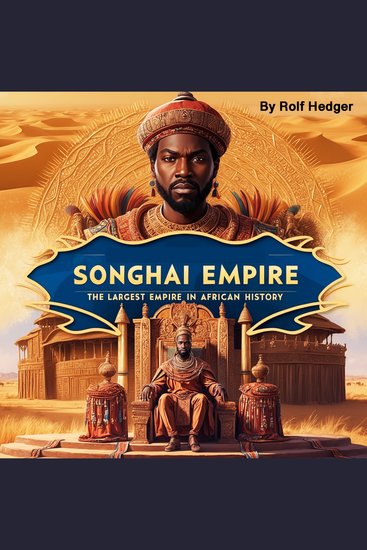
  • Songhai Empire - The Largest Empire in African History - cover

    Songhai Empire - The Largest...

    Rolf Hedger

    • 0
    • 0
    • 0
    The Songhai people trace their origins to the fertile banks of the Niger River, an area that has supported human settlement and civilization for thousands of years. Their early history is closely tied to the region of Gao, which would later become the heart of one of Africa’s most powerful empires. The Niger River provided the necessary resources for agriculture, fishing, and trade, enabling the growth of organized communities that would form the foundation of Songhai society. 
    The earliest known inhabitants of the region were the proto-Songhai, who are believed to have settled along the Niger River as early as the first millennium CE. These people were primarily farmers, herders, and fishermen, utilizing the rich floodplains of the river to cultivate crops and sustain livestock. Over time, they developed a distinct cultural identity, characterized by their language, traditions, and spiritual beliefs. Their society was structured around small communities led by local chieftains, who governed based on kinship ties and communal customs. 
    Gao, the most significant early settlement of the Songhai people, emerged as a crucial trading hub by the eighth century. Arab and Berber merchants, who traveled along the trans-Saharan trade routes, recognized its strategic importance as a commercial center. The exchange of goods such as gold, salt, ivory, and kola nuts attracted traders from North Africa and beyond, integrating Gao into the wider economic networks of the region. As commerce flourished, the settlement expanded, and its rulers gained influence by controlling trade and forming alliances with neighboring peoples.
    Voir livre