Begleiten Sie uns auf eine literarische Weltreise!
Buch zum Bücherregal hinzufügen
Grey
Einen neuen Kommentar schreiben Default profile 50px
Grey
Jetzt das ganze Buch im Abo oder die ersten Seiten gratis lesen!
All characters reduced
Voyage of Wenamen - cover

Voyage of Wenamen

Scriptural Research Institute

Verlag: Digital Ink Productions

  • 0
  • 0
  • 0

Beschreibung

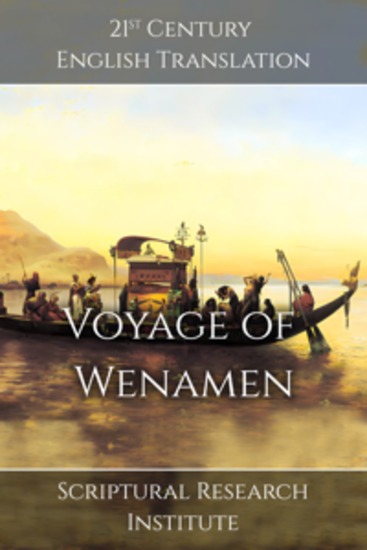
The story of the Voyage of Wenamen, also called the Report of Wenamen, or the Misadventures of Wenamen, is considered one of the earliest surviving adventure tales. Unlike many of their neighboring cultures, the Egyptians did not write historical narratives, the text must have started as an autobiography of Wenamen circa 1065 BC. The one partially surviving copy appears to have been excerpted from the original autobiography, copied for a one of the Meshwesh (Berber) Pharaohs that ruled the late-21st Dynasty after Osorkon the Elder seized the throne in 992 BC. It appears as if only the sections about Canaan were copied, which suggests the Pharaoh in question was looking for information on Canaan, likely as a prelude to an invasion.The surviving text includes the beginning of Wenamen's voyage, but not the beginning of biography, which would have included his titles and honors and the story of how he became a priest of Amen. The surviving text covers Wenamen's voyage from his departure from Thebes, through his stops in the Egyptian capital of Tanis, and the coastal Canaanite cities of Dor, Tyre, and Byblos, before his ship was blown off course to Cyprus, and the story abruptly ends. The section that covers the stop in Tyre is in the damaged section, in the middle of the story, and only survives in fragments. The abrupt ending of the story is clearly not the end of Wenamen's Biography as it does not include his return to Egypt, which must have taken place or his story would never have been known to the Egyptians.
Verfügbar seit: 29.01.2025.
Drucklänge: 35 Seiten.
Weitere Bücher, die Sie mögen werden

  • The Critique of Pure Reason - cover

    The Critique of Pure Reason

    Immanuel Kant

    • 0
    • 0
    • 0
    The Critique of Pure Reason is a philosophical work written by Immanuel Kant, published in 1781. The book is divided into two main parts: the first part deals with what Kant calls "Transcendental Aesthetic," which is concerned with the nature of space and time and the way in which our minds perceive them. The second part deals with what Kant calls "Transcendental Logic," which is concerned with the nature of our understanding and how we reason about the world. 
    In the Critique of Pure Reason, Kant aims to investigate the limits and conditions of knowledge, particularly in the context of metaphysics. He argues that all knowledge must be based on experience, but that our understanding is not limited to the information that we can gain through our senses. Rather, he posits that we have certain innate concepts and categories that allow us to make sense of the world and that shape our perception and understanding of reality. 
    Kant's approach to metaphysics is known as transcendental idealism, which holds that the world as it appears to us is not necessarily the same as it is in itself. He argues that we can only know the world as it appears to us, not as it is in itself, and that our knowledge is necessarily limited by the nature of our minds and our perception. 
    Overall, the Critique of Pure Reason is a complex and influential work that has had a profound impact on philosophy, particularly in the fields of epistemology and metaphysics. It is considered a foundational text of modern philosophy and is still widely studied and debated today.
    Zum Buch
  • A Rare Recording of Five Famous Seabiscuit Horse Races - cover

    A Rare Recording of Five Famous...

    Various

    • 0
    • 0
    • 0
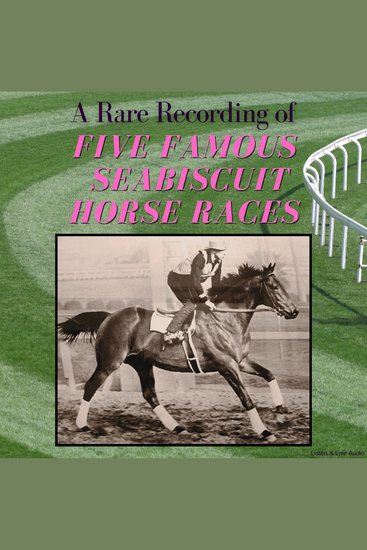
    Seabiscuit (May 23, 1933 to May 17, 1947), foaled in Lexington, Kentucky, on May 23, 1933, from the mare Swing On and sire Hard Tack, a son of Man o' War, was a champion thoroughbred racehorse in the United States that became the top money-winning racehorse up to the 1940s. He beat the 1937 Triple Crown winner, War Admiral, by four lengths in a two-horse special at Pimlico and was voted American Horse of the Year for 1938. Seabiscuit has been immortalized in books and films, including the Shirley Temple film, The Story of Seabiscuit (1949); the book, Seabiscuit: An American Legend (1999) by Laura Hillenbrand, along with the film adaptation of Hillenbrand's book, Seabiscuit (2003), that was nominated for the Academy Award for Best Picture. The following recordings include the Third Annual Santa Anita Handicap raced on February 27, 1937; the Fourth Annual Santa Anita Handicap raced on March 5, 1938; a Match Race between Seabiscuit and Ligaroti held at Del Mar, California August 12, 1938; a Match Race between Seabiscuit and War Admiral at Pimlico Race Course, Baltimore, MD – dubbed the “Match of the Century” – held on November 1, 1938; and the Sixth Annual Santa Anita Handicap raced on March 2, 1940.
    Zum Buch
  • Writer’s Momentum The: Breaking Blocks & Building Brilliant Stories - cover

    Writer’s Momentum The: Breaking...

    Billy Grady

    • 0
    • 0
    • 0
    Your stories are waiting—but the words just won’t come. Whether you’re facing a blank page, a stalled draft, or a half-finished novel, The Writer’s Momentum is the push you need to break free and write with unstoppable energy. 
    Acclaimed writing coach Billy Grady shares practical tools and inspiring insights to help you: 
     Shatter creative blocks and silence self-doubt 
     Build habits that keep ideas—and words—flowing 
     Shape unforgettable characters and gripping plots 
     Edit with clarity to bring your best story to life 
    Equal parts motivational manifesto and step-by-step guide, this book will reignite your passion for storytelling and give you the confidence to finish—and love—every project you start. 
    Momentum isn’t magic. 
    It’s a practice. 
    And it starts the moment you turn the page.
    Zum Buch
  • Rhetoric - The Art of Persuasion and Public Speaking - cover

    Rhetoric - The Art of Persuasion...

    Aristotle, Tim Zengerink

    • 0
    • 0
    • 0
    What if you could sway hearts and minds with the power of your words? 
    Aristotle’s classic work on persuasion stands as the cornerstone of Western rhetoric. Adapted for the contemporary reader, this essential guide illuminates the principles and strategies behind compelling communication. From structuring an argument to appealing to emotions and ethics, Rhetoric empowers you to articulate ideas effectively—whether on stage, in writing, or online. 
    What You’ll Discover in This Modern Translation: 
    - Time-tested techniques for crafting persuasive arguments 
    - How to engage ethos, pathos, and logos to convince any audience 
    - Guidance for clear, compelling public speaking 
    - Practical examples that bridge ancient wisdom and modern discourse 
    Imagine speaking with such clarity and passion that you captivate any crowd. Aristotle’s Rhetoric distills the essence of persuasive communication, providing a roadmap for authentic, impactful speech in our busy modern world. 
    Step into the realm of master communicators. Get your copy now and unlock the timeless art of persuasion.
    Zum Buch
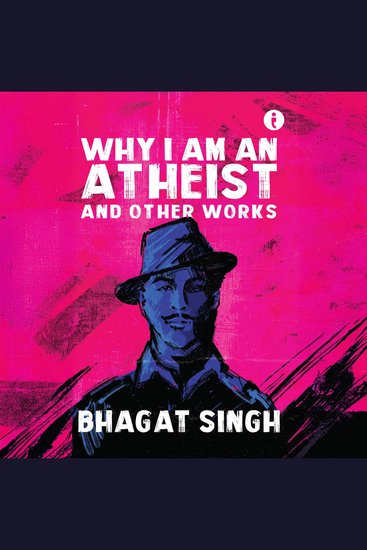
  • Why I Am An Athiest And Other Works - cover

    Why I Am An Athiest And Other Works

    Anonym

    • 0
    • 0
    • 0
    Bhagat Singh was only 23 years old when he was executed in 1931 for his role in the fight for India’s independence. A fiery revolutionary and a committed socialist, Singh’s acts of courage and his ideals left an indelible mark on the Indian freedom struggle; a testament of which is the significance and popularity of the ‘Enquilaab Zindabad’ slogan. A hundred years later, his influence has only grown, not waned, and his writings and speeches continue to be read, studied, and shared for their inspired, and inspiring, vision of a society founded on the principles of democracy, equality, and moral courage. "Why I Am An Atheist and Other Works", which includes additional letters and messages, delves into his thoughts on religion, politics, and the nature of the struggle for freedom. In these writings, Bhagat Singh reflects on his rejection of blind faith, his embrace of rationalism, and his deep commitment to secularism and social justice. His sharp intellect, unyielding courage, and unwavering ideals make this a compelling read for anyone interested in ideas of revolution, secularism, and social change.
    Zum Buch
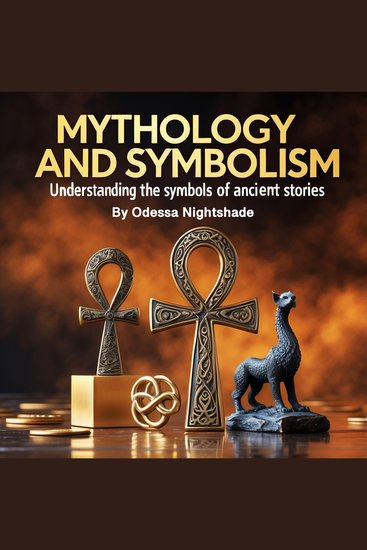
  • Mythology and Symbolism - Understanding the Symbols of Ancient Stories - cover

    Mythology and Symbolism -...

    Odessa Nightshade

    • 0
    • 0
    • 0
    Mythology has long served as a means for civilizations to interpret the world, explain natural phenomena, and pass down cultural values. At the heart of these ancient stories lies symbolism, a powerful tool that conveys deeper meanings beyond the literal narratives. Symbols in mythology are not just decorative elements but vessels of wisdom, embodying universal truths that transcend time and geography. Whether representing divine power, cosmic forces, or the human experience, these symbols continue to influence art, literature, and philosophy. Understanding them allows for a deeper appreciation of ancient myths and their lasting relevance.  
    Symbols in mythology often serve as bridges between the physical and spiritual worlds. Many ancient cultures used them to express concepts that were otherwise difficult to articulate. For example, the serpent appears in myths across civilizations, representing both wisdom and deception, life and death. The world tree, found in Norse, Mayan, and Hindu traditions, symbolizes the connection between heaven, earth, and the underworld. These recurring motifs highlight the shared human fascination with life’s mysteries and the interconnected nature of different belief systems.  
    The study of mythological symbols also sheds light on the values and priorities of ancient societies. A thunderbolt, wielded by gods such as Zeus and Indra, signifies divine authority and raw power, reflecting the belief in the supremacy of celestial forces. In contrast, sacred animals, such as the Egyptian scarab or the Greek owl, represent wisdom, transformation, or protection, illustrating how people sought guidance from the natural world. Ritual objects, from swords to chalices, often hold dual meanings, symbolizing both material and spiritual power. 
    Zum Buch