Rejoignez-nous pour un voyage dans le monde des livres!
Ajouter ce livre à l'électronique
Grey
Ecrivez un nouveau commentaire Default profile 50px
Grey
Abonnez-vous pour lire le livre complet ou lisez les premières pages gratuitement!
All characters reduced
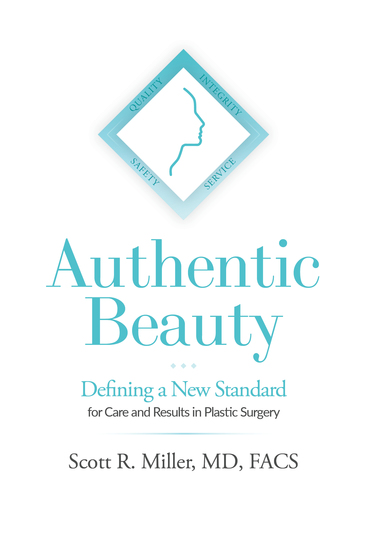
Authentic Beauty - Defining a New Standard for Care and Results in Plastic Surgery - cover

Authentic Beauty - Defining a New Standard for Care and Results in Plastic Surgery

Scott R. Miller

Maison d'édition: Advantage Media Group

  • 0
  • 0
  • 0

Synopsis

In Authentic Beauty, Dr. Scott Miller reveals his proven approach to achieving naturally beautiful results that boost confidence and change lives. Whether you're considering a cosmetic procedure or simply curious, this book showcases the transformative power of expertly crafted results to enhance your appearance and embrace life with renewed self-assurance.
Disponible depuis: 02/09/2025.
Longueur d'impression: 266 pages.

D'autres livres qui pourraient vous intéresser

  • The AI Mirror - How to Reclaim Our Humanity in an Age of Machine Thinking - cover

    The AI Mirror - How to Reclaim...

    Shannon Vallor

    • 0
    • 0
    • 0
    For many, technology offers hope for the future—that promise of shared human flourishing and liberation that always seems to elude our species. Artificial intelligence (AI) technologies spark this hope in a particular way. They promise a future in which human limits and frailties are finally overcome—not by us, but by our machines. Yet rather than open new futures, today's powerful AI technologies reproduce the past. Forged from oceans of our data into immensely powerful but flawed mirrors, they reflect the same errors, biases, and failures of wisdom that we strive to escape. Our new digital mirrors point backward. They show only where the data say that we have already been, never where we might venture together for the first time. 


    To meet today's grave challenges to our species and our planet, we will need something new from AI, and from ourselves. 


    Shannon Vallor makes a wide-ranging, prophetic, and philosophical case for what AI could be: a way to reclaim our human potential for moral and intellectual growth, rather than lose ourselves in mirrors of the past. Rejecting prophecies of doom, she encourages us to pursue technology that helps us recover our sense of the possible, and with it the confidence and courage to repair a broken world. Vallor calls us to rethink what AI is and can be, and what we want to be with it.
    Voir livre
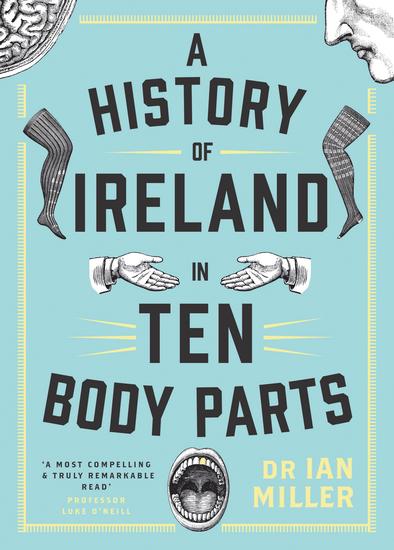
  • A History of Ireland in Ten Body Parts - cover

    A History of Ireland in Ten Body...

    Ian Miller

    • 0
    • 0
    • 0
    Skulls, height, hands, legs, sex organs, blood, brains, stomachs, ears and corpses – discover Irish history anew through the utterly unique prism of the human body.
    From the brutal beheading of the red-headed Clonycavan Man some 2,000 years ago to the ancient skulls – believed to be those of giants – stolen from islands off Ireland's west coast, medical historian Dr Ian Miller brings readers on a delightfully gruesome journey through our rich heritage.
    Learn about the fears of excessive tea drinking that were once such a great cause for concern on this isle – scarcely believable! Meet the doctors who revolutionised Irish medicine in the 19th century – along with the deplorable bodysnatching that accompanied this progress.
    Fact and folklore intertwine seamlessly throughout, providing the reader with an endlessly fascinating account of matters historical and mythological.
    Voir livre
  • Digital Nomad - Travel the World While Making Money Online - cover

    Digital Nomad - Travel the World...

    Daniel Shore

    • 0
    • 0
    • 0
    The digital nomad lifestyle has gained popularity in recent years due to advancements in technology and a shift in work culture towards remote employment. Digital nomads typically rely on laptops, smartphones, and internet connectivity to perform their work from anywhere with a reliable internet connection. This lifestyle enables individuals to break free from the traditional office setting, allowing them to choose their own hours, travel to new destinations, and immerse themselves in different cultures. 
      
    One of the key aspects of the digital nomad lifestyle is flexibility. Since most digital nomads work as freelancers, consultants, or remote employees, they have the freedom to design their own work schedule. This flexibility allows them to prioritize experiences over material possessions, spending their time and resources on travel, exploration, and personal growth. 
      
    However, the digital nomad lifestyle also comes with its challenges. Adapting to different time zones, managing work-life balance, and maintaining a stable income stream while on the road can be daunting tasks. Digital nomads must also navigate visa requirements, cultural differences, and logistical issues related to accommodation, transportation, and healthcare. 
      
    Despite these challenges, many individuals find the digital nomad lifestyle to be incredibly rewarding. It offers the opportunity to live and work on their own terms, fostering creativity, independence, and a sense of adventure. Whether it's working from a beachside cafe in Bali, a co-working space in Lisbon, or a mountain retreat in Colorado, the digital nomad lifestyle opens up a world of possibilities for those willing to embrace it.
    Voir livre
  • A History of the Warfare of Science with Theology in Christendom - cover

    A History of the Warfare of...

    Andrew Dickson White

    • 0
    • 0
    • 0
    This recording has been digitally produced by DeepZen Limited, using a synthesized version of an audiobook narrator’s voice under license. DeepZen uses Emotive Speech Technology to create digital narrations that offer a similar listening experience to human narration.  
     
    "A History of the Warfare of Science with Theology in Christendom" by Andrew Dickson White is a seminal two-volume work that delves into the prolonged struggle between science and religious orthodoxy throughout Western history. White, co-founder and first president of Cornell University, provides a comprehensive account of how religious dogma frequently stood in opposition to scientific advancements, from the age of Galileo to Darwinian evolution. He posits that this clash hindered intellectual progress and societal development, but also acknowledges the instances where religion fostered the growth of scientific understanding. Through detailed historical analysis, White underscores the necessity of maintaining a clear separation between theological beliefs and empirical investigation for the unhindered progress of knowledge.
    Voir livre
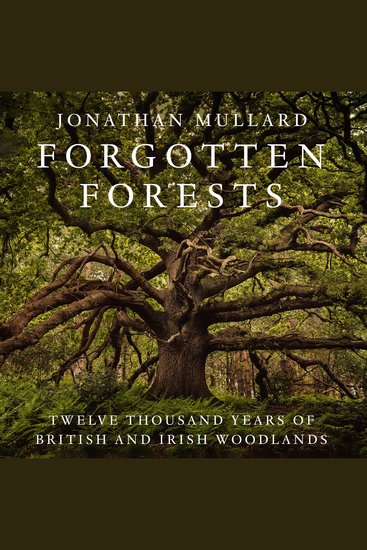
  • Forgotten Forests: Twelve Thousand Years of British and Irish Woodlands - cover

    Forgotten Forests: Twelve...

    Jonathan Mullard

    • 0
    • 0
    • 0
    Ancient trees, some over a thousand years old, are dotted around the British Isles, the last survivors of a lost world. Now, new scientific studies of these trees and of fossilised forests and of our oldest wooden artifacts can help us to understand the many woodlands that have disappeared from our landscapes. 
    Locked in ice for more than twenty thousand years, the lands that now make up Britain and Ireland were some of the last settled by humans. The earliest people, Mesolithic hunter-gatherers like Cheddar Man, arrived around eleven thousand years ago to find dense forests. While they lived lightly, they did introduce fire, which they used to create clearings, and this was the beginning of the reshaping of Britain’s forests. 
    When Neolithic farmers migrated to Britain from Europe some six thousand years ago, it meant a violent end to the hunter-gatherers’ way of life. It also indicated a dramatic change for the ecosystems. Forests were cleared for fields, trees and plants fed to livestock and predators hunted. A wild, forested world became one of agriculture and villages. 
    As humans learned to work bronze, then iron, they also used wood in myriad ways, building homes, then cathedrals, hand tools then furniture and early machines, boats and eventually immense ships. The forests of Britain and Ireland fuelled the burgeoning human civilisation, from the Romans, Anglo Saxons, Vikings and Normans, to the British, Scottish, Welsh and Irish peoples through to the present day. In that time our woodlands have changed beyond recognition, but clues to their story remain. Biologist and Britain’s first senior officer for Areas of Outstanding Natural Beauty Jonathan Mullard retraces the history of the forgotten forests of Britain and Ireland, piecing together historical records going as far back as the written word and archaeological evidence going back far further. The result is a wealth of arcane anecdotes and the latest scientific understanding of our natural history, as well as a fascinating journey through the forests, landscapes and human history of Britain. 
    In his latest non-fiction work, Forgotten Forests, Jonathan Mullard takes us on a journey through time, exploring the habitats that once covered Britain and Ireland. His deep understanding of ecology and passion for nature shine through in this compelling narrative of human impact and ecological transformation. 
    For fans of Robert Macfarlane (Is a River Alive?), and Rough Guides (The Rough Guide to Morocco). 
    HarperCollins 2025
    Voir livre

  • Know about "giordano bruno" - a friar philosopher mathematician astronomer & occultist - cover

    Know about "giordano bruno" - a...

    Saurabh Singh Chauhan

    • 0
    • 0
    • 0
    This is small copy of introduction of the book: Giordano Bruno was a 16th-century Italian friar, philosopher, mathematician, astronomer, and occultist. He is best known for his cosmological theories, which anticipated the Copernican model of the universe and held that the stars are distant suns surrounded by their own planets. Bruno's ideas were considered heretical by the Catholic Church, and he was burned at the stake in Rome in 1600. 
    Bruno was born in Nola, Italy, in 1548. He joined the Dominican Order at the age of 15, but he soon became disillusioned with the Church's teachings. He left the Order in 1572 and began to travel throughout Europe, teaching his ideas about cosmology and philosophy. 
    In 1576, Bruno published his book On the Shadows of the Ideas, in which he outlined his cosmological theories. He argued that the universe is infinite and that it contains many inhabited worlds. He also rejected the Aristotelian view of the universe as a finite sphere centered on the Earth.  
    Bruno's ideas were controversial from the start. He was accused of heresy by the Catholic Church and forced to flee Geneva in 1583. He then spent several years in France, where he was protected by King Henry III. However, after Henry's death in 1589, Bruno was forced to flee again. 
    In 1591, Bruno returned to Italy. He was arrested in Venice in 1592 and extradited to Rome. He was put on trial for heresy and found guilty. On February 17, 1600, Bruno was burned at the stake in Campo de' Fiori. 
    Despite his execution, Bruno's ideas had a profound influence on later thinkers. His work helped to pave the way for the scientific revolution of the 17th century.
    Voir livre