Rejoignez-nous pour un voyage dans le monde des livres!
Ajouter ce livre à l'électronique
Grey
Ecrivez un nouveau commentaire Default profile 50px
Grey
Abonnez-vous pour lire le livre complet ou lisez les premières pages gratuitement!
All characters reduced
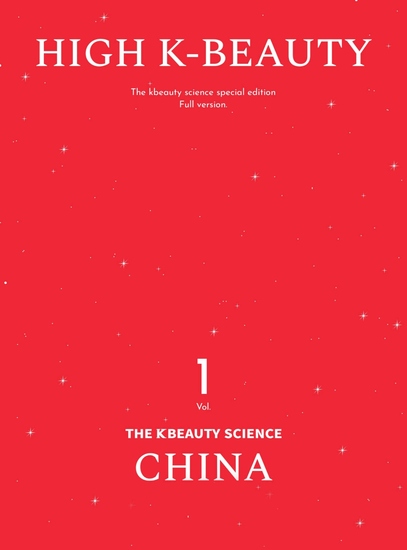
High K-beauty - cover

High K-beauty

Science The K Beauty

Maison d'édition: THE K BEAUTY SCIENCE

  • 0
  • 0
  • 0

Synopsis

HIGH K-BEAUTY 2023 is a bookazine(a book combined with a magazine) that is designed to help the global audience deepen their understanding of K-beauty. The bookazine puts the spotlight on R&D, the latest industry developments, and what’s trending in different K-beauty areas, through the eyes of K-beauty experts. It also includes some content from THE K BEAUTY SCIENCE, a monthly magazine published in Korean. The English version is also available, and the Chinese and Japanese versions will soon be published. The bookazine is issued as an e-bookePub, PDF file four times a year and is globally distributed for free or as a charged publication at exhibitions and online bookstores. The full version will be charged while an abridged version will be provided for free. You can also get a paper book if you use the Publish-on-Demand POD service. Notably, each issue of the quarterly bookazine HIGH K-BEAUTY is produced by supple-menting the previous one. Readers will not miss any K-beauty content, while discovering fresh content every time they see the bookazine. Please continue to support High K-beauty to satisfy your curiosity in K-beauty.
Disponible depuis: 01/02/2023.
Longueur d'impression: 191 pages.

D'autres livres qui pourraient vous intéresser

  • Valéry Giscard d'Estaing: A short biography - 5 Minutes: Short on time – long on info! - cover

    Valéry Giscard d'Estaing: A...

    5 Minutes, 5 Minute Biographies,...

    • 0
    • 0
    • 0
    Valéry Giscard d'Estaing, French President: Life and work in a short biography! Everything you need to know, brief and concise. Infotainment, education and entertainment at its best!
    Voir livre
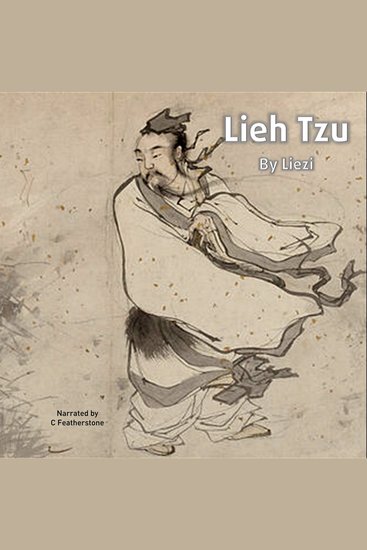
  • Lieh Tzu - One Of Daoism's Central Works (alongside the Dao De Jing and Zhuang Zi) - cover

    Lieh Tzu - One Of Daoism's...

    Lieh Tzu, Lionel Giles

    • 0
    • 0
    • 0
    One of the four central works in Daoism. The Lie-Tzu, or Liezi, was originally thought to have been composed in the same period as the Dao and Zhuang Zi, around the 5th century BCE. However, it is now believed to have been compiled nearly a thousand years later, around 400 CE.Lionel Giles, in fact, was one of the first to call out the Lieh Tzu’s suspicious origins, saying “scholars […] seem to have enjoyed nothing so much as forging, if not the whole, at any rate portions, of the works of ancient authors. Someone even produced a treatise under the name of Lieh Tzu, a philosopher mentioned by Chuang Tzu, not seeing that the individual in question was a creation of Chuang Tzu's brain!”Around 700 CE, it was given a new honorific title, the Chongxu zhenjing or Classic of the Perfect Emptiness, and designated a Daoist classic. The triad of Tao Te Ching, Zhuang Zi, and Lieh Tzu makes a certain logical sense, as each work contrasts the other two. The Dao is deeply abstract, and the Zhuang Zi filled with ethical conundrums and nonsensical stories. The Lieh Tzu is a much more practical work, turning the philosophy into a much more workable framework for thought and action.Most of the chapters are named for famous Chinese characters from history or mythology, and many of the stories are continuations or different perspectives on tales and characters in the Zhuang Zi. In this version, Chapter 7 is excluded. This chapter was not translated by Giles, and occasions a great deal of controversy. It is written in a very different voice and perspective to the other chapters, such that some have described it as ‘hedonistic’ and ‘negative Daoism’. Others have claimed that it must have been written before the author even discovered Daoism.
    Voir livre
  • Anglo-Saxons and the Jutes The: The History and Legacy of the European Groups that Settled Britain in the Middle Ages - cover

    Anglo-Saxons and the Jutes The:...

    Editors Charles River

    • 0
    • 0
    • 0
    As the Western Roman Empire collapsed in the late 5th century, Hadrian’s Wall was abandoned and Roman control of the area broke down.  
    Little is known of this period of British history, but soon the Anglo-Saxons – who had been harassing the Saxon Shore as pirates – showed up and began to settle the land, creating a patchwork of little kingdoms and starting a new era of British history. Several early medieval historians, writing well after the events, said the Anglo-Saxons were invited to Britain to defend the region from the northern tribes and ended up taking over. However they came to control most of England, the Anglo-Saxons became the dominant power in the region for nearly 500 years, and the strength of their cultural influence could be felt even after William the Conqueror won the Battle of Hastings and became the first Norman ruler on the island. The efforts to consolidate his rule in England were complicated from the start, both due to external enemies and those jockeying for his position while he was still alive, but the Normans would manage just barely to cling to power over England, and William remains the last foreign conqueror of the island.  
    The Jutes were so closely related to the Angles and Saxons that the nature of their existence has been, and continues to be, the subject of scholarly debates. Although historians and archaeologists have identified a Germanic tribe known as the Jutes that migrated to England at the same time as the Angles and Saxons, the attempt to distinguish them from the other tribes has been questioned. Either way, once the Jutes landed in England, they immediately distinguished themselves from the Angles and Saxons by carving out kingdoms in the regions of Kent and the Isle of Wight. From these two locations, the Jutes not only carried on many of their pre-migration cultural traditions but also adopted some of the new, unifying European traditions, particularly Christianity.
    Voir livre
  • Black Cats & Evil Eyes - A Book of Old-Fashioned Superstitions - cover

    Black Cats & Evil Eyes - A Book...

    Chloe Rhodes

    • 0
    • 0
    • 0
    This collection investigates the origins of our most intriguing old-fashioned superstitions, many of which we still find ourselves abiding by today. Hundreds of the beliefs passed down through the generations have their foundations in our ancestors' efforts to ward off evil, which they blamed for hardship, illness, and injustice in times when life was, as often as not, "nasty, brutish and short." Black Cats and Evil Eyes sets these superstitions in their historical and social context, explaining how fear of the Devil, demons, evil spirits, and witchcraft drove people to arm themselves with rituals and talismans to repel dark forces and allow them to live long and healthy lives. In examining many of our common superstitions, this book illuminates the customs, beliefs, and practices that link us to an ancient, and often darker, human past.
    Voir livre
  • Mindfulness Unleashed: Simple Secrets for Everyday Calm - "Unlock tranquility with our engaging audio lessons designed to enhance your everyday mindfulness practice!" - cover

    Mindfulness Unleashed: Simple...

    Cyrus Lockwood

    • 0
    • 0
    • 0
    Mindfulness Unleashed: Simple Secrets for Everyday Calm 
    Are you eager to enhance your well-being and cultivate a sense of calm in your daily life? 
    Searching for a practical guide that reveals essential strategies for integrating mindfulness into your routine? 
    Your quest ends here! 
    This audiobook serves as your ultimate companion for deepening your understanding of mindfulness, applying effective techniques, and engaging in transformative exercises. With this resource, you're set up for a more peaceful existence. 
    Updated for the latest mindfulness practices. 
    Key features of this insightful guide: 
    - In-depth insights into mindfulness techniques for daily life 
    - Thorough explanations of mindfulness principles 
    - Effective strategies for incorporating mindfulness into your day-to-day activities 
    Our guide sets itself apart through its comprehensive coverage, which is vital for your personal growth. Concepts are explored in depth, ensuring a clear understanding. 
    It's important to note that this guide is an independent resource and is not affiliated with any official mindfulness organization.  
    Crafted with a clear structure and accessible language, our Mindfulness Guide ensures smooth transitions between topics. Say goodbye to complicated terminology and embrace clear, precise, and technically sound content. 
    So, why wait? Click the BUY NOW button, secure your audiobook, and embark on your journey to a calmer, more mindful life today!
    Voir livre
  • Sumerian Origins - Lifting the Veil on Ancient Mesopotamia Mysteries - cover

    Sumerian Origins - Lifting the...

    Norah Romney

    • 0
    • 0
    • 0
    A Mysterious Group of People came to settle in southern Mesopotamia, sometime around 5400BC. What is now the modern state of Iraq, the first city of Mesopotamia was founded named Eridu. Although historians have generally regarded this as the world’s first city, we have seen this challenged on numerous occasions by recent discoveries too numerous to mention here. Eridu had all the things we ordinarily associate with an ancient city: temples, administrative buildings, housing, agriculture, markets, art, and, of course, walls to keep out unsavoury characters.The elusive aspect is we have absolutely no idea where they acquired their language, and bizarre language it is, we have no idea what they originally looked like. Their language, which we call Sumerian, and the subsequent Akkadian derivative were linguistic isolates. Sumerian is the oldest known written language on Earth, and any languages it might have derived from or developed alongside have been lost to time. Figuring out what their baffling ethnic identity based on their art is a doomed effort, because their art was so stylized that a good case could be made that it portrays people of any ethnicity, or the people they encountered. The Sumerian language was not Semitic, and the Akkadian conquests of 2334 BCE disrupted the ethnic and cultural isolation of the Sumerian people.
    Voir livre