Begleiten Sie uns auf eine literarische Weltreise!
Buch zum Bücherregal hinzufügen
Grey
Einen neuen Kommentar schreiben Default profile 50px
Grey
Jetzt das ganze Buch im Abo oder die ersten Seiten gratis lesen!
All characters reduced
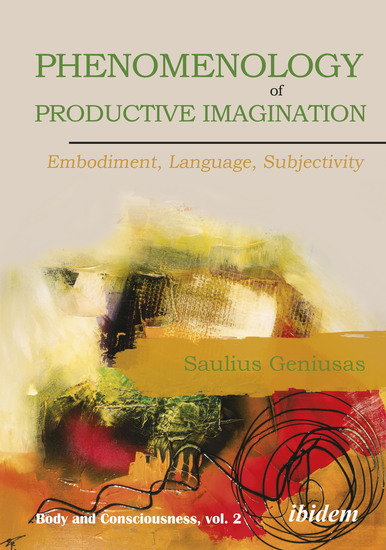
Phenomenology of Productive Imagination: Embodiment Language Subjectivity - cover

Phenomenology of Productive Imagination: Embodiment Language Subjectivity

Saulius Geniusas

Verlag: ibidem

  • 0
  • 0
  • 0

Beschreibung

Although productive imagination has played a highly significant role in (post-) Kantian philosophy, there have been very few book-length studies explicitly dedicated to its analysis. 

In his new book, Saulius Geniusas develops a phenomenology of productive imagination while relying on those resources that we come across in Edmund Husserl’s, Max Scheler’s, Martin Heidegger’s, Ernst Cassirer’s, Miki Kiyoshi’s, Jean-Paul Sartre’s, Maurice Merleau-Ponty’s, and Paul Ricoeur’s writings, while also engaging in present-day philosophical discussions of the imagination. Investigating the relation between imagination and embodiment, affectivity, perception, language, selfhood, and intersubjectivity, the book provides a phenomenological conception of productive imagination, which is committed to basic phenomenological principles and which is sensitive to how productive imagination has been conceptualized in the history of phenomenology. 

Against such a background, Geniusas develops a new conception of productive imagination: It is a basic modality of intentionality that indirectly shapes the human experience of the world by forming the contours of action, intuition, knowledge, and understanding. It is not so much a blind and indispensable function of the soul, but an art concealed in the body, for it springs out of instincts, drives, desires, and needs. 

The author demonstrates unexpected ways in which phenomenology of productive imagination enriches our understanding of embodied subjectivity.
Verfügbar seit: 07.03.2022.
Drucklänge: 318 Seiten.

Weitere Bücher, die Sie mögen werden

  • Forgiving Humanity - How the Most Innovative Species Became the Most Dangerous - The Curse of Exponential Change - cover

    Forgiving Humanity - How the...

    Peter Russell

    • 0
    • 0
    • 0
    Why has the most innovative of species become so dangerous? The answer, suggests Peter Russell, lies in humanity’s accelerating pace of development. He shows how innovation breeds further innovation—a positive feedback loop leading to exponential rates of change. But our minds cannot grasp the full implications of exponential growth. We think more in terms of linear change, leading to a blind spot on the future.  
    However fast the pace of change may be today, it will be even faster in the years to come, bringing ever more rapid scientific and technological advances. But ever-accelerating change also creates stress on the systems involved. The faster the change, the greater the stress, and the more likely systemic breakdown. We are heading into a future with technology beyond our dreams, but in a world that is breaking at the seams. 
    Russell argues there is no blame for this. Spiraling rates of development, with all their consequences, positive and negative, are the inevitable fate of any intelligent, technologically-empowered species.  
    How do we live with such unsettling conclusions? How can we prepare for a world that is becoming increasingly unpredictable? What does it mean for the future of humanity? 
    Peter Russell, the widely acclaimed author of The Global Brain and other pioneering works, earned an honors degree in theoretical physics and psychology —as well as a masters degree in computer science —at the University of Cambridge. He subsequently went to India where he explored meditation and Eastern philosophy, and was one of the first people to introduce personal development programs to corporations in the 1970s. His other books include The TM Technique, The Upanishads, Waking Up in Time, From Science to God, and Letting Go of Nothing.
    Zum Buch
  • The Smallest Room in the House - 50 political oddities to read in more than one sitting - cover

    The Smallest Room in the House -...

    Philip Cowley

    • 0
    • 0
    • 0
    Based on Philip Cowley's entertaining columns in The House magazine, this collection of political oddities and fascinating research, discussing the politics of fights, cockroaches, riots, potholes, beards and much more, is perfect for reading in multiple sittings. Discover the electoral relevance of chip shops and football grounds, what your lawn tells you about your voting, why politicians need to pay extra care in Scunthorpe, what MPs think of voters, why they all claim to be local and why they are all now so inexperienced.
    Equal parts witty and thought-provoking, and with additional grumpy complaints about bats, overly long constituency names and giving the vote to sixteen-year-olds, it's a book that will appeal to the sort of person who likes to tell you that, actually, it's all a bit more complicated than that…
    Zum Buch
  • Gettysburg Campaign The: A Captivating Guide to the Military Invasion of Pennsylvania That Culminated in the Battle of Gettysburg During the American Civil War - cover

    Gettysburg Campaign The: A...

    Captivating History

    • 0
    • 0
    • 0
    Learn about the pivotal battle that changed the course of the American Civil War. 
    In the summer of 1863, Confederate General Robert E. Lee, fresh off a victory at the Battle of Chancellorsville, decided to invade Union territory. Taking his Army of Northern Virginia into Pennsylvania, Lee was drawn to a place where the area’s major roads converged at Gettysburg. 
    There, over seventy thousand Southern troops waged a dogged, bloody battle against over ninety thousand Union soldiers in the fields and on the boulder-strewn heights surrounding the town. 
    Lee had a lot of faith in his troops. He nursed many hopes for the invasion, primarily engaging in peace negotiations by placing pressure on Washington, D.C. 
    Within three days, those hopes and the future of the Southern cause lay battered on the Gettysburg battlefield, a defeat so crippling it signaled the beginning of the end for the Confederacy. 
    This captivating guide tells the story of the Gettysburg campaign, from Lee’s decision to invade to his retreat from the battlefield. In these pages, you’ll read about acts of heroism, brilliant battlefield tactics, and horrible decisions that turned the tide of war. 
    In this audiobook, you’ll learn about the following:The personal histories of generals and other major figures on both sidesThe plight of the people of Gettysburg caught between two armiesThe strategy Lee envisioned and the actual battle he was forced to fightThe significance of major landmarks on the Gettysburg battlefieldThe scope and intensity of battlefield medical supportThe post-war efforts to preserve the ground upon which America’s bloodiest battle had been foughtThe post-war lives of the major participants in the campaignAnd so much more! 
    Scroll up and click the “add to cart” button to learn more about the Gettysburg Campaign!
    Zum Buch
  • Life Map - A Short Guide For Future Generations - (and a couple of personal anecdotes) - cover

    Life Map - A Short Guide For...

    Ioniţă "Shumu” Mihai

    • 0
    • 0
    • 0
    My aim with this book is to help bring some clarity and a sense of direction to adults and younger people alike. 
    As an adult, if you find yourself kind of stuck, say you’ve had a fair amount of experiences up to this point, you are financially independent and overall pretty content but feel you kind of lost contact with some of your dreams and aspirations from around…10 years ago…keep on reading. 
    Or, if you’re a student who feels overwhelmed in today’s world where we’re all constantly flooded by the online medium which fights for each second of our attention and distorts reality by feeding us fake reference points…keep on reading. 
    It’s completely understandable how someone can feel lost and not know what to do with one’s life. 
    While I do not claim to hold an absolute truth, I firmly believe that this book can and will be seen as a clear and solid starting point in helping you find at least some answers to questions you have or may have, whether you’re an adult looking to improve your life, or a student feeling your life is just starting out. 
    In short, my idea was to take Abraham Maslow’s Expanded Hierarchy of Needs and pump it full of steroids. 
    I wanted to take this pyramid and turn it into a tesseract. 
    Ok…so maybe that fifth cup of coffee at 3 a.m. wasn’t such a good idea after all.
    Zum Buch
  • 52 Weeks to Fearless--What Creatives Need to Know About Money - cover

    52 Weeks to Fearless--What...

    Peggy Doviak

    • 0
    • 0
    • 0
    With a background in music, creative writing, and education, Peggy Doviak went into finance when a stockbroker exploited her mother. Now a CERTIFIED FINANCIAL PLANNERTM professional and bestselling author, she has spent more than twenty years helping others avoid what her mother experienced. 
    Peggy’s award-winning personal finance books offer bite-sized pieces of financial information and activities to help you apply what you’ve read. In 52 Weeks to Fearless, creatives are invited to Ask Peggy® questions about their money. Finances can be intimidating when your passion is in the arts. 
    Earning money as a creative presents challenges. How do you budget when your income is uneven? How do you pay your income taxes when you don’t have a traditional employer? How can you save for retirement without a 401(k)? If your creative endeavor is a business, how do you choose the structure? How do you handle payroll taxes? Most importantly, how do you convince the IRS that your creative endeavor is not a hobby? In 52 Weeks to Fearless, Peggy answers these questions and more!
    Zum Buch
  • The Loneliness Files - cover

    The Loneliness Files

    Athena Dixon

    • 0
    • 0
    • 0
    What does it mean to be a body behind a screen, lost in the hustle of an online world? In our age of digital hyper-connection, Athena Dixon invites us to consider this question with depth, heart, and ferocity, investigating the gaps that technology cannot fill and confronting a lifetime of loneliness. 


    Living alone as a middle-aged woman without children or pets and working forty hours a week from home, more than three hundred fifty miles from her family and friends, Dixon begins watching mystery videos on YouTube, listening to true crime podcasts, and playing video game walk-throughs just to hear another human voice. She discovers the story of Joyce Carol Vincent, a woman who died alone, her body remaining in front of a glowing television set for three years before the world finally noticed. Searching for connection, Dixon plumbs the depths of communal loneliness, asking essential questions of herself and all of us: How have her past decisions left her so alone? Are we, as humans, linked by a shared loneliness? How do we see the world and our place in it? And finally, how do we find our way back to each other? 


    Searing and searching, The Loneliness Files is a groundbreaking memoir in essays that ultimately brings us together in its piercing, revelatory examination of how and why it is that we break apart.
    Zum Buch