Begleiten Sie uns auf eine literarische Weltreise!
Buch zum Bücherregal hinzufügen
Grey
Einen neuen Kommentar schreiben Default profile 50px
Grey
Jetzt das ganze Buch im Abo oder die ersten Seiten gratis lesen!
All characters reduced
The Extraordinary Life Story of Harriet Tubman - The Female Moses Who Led Hundreds of Slaves to Freedom as the Conductor on the Underground Railroad (2 Memoirs in One Volume) - cover

The Extraordinary Life Story of Harriet Tubman - The Female Moses Who Led Hundreds of Slaves to Freedom as the Conductor on the Underground Railroad (2 Memoirs in One Volume)

Sarah H. Bradford

Verlag: Good Press

  • 0
  • 0
  • 0

Beschreibung

In "The Extraordinary Life Story of Harriet Tubman," Sarah H. Bradford meticulously chronicles the remarkable journey of one of America'Äôs most pivotal abolitionists. This biographical narrative is not merely a recounting of Tubman's life; it delves into the tumultuous era of slavery and the burgeoning abolitionist movement, rendered through Bradford's evocative and accessible prose. The text is steeped in historical context, offering both vivid storytelling and poignant insights into Tubman's indomitable spirit, her daring escapes, and her relentless commitment to liberty and social justice. Sarah H. Bradford, a prominent 19th-century writer and social activist, was inspired by her own experiences in a nation grappling with the morality of slavery. A contemporary of Tubman, Bradford'Äôs close association with abolitionist circles and her extensive research into Tubman'Äôs life positioned her uniquely to bring forth this compelling account. Her personal dedication to social reform is reflected in her empathetic portrayal of Tubman, highlighting not just her achievements but the challenges she faced as a Black woman in a prejudiced society. This book is highly recommended for anyone interested in American history, social justice, or the life of extraordinary individuals. Bradford'Äôs work not only serves as a biography but as a source of inspiration, encouraging readers to reflect on the themes of courage, resilience, and the fight against injustice that remain relevant today.
Verfügbar seit: 15.01.2024.
Drucklänge: 150 Seiten.

Weitere Bücher, die Sie mögen werden

  • Shades A Phantasy - Ukranian born Korolenko creates a fictional dialogue of Socrates to examine lifes biggest questions - cover

    Shades A Phantasy - Ukranian...

    Vladimir Korolenko

    • 0
    • 0
    • 0
    Vladimir Galaktionovich Korolenko was born in Zhytomyr, Ukraine, then part of the Russian Empire on 27th July 1853. 
     
    His father died when he was 13 and life was then often struck with bouts of poverty, which resulted in his education being somewhat erratic.   A spell in exile at 23 was followed by another as the politics of the times opposed his volatile but heart-felt passions. 
     
    Writing was also coming to the fore and in 1879 his debut short story telling of a young Narodnik searching for social and spiritual identity, was published. 
     
    In 1881, Korolenko refused to swear allegiance to the new Russian Tsar and was again exiled, this time much farther afield.  He spent the next three years doing manual work, but took time to study local customs and history.  These impressions in exile provided rich material for his writings. 
     
    In 1885 he was allowed to settle in Nizhny, where again he repeatedly questioned the authorities.  That same year ‘Makar's Dream’ established his literary reputation and was part of his first collection ‘Sketches and Stories’, the following year. 
     
    In the early 1890’s when famine struck Central Russia, he went to work on relief missions, collecting donations, supervising the delivery and distribution of food, opening 45 free canteens, all this while writing the graphic reports that would later be published as ‘In the Year of Famine’ in 1893. 
     
    By 1896 despite some psychological disorders, he was well regarded amongst Russian writers and was even a member of the Russian Academy of Sciences.  Throughout his writing career Korolenko was a staunch advocate of human rights, putting that sacred activity above what he called his 'part-time-writing'. 
     
    In the Revolutionary year of 1905, under his editorship, Russkoye Bogatstvo published the Manifest by the Petersburg Soviet of the Workers' deputies. Korolenko was now repeatedly harassed by the authorities, had his flat raided many times and materials confiscated. 
     
    As a lifetime opponent of Tsarism, he guardedly welcomed the Revolution of 1917.  Once the nature of Bolshevism was established, he soon started to criticize it. During the Russian Civil War that ensued, he condemned both the Red Terror and the White Terror.  
     
    Despite suffering from a progressive heart disorder, he collected food packages for children in famine-stricken Moscow and Petrograd as well as organised orphanages and shelters for the homeless.  
     
    Vladimir Korolenko died in Poltava, Ukraine, of the complications of pneumonia on 25th December 1921.  He was 68. 
     
    In this story Korolenko invokes the characters of Socrates and Elpidias who, after their deaths, involve themselves in a debate on God.  This is a tour-de-force of conception and execution.
    Zum Buch
  • A Darker Electricity - The Origins of Spiral Tribe Sound System - cover

    A Darker Electricity - The...

    Mark Angelo Harrison

    • 0
    • 0
    • 0
    At the time, it was unclear why the UK government targeted the Spiral Tribe travelling sound system. Even after arresting many key members and launching one of Britain's biggest court cases against them. 
    Was it really because they were a marauding horde of anarcho-techno-pirates, their outlandish music calling a generation to rise up in rebellion against conservatism, convention, and even consensus reality? 
    Or was it because, as pioneers of the 1990s free party movement, championing the new British breakbeat and European techno sound, they were reclaiming social space in warehouses and out under the stars? 
    Each weekend they pulled ever bigger crowds away from consumer culture. No superstar DJs, no door policy and everyone dancing together as equals. An inspiring, unifying force of creativity. 
    As Spiral Tribe's co-founder and visual artist (or as the Crown Prosecutor described him, 'the criminal ringleader' who'd helped 'mastermind' Britain's 'biggest ever illegal rave' at Castlemorton), Mark Angelo Harrison has a unique perspective to tell their inside story. He vividly charts their nomadic journey and the rapid escalation of their popularity - and notoriety. 
    From small squat-scene parties in London to enormous warehouse raves and free festivals. From one little overloaded van to the mighty convoy of matt-black military vehicles that instigated the teknivals of Europe.
    Zum Buch
  • Memoirs of a CA - Aap toh CA hain - A Soulful Glimpse into the Life Behind the Numbers - cover

    Memoirs of a CA - Aap toh CA...

    Sanjivv Shiv

    • 0
    • 0
    • 0
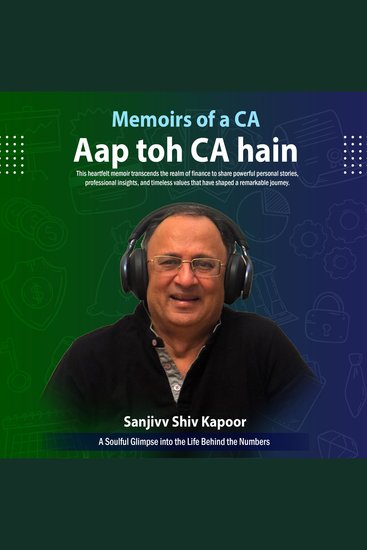
     This is a book for those who strive to build careers without losing themselves, for those who want to excel professionally while cherishing relationships, nurturing passions, and living fully. CA Sanjivv Shiv Kapoor’s journey proves that you don’t have to choose between ambition and balance—you can have both. 
    Highlights of the Book: 
    A behind-the-scenes look at the life of a Chartered Accountant. 
    Inspiring anecdotes from a 35+ year professional journey. 
    Personal stories that reflect the balance of career, family, and passion. 
    Motivational takeaways for aspiring CAs and professionals across fields. 
    Insights on lifelong learning, resilience, and staying true to values.
    Zum Buch
  • Memoirs of My Dead Life - cover

    Memoirs of My Dead Life

    George Moore

    • 0
    • 0
    • 0
    "Memoirs of My Dead Life" by George Moore unfolds as a compelling introspection into the protagonist's past. In this autobiographical novel, Moore navigates the labyrinth of memory, revisiting love affairs, artistic endeavors, and personal struggles. The narrative explores the complexities of identity, regret, and the passage of time with poetic eloquence. As the protagonist reflects on the ghosts of their past, the novel becomes a poignant exploration of the human condition, leaving readers captivated by the timeless themes of life's transient nature and the enduring power of memory.
    Zum Buch
  • John Gresham Machen - Evangelical Hero - cover

    John Gresham Machen -...

    Joel R. Beeke, Douglas Bond

    • 0
    • 0
    • 0
    What do George Whitefield, Elisabeth Elliot, and J. Gresham Machen have in common? They were all Evangelical Heroes. In the Evangelical Heroes series, Joel Beeke and Douglas Bond present thirty biographical sketches of faithful evangelical leaders from the eighteenth, nineteenth, and twentieth centuries. From George Whitfield to Charles Spurgeon to R.C. Sproul, these men and women held firm to the authority of Scripture and the reality of Christ's death and resurrection in the face of rising liberalism in the Church. These inspiring volumes introduce us to faithful Christians from the past and encourage us to stand firm today!
    Zum Buch
  • Alexander Kuprin - A Short Story Collection - A selection of stories from the great short story writer that Leo Tolstoy labelled the true successor to Anton Chekhov - cover

    Alexander Kuprin - A Short Story...

    Alexander Kuprin

    • 0
    • 0
    • 0
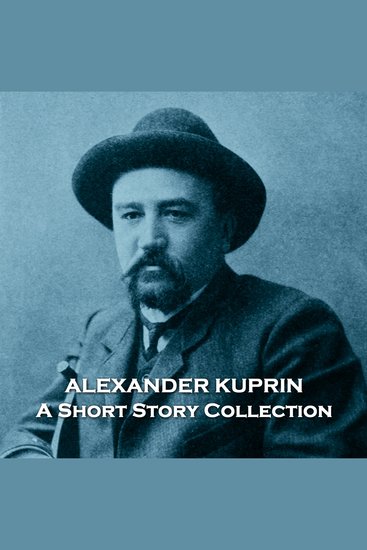
    Alexander Kuprin was born in Narovchat, Penza in Russia on 7th September 1870. 
     
    At 3 his Father died and he and mother moved to Moscow. By 10 he was enrolled at the Second Moscow Military High School and there his interest in literature began. The Alexander Military Academy followed and two years later he was a sub-lieutenant and posted to an Infantry Regiment for a further four years. 
     
    Despite his duties he was a now a keen writer and published his first short story at this time. His military duties also garnered him experiences for his breakthrough work ‘The Duel’.  Leaving the military he left for Kiev to work for local newspapers.  He continued to publish both stories and novels and by 1901 he was in St Petersburg becoming part of a group that included Chekhov, Ivan Bunin, Maxim Gorky and Leonid Andreyev.  
     
    In the years that followed further controversial works and acclaim followed.  His comments on the regime meant he was also put under secret police surveillance.   
     
    As World War I erupted, Kuprin opened a military hospital but was then given command of an infantry company in Finland. He was soon discharged on grounds of ill health.  
     
    The October Revolution saw him praise Lenin, but he warned that the Bolsheviks threatened Russian culture and might cause further widespread suffering to the peasants.  As Civil War raged he took his family to Helsinki and then on to Paris. 
     
    Exile saw his talents decline further and his succumbing to alcoholism. He became lonely and withdrawn. The family's poverty increased his malaise.   
     
    In May 1937, the Kuprin’s returned to Moscow.  He now saw his work published but wrote almost nothing new.  In 1938 his health rapidly deteriorated.  Already suffering from a kidney problems and sclerosis, he had now developed cancer of the oesophagus.  
     
    Alexander Kuprin died on 25th August 1938. 
     
    1 - Alexander Kuprin - A Short Story Collection - An Introduction 
    2 - A Slav Soul by Alexander Kuprin 
    3 - Cain by Alexander Kuprin  
    4 - An Evening Guest by Alexander Kuprin 
    5 - Demir Kaya by Alexander Kuprin 
    6 - A Legend by Alexander Kuprin 
    7 - Anathema by Alexander Kuprin 
    8 - The Garden of the Holy Virgin by Alexander Kuprin 
    9 - The Outrage by Alexander Kuprin 
    10 - The Park of Kings by Alexander Kuprin
    Zum Buch