Rejoignez-nous pour un voyage dans le monde des livres!
Ajouter ce livre à l'électronique
Grey
Ecrivez un nouveau commentaire Default profile 50px
Grey
Abonnez-vous pour lire le livre complet ou lisez les premières pages gratuitement!
All characters reduced
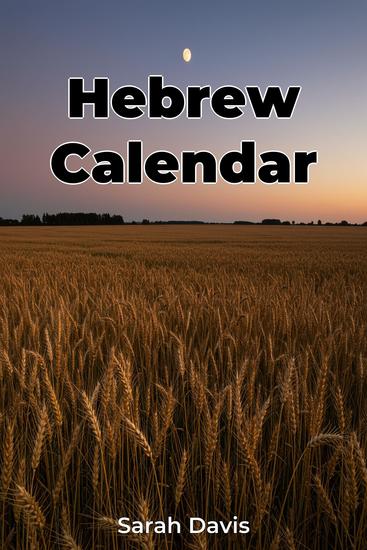
Hebrew Calendar - cover

Hebrew Calendar

Sarah Davis

Traducteur A AI

Maison d'édition: Publifye

  • 0
  • 0
  • 0

Synopsis

Hebrew Calendar explores the fascinating world of the Jewish calendar, a system deeply intertwined with Jewish religious life, history, and agricultural practices. This lunisolar calendar uniquely balances lunar months and solar years, impacting the timing of Jewish holidays and shaping religious observances. From its ancient roots in observational astronomy, where the Sanhedrin declared new months, to its later codification, the book traces the evolution of this vital timekeeping system.

 
The book explains how the Hebrew calendar transitioned into a mathematically calculated format attributed to Hillel II, ensuring its stability across generations. Readers will discover the intricate roles of leap years, molads (new moon conjunctions), and postponement rules in determining holiday dates. The book begins with basic calendar concepts and progresses through biblical, Second Temple, and Talmudic periods, culminating in practical applications for modern Jewish life.

 
By examining biblical texts, Talmudic literature, and astronomical research, Hebrew Calendar reveals how this calendar serves as a dynamic intersection of astronomy, religion, and agriculture. This makes it invaluable for anyone seeking a deeper understanding of Jewish tradition, religious studies, or the history of timekeeping.
Disponible depuis: 04/03/2025.
Longueur d'impression: 60 pages.


D'autres livres qui pourraient vous intéresser

  • Khalsa Butt Na Manne Koi Part- 2 - (ਖਾਲਸਾ ਬੁੱਤ ਨਾ ਮਾਨੌ ਕੋਇ -2) - cover

    Khalsa Butt Na Manne Koi Part- 2...

    Edited by: Parmjeet Singh Gazi,...

    • 0
    • 0
    • 0
    Book: Khalsa Butt Na Manne Koi Part-2 
    Edited By: Parmjeet Singh Gazi, Ravinderpal Singh 
    Khalsa But Na Maane Koi Part- 2 is a thoughtful and important book that explains why idol worship is not allowed in Sikhism. The book includes a collection of articles written by different Sikh writers and scholars. These articles talk about how Sikh history, teachings of the Gurus, and Gurbani clearly say that Sikhs should not use statues or pictures for worship. 
    Khalsa But Na Maane Koi Part- 2 gives answers to new ideas that try to bring idol worship into the Sikh community. The writers use strong examples from Sikh scriptures and history to explain why such practices go against Sikh beliefs. The book is edited by Parmjeet Singh Gazi and Ravinderpal Singh, who have carefully chosen articles that are full of useful information and references. 
    The main message of this book is to stay true to Sikh values and to avoid any practice that changes the original path shown by the Gurus. The book helps readers understand the difference between true Sikh practice and ideas that have come from outside.If you want to learn more about Sikh beliefs or understand why idol worship is not part of Sikhism, this book is a great book to read. It is simple, clear, and based on facts. Get your copy and reconnect with the true teachings of Sikhism.
    Voir livre
  • Ocean Inferno: Survival Against All Odds - Dive into Ocean Inferno mastery! Unlock intense audio lessons for unbeatable survival skills - cover

    Ocean Inferno: Survival Against...

    Adrian Falkner

    • 0
    • 0
    • 0
    Looking to elevate your career and cement your expertise with success?  
    In search of the ultimate resource that covers every element you need for triumph in Unbelievable Resilience, Heart-Pounding Suspense, Unparalleled Human Spirit? 
    Look no further! 
    This audiobook is your essential companion for gaining deeper insights, honing your skills, and engaging in immersive exercises, setting you on the path to success. 
    Updated to reflect the latest insights and strategies. 
    Highlights of this enriched resource: 
    - Profound insights into Unbelievable Resilience 
    - Detailed explanations of Heart-Pounding Suspense 
    - Effective strategies for preparation and mastery 
    Our audiobook stands out for its exhaustive coverage, essential for achieving victory. Concepts are explored thoroughly with precision. 
    Please note, this resource is independent and not associated with any official entity; it’s solely crafted for your benefit. 
    Crafted with a clear structure and accessible language, our guide ensures a smooth transition through various topics. Say goodbye to complex jargon and enjoy clear, precise content. 
    Why wait? Click the BUY NOW button, secure your audiobook, and embark on your journey to mastering Unbelievable Resilience, Heart-Pounding Suspense, Unparalleled Human Spirit!
    Voir livre
  • Senility And the Brain Cells - Ojai 1980 - Dialogue 8 - cover

    Senility And the Brain Cells -...

    Jiddu Krishnamurti

    • 0
    • 0
    • 0
    Senility and the brain cells - 1 June 1980  
    • Is the human brain deteriorating? 
    • The human brain is not a particular brain, it doesn’t belong to me or to anyone 
    else, it is the human brain which has evolved for millions of years. 
    • Can the brain not only be aware of its own movement but can the brain itself 
    have enough energy to break all patterns and move out of it? 
    • Is psychological knowledge not in itself a factor of the shrinking of the brain? 
    • The ending of suffering comes about when the self, which is built up through 
    time, is no longer there. 
    • If there is an insight into the nature of time the very brain cells which are part 
    of time break down. The brain cells mutate, bring about a change in 
    themselves. 
    • Meditation is insight.
    Voir livre
  • Teaching Primary Programming with Scratch Pupil Book Year 5 - cover

    Teaching Primary Programming...

    Phil Bagge

    • 0
    • 0
    • 0
    Scratch teaching and learning made easy thanks to up-to-date, classroom-tested methodologies. Draws on the expertise of Code-IT and HIAS.
    Voir livre
  • Federalist Papers The: Book Summary & Analysis - cover

    Federalist Papers The: Book...

    Miles Thatcher

    • 0
    • 0
    • 0
    This content is an independent and unofficial summary created for informational and educational purposes only. It is not affiliated with, authorized, approved, licensed, or endorsed by the original author or publisher. All rights to the original work belong to its respective copyright holders. This summary is not intended to substitute the original book, but to offer a concise overview and interpretation of its main ideas.
     
    The Federalist Papers is a collection of 85 essays that delve into the principles and challenges of the newly proposed United States Constitution. Originally written to persuade New York state voters to ratify the Constitution, these essays explore themes of governance, federalism, and individual rights. Offering profound insights into the founding framework of American democracy, this timeless work remains essential reading for anyone interested in political theory, constitutional law, or the historical roots of the United States.
    Voir livre
  • Evolution Is Wrong - A Radical Approach to the Origin and Transformation of Life - cover

    Evolution Is Wrong - A Radical...

    Erich von Däniken

    • 0
    • 0
    • 0
    A Fascinating Exploration on Why the Darwinists’ Theory No Longer Explains EverythingThere was once a set of ideas called the theory of evolution, conceived by clever people and confirmed by countless scientists. Then people discovered the electron microscope. This made it possible to make the molecules within the cell visible, and suddenly questions about evolution arose that were not possible before. Which force actually bundles the atoms in the right order? What moves the molecular chains into the correct position? How did the first living unit within the cell actually come about? How does inheritance work, how does information pass on to the next generation? Did humans descend only and exclusively from primates—as Charles Darwin and countless other great minds assumed—or did additional “engines” intervene in evolution? Today it is clear: countless questions can no longer be answered with the previous theory of evolution. There is a form of life called “Blob” (Physarum polycephalum). The “thing” has neither eyes nor ears, neither a mouth nor a nose or even a brain. Nevertheless, it takes in food, overcomes obstacles by the shortest route and exchanges information with other “blobs.” The “blob” contradicts any evolutionary thought that one develops from the other. Or the “gastric-brooding frogs” (Rheobatrachus) found in Australia. They hatch their young in the stomach. Impossible in a slow, evolutionary process. Everywhere there are characteristics of animals that do not want to fit into the theory of evolution anywhere. And man? Are we really the most adapted life-form on this planet? Today, more and more scientists who contradict the previous theory of evolution speak out. The theory fits the changes within the species, but it can no longer be reconciled with the inner workings of the cell. Some other influence that has so far escaped us is affecting evolution. It is called “Intelligent Design.” Intelligent planning is suspected behind this. Anyone or anything—a spirit of the universe? Aliens?—could be behind this planning. Erich von Däniken uses countless examples to demonstrate the impossibility of the previous evolutionary idea. He quotes scientists who argue against the previous teaching, but also those who defend it. Unfortunately, established science still refuses to look at discrepancies and holes in the theory of evolution, even though it is quite obvious that there is more going on with regard to the development of all species, as well as human culture, than could be explained by the theory of evolution alone.
    Voir livre