Begleiten Sie uns auf eine literarische Weltreise!
Buch zum Bücherregal hinzufügen
Grey
Einen neuen Kommentar schreiben Default profile 50px
Grey
Jetzt das ganze Buch im Abo oder die ersten Seiten gratis lesen!
All characters reduced
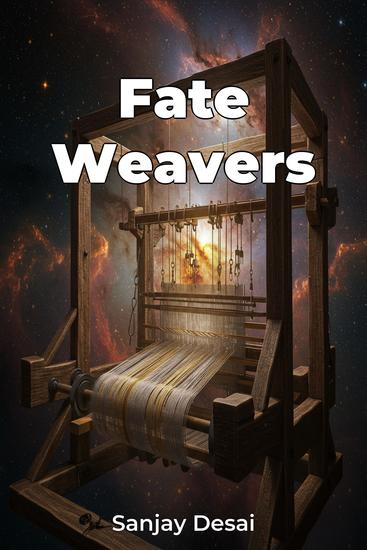
Fate Weavers - cover

Fate Weavers

Sanjay Desai

Übersetzer A AI

Verlag: Publifye

  • 0
  • 0
  • 0

Beschreibung

"Fate Weavers" explores humanity’s enduring fascination with fate and destiny through the lens of mythology and cultural history. Examining ancient beliefs, the book focuses on the deification of fate, spotlighting mythological figures like the Greek Moirai and Norse Norns who were believed to control human destinies. These figures provide insight into how different societies conceptualized the forces governing their lives, revealing cultural anxieties, hopes, and beliefs about the human condition.

 
The book also analyzes narrative interpretations of destiny, looking at how fate is portrayed in stories and epics. It traces the concept of fate from ancient times to the present day, providing essential historical and religious contexts. "Fate Weavers" argues that our preoccupation with fate reveals profound insights into our understanding of mortality and the search for meaning.

 
Structured to offer a comprehensive exploration, the book begins by introducing the concept of fate. It then explores major mythological traditions, analyzing deities and figures associated with destiny, and culminates by considering the modern implications of these ancient beliefs. This approach offers readers a unique perspective by comparing and contrasting various cultural interpretations of fate, revealing common themes and distinctive features across different traditions.
Verfügbar seit: 26.02.2025.
Drucklänge: 67 Seiten.

Weitere Bücher, die Sie mögen werden

  • Kant Today - A Survey - cover

    Kant Today - A Survey

    Erich Przywara

    • 0
    • 0
    • 0
    In Kant Today: A Survey, Erich Przywara explores the enduring impact of the tensions inherent in Immanuel Kant’s thought on continental philosophy over nearly a century and a half. Drawing parallels to the efforts at synthesis of Thomas Aquinas, Przywara presents Kant as a thinker striving to reconcile disparate currents of contemporary thought. While Aquinas fused neo-Platonic Augustinian philosophy with the neo-Aristotelianism of the Parisian Arts Faculty, Kant sought to harmonize continental idealism with the skepticism and empiricism exemplified by a British thinker like David Hume.   Aquinas’s synthesis maintained coherence due to his reliance on the analogia entis. In contrast, Kant’s synthesis lacked such a unifying principle, leading to the proliferation of philosophical antitheses reverberating throughout nineteenth- and early-twentieth-century Europe. Kant Today chronicles the aftermath of Kant’s tumultuous synthesis and suggests that the resolution may lie in a thinker capable of uniting Augustine’s fervent pursuit of God with Aquinas’s distinctive epistemological equilibrium—namely, John Henry Newman.  
    Zum Buch
  • Summary: What Happened to You? - Conversations on Trauma Resilience and Healing - cover

    Summary: What Happened to You? -...

    Alice Moore, Liam Daniels

    • 0
    • 0
    • 0
    Summary: What Happened to You? (Oprah Winfrey and Bruce Perry) 
    You are likely to be familiar with the question, “What’s wrong with you?” We've all encountered it at some point, and most likely, we've asked it ourselves. But have you ever considered that this might be the wrong question to ask? 
    In a powerful and compelling conversation, Oprah and Dr. Perry discuss the importance of our past in shaping us and why asking “What’s wrong with you?” might be an unhelpful and misguided question. They propose shifting the focus to “What happened to you?” instead. This may seem simple, but it has been groundbreaking in changing the way we understand and think about trauma, which in turn has offered a significantly more optimistic approach to recovery. 
    Asking “What happened to you?” also removes any unintentional blame or fault directed toward any traumatized individual. It favors a compassionate, empathetic approach to therapy and healing. But this is just one of the core messages of Oprah and Dr. Perry’s book. 
    “Summary: What Happened to You?” provides you with all the powerful ideas, practices, and concepts that Oprah and Dr. Perry discuss in their original book. 
    You'll get:A complete breakdown of the original covering the most essential aspects of it in a concise, clear, and easy-to-read format—without missing anything important!Explanations of key brain systems and processes from a world-leading neuroscientist and trauma specialist.Information on different methods of trauma treatment.A powerful combination of storytelling and the latest research on neuroscience and traumatology.Shocking facts about trauma.And much more! 
    While it is beneficial to have read their original work, it’s not compulsory, as this summary will provide you with all the information you need. Don't miss out on the combined wisdom of these two giants.
    Zum Buch
  • Peace Is a Practice - An Invitation to Breathe Deep and Find a New Rhythm for Life - cover

    Peace Is a Practice - An...

    Morgan Harper Nichols

    • 0
    • 0
    • 0
    Read by the author. 
    When you breathe in all the grace available to you and release everything that is outside of your control, you'll discover peace that surpasses your circumstances. All it takes is practice. 
    If you feel overwhelmed with anxiety about the future, you're far from alone. For many of us, when we're not worrying about what is to come, we find ourselves wrestling with things from the past. Where does that leave us today? 
    Morgan Harper Nichols has learned the answer to this question. She has examined stories from her own life and the lives of people around the world and noticed a common thread: we all long for peace. We're all seeking light and life. 
    But these things don't happen passively. 
    Peace Is a Practice invites you to become an active peacemaker in your own life, starting right where you are, and in some of the most unexpected places. As these words and images inspire you to take daily steps toward peace, you'll uncover the key to:Embracing the beauty of the presentLetting go of regret of the past and fear of the futureDeveloping a path toward meaning and authenticityApproaching life's challenges with faith and a calm confidenceFeeling peace even in the midst of uncertainty or difficult times 
      
    In every moment, there is something as deep and boundless as a winding river waiting to be found--a true peace that flows, beckoning you to rest and be still. 
     
    Zum Buch
  • Ancient Deities - The Gods and Legends of Early Civilizations (3 in 1) - cover

    Ancient Deities - The Gods and...

    Odessa Nightshade

    • 0
    • 0
    • 0
    Step back into a time when gods ruled the skies, rivers, and underworlds—when mythology explained the mysteries of life and divine beings shaped the destiny of empires. Ancient Deities brings together the awe-inspiring pantheons of three of the world’s earliest and most influential civilizations: Egypt, Sumer, and Rome. 
    Begin your journey in the Nile Valley with Ancient Egyptian Gods, where deities like Ra, Osiris, and Isis governed life, death, and rebirth through intricate rituals and symbolism. Travel east to the cradle of civilization with Sumerian Gods and Heroes, uncovering powerful figures such as Enlil, Inanna, and the legendary Gilgamesh. Finally, explore the mythic heart of an empire in Roman Gods and Legends, where Jupiter, Mars, and Venus reflected both divine might and human ambition. 
    This 3-in-1 volume is perfect for lovers of mythology, ancient history enthusiasts, and anyone fascinated by the enduring power of gods and legends in shaping early human culture.
    Zum Buch
  • The Majesty & Mystery Of Krsna's Divine Dance - cover

    The Majesty & Mystery Of Krsna's...

    Radha Krsna Das

    • 0
    • 0
    • 0
    Chaitanya Mahaprabhu appeared as a devotee of Krishna in Mayapur, West Bengal, India in the late fifteenth century. He introduced sankirtan, widespread congregational chanting of the Supreme Person’s names, as the most effective means by which anyone can achieve spiritual perfection. By His influence, many of India’s leading religious scholars and their followers became devotees of Krishna themselves. 
     
    In His youth, Mahaprabhu started a Sanskrit academy in Navadvipa—one of India’s top centers of learning at the time—and earned a reputation as an excellent scholar. But at age twenty-four he renounced everything to travel the subcontinent encouraging everyone he met to chant the Hare Krishna mantra. 
     
    He is considered by disciples, scholars and followers to be the latest avatar of Krishna Himself, based on extensive evidence found in Vedic literature. The International Society for Krishna Consciousness, ISKCON, is a continuation of Chaitanya Mahaprabhu’s sankirtan movement. 
      
    Chaitanya's humble, saintly demeanor and knowledge of Vedic conclusions persuaded prominent impersonalists that Krishna consciousness, worship of the Supreme Person, is life’s highest purpose. On Mahaprabhu’s instruction, the Six Goswamis of Vrindavan made a thorough analysis of the Vedas to show that Krishna bhakti, devotional service to Lord Krishna, is the essence of all Vedic teachings. Mahaprabhu’s extensive conversations with His devotees such as Ramananda Raya and Sanatana Goswami form the philosophical and scriptural basis of Gaudiya Vaishnavism, or Krishna consciousness. 
     
    Chaitanya himself left only eight written verses, the Siksastaka, in which he teaches that chanting God’s names is the most simple and sublime spiritual practice for everyone, everywhere. He also showed such extraordinary symptoms of love of God that great scholars among His devotees, including the Six Goswamis
    Zum Buch
  • The Black Promise Land - Recapturing 40 Acres and a Legacy - cover

    The Black Promise Land -...

    Tashlultum

    • 0
    • 0
    • 0
    In this heart-warming story, we follow the story of a loving father who, on the eve of his son's wedding, gifts him an acre of land - a symbolic gesture that sparks a captivating exploration into the rich tapestry of African American history and the quest for liberation and prosperity. 
    As the father and son stand on the lush acre, the father recounts the persistent legacies of resilience and hope forged by their ancestors in the face of adversity. The characters engage in profound conversations about the promises of "forty acres and a mule" and the Biblical tale of the Israelites' journey to the Promised Land, drawing powerful parallels that span generations and cultures. 
    As the story unfolds, the father soberly reflects on the historical injustices and land dispossession experienced by African Americans, highlighting the importance of landownership as a path to economic autonomy, vibrant health, and intergenerational wealth. Together, they rekindle the entrepreneurial spirit and determination that has long coursed through the veins of Black America, propelled by the belief that freedom and prosperity can only be fully realized once every family owns at least a piece of land, free from debt. 
    Through the intimate exchanges between father and son, their bond transcending time, "The Black Promise Land: A Father's Gift and a Legacy Reclaimed" inspires readers to embrace their roots, tap into the collective resilience that shapes African American history, and forge a new chapter of landownership and prosperity for themselves and generations to come. As the story culminates with the son stepping forward into married life, armed with the knowledge of his ancestral wisdom and an acre of promise, the reader is left with a renewed sense of purpose, determination, and hope for a brighter future.
    Zum Buch