Rejoignez-nous pour un voyage dans le monde des livres!
Ajouter ce livre à l'électronique
Grey
Ecrivez un nouveau commentaire Default profile 50px
Grey
Abonnez-vous pour lire le livre complet ou lisez les premières pages gratuitement!
All characters reduced
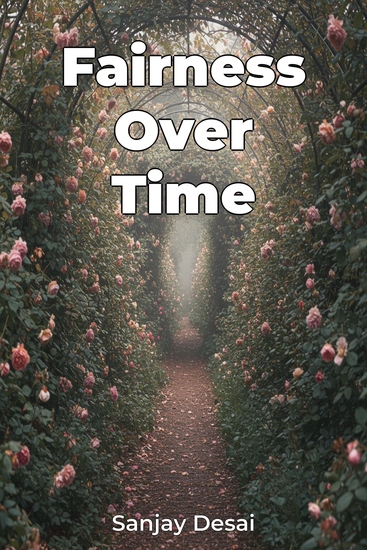
Fairness Over Time - cover

Fairness Over Time

Sanjay Desai

Traducteur A AI

Maison d'édition: Publifye

  • 0
  • 0
  • 0

Synopsis

Fairness Over Time explores the evolving nature of fairness and honesty in our relationships, examining how these concepts have transformed across history and continue to shape our social bonds. It delves into the historical, psychological, and social dynamics that influence our perceptions of justice and integrity in interactions with loved ones, friends, and acquaintances. The book uniquely blends historical analysis with psychological theory, providing a nuanced understanding of relational values.

 
One intriguing insight is how changing gender roles and economic structures have significantly impacted relational dynamics. For example, expectations of fairness in Victorian-era marriages differed drastically from modern partnerships. The book draws upon diverse sources, including historical documents, sociological surveys, and psychological experiments, to support its arguments.

 
It unfolds in three sections: establishing a conceptual framework, analyzing historical changes, and synthesizing insights for practical application. This comprehensive approach offers valuable perspectives on improving personal relationships and navigating contemporary challenges.
Disponible depuis: 20/02/2025.
Longueur d'impression: 76 pages.


D'autres livres qui pourraient vous intéresser

  • Foxe's Book of Martyrs Vol 2 A History of the Lives Sufferings and Triumphant Deaths of the Early Christian and the Protestant Martyrs - cover

    Foxe's Book of Martyrs Vol 2 A...

    William Byron Forbush

    • 0
    • 0
    • 0
    The Book of Martyrs, by John Foxe, is an English Protestant account of the persecutions of Protestants, many of whom had died for their beliefs within the decade immediately preceding its first publication. It was first published by John Day, in 1563. Lavishly illustrated with many woodcuts, it was the largest publishing project undertaken in Britain up to that time. Commonly known as, "Foxe's Book of Martyrs", the work's full title begins with "Actes and Monuments of these Latter and Perillous Days, Touching Matters of the Church." There were many subsequent editions, by Day, and by other editors down through the years. Foxe's original work was enormous (the second edition filling two heavy folio volumes with a total of 2,300 pages, estimated to be twice as long as Edward Gibbon's "Decline and Fall of the Roman Empire." This edition is much abridged from Foxe's original. 
     
    This book was first published shortly after the death of Queen Mary. During Mary's reign, common people of Protestant Christian faith were publicly burned at the stake in an attempt to eliminate dissension from Catholic doctrines. 
     
    Foxe's account of Mary's reign and its martyrdoms form a significant part of the work. Foxe intended to justify the foundation of the Church of England as a continuation of the true and faithful ancient church, rather than as a new denomination. 
     
    The work has a historic perspective. It begins with early Christian martyrs, and continues with the Inquisition, Wycliffe, and the Marian Persecutions. 
     
    For the English Church, Foxe's book remains a fundamental witness to the sufferings of faithful Christian people at the hands of the anti-Protestant Roman Catholic authorities, and to the miracle of their endurance unto death. 
     
    Roman Catholics often view Foxe's record of this period as extremely partisan and the primary propaganda piece for English anti-Catholicism. Among other objections, the accuracy of Foxe's claims regarding martyrdoms under Mary ignore the mingled political and religious aspects of the time period. Some of the victims may have been intent on removing Mary from the throne. Although the work is more accurate when dealing with events during Foxe's time, it is generally not a correct or impartial account of the period, and includes occasional "willful falsification of evidence" (Summary abridged from Wikipedia by Karen Merline)
    Voir livre
  • We Shall All Be Changed - How Facing Death with Loved Ones Transforms Us - cover

    We Shall All Be Changed - How...

    Whitney K. Pipkin

    • 0
    • 0
    • 0
    TGC 2024 Book Award WinnerDeath teaches us how to live.When Whitney K. Pipkin’s mother was diagnosed with terminal cancer, she wasn’t ready. How could she be? She searched for resources that could help her walk through this heavy yet sacred time in her life. But she struggled to find the guidance she longed for in a season of anticipatory grief.We Shall All Be Changed is a companion for those experiencing the lonely season of suffering and death. In this book, Whitney reaches across the pages to hold the hand of the caregiver. Walking through death with a loved one can be incredibly isolating and unsettling. This book reminds us that we can experience God’s very presence in life’s dark and deep valleys. As Whitney draws from her own experience, she sheds light and hope. She shows that we are not alone. And she reveals the mysterious way that God ministers to and transforms us through death and suffering.Beautifully honest and theologically rich, Whitney invites us to consider death so that we might understand life and how to live it.Rather than wanting to run from discussions of death—as I did for so long—I now want to press into them, to wring from one of the hardest trials life has to offer every drop of sanctification and glory. I see now that having a front seat to my mom’s final days has forever changed the ones I have left to live. —Whitney PipkinA book for those who are caring for the sick and dying . . . for those who will care for parents, family, or friends in their last days . . . and for those who have already walked this journey. This book is for us.
    Voir livre
  • The Burnout Challenge - Managing People’s Relationships with Their Jobs - cover

    The Burnout Challenge - Managing...

    Michael P. Leiter, Christina...

    • 0
    • 0
    • 0
    Two pioneering researchers identify key causes of workplace burnout and reveal what managers can do to promote increased productivity and health. 


    Citing a wealth of research data and drawing on illustrative anecdotes, The Burnout Challenge shows how organizations can change to promote sustainable productivity. Christina Maslach and Michael P. Leiter provide useful tools for identifying the signs of employee burnout, most often exhaustion, cynicism, and ineffectiveness. They also advise managers on assembling and interpreting worker self-evaluation surveys, which can reveal workplace problems and potential solutions. And when it comes to implementing change, Maslach and Leiter offer practical, evidence-driven guidance. The key, they argue, is to begin with less-taxing changes that employees nonetheless find meaningful, seeding the ground for more thorough reforms in the future. 


    Experts estimate that more than $500 billion and 550 million workhours are lost annually to on-the-job stress, much of it caused by dysfunctional work environments. As priorities and policies shift across workplaces, The Burnout Challenge provides pragmatic, creative, and cost-effective solutions to improve employee efficiency, health, and happiness.
    Voir livre
  • Stoicism for Better Decisions – Stay Calm and Stay in Control with Epictetus Discourses (Practical Stoic Philosophy British Narration) - cover

    Stoicism for Better Decisions –...

    Epictetus, Stillmind

    • 0
    • 0
    • 0
    The Discourses of Epictetus is a foundational work of Stoicism, focused on how to stay in control, think clearly, and make better decisions by focusing only on what you can control. 
    Epictetus teaches a direct and practical approach to life. His philosophy is built around personal responsibility, discipline, and clear thinking in the face of challenges. 
    This audiobook presents those ideas in a simple and accessible way, making it easier to apply Stoic principles in real situations. 
    You will learn how to respond instead of react, maintain control in difficult moments, reduce unnecessary stress, and make better decisions with a clearer and more focused mind. 
    This is not just a traditional reading, but a carefully structured listening experience designed to help you apply Stoic thinking in real life. 
    Narrated in a calm and steady British voice, this edition supports both active listening and relaxed background listening, allowing you to absorb the material at your own pace. 
    Many listeners return to these teachings regularly as a way to strengthen discipline, improve focus, and build a more controlled and deliberate approach to life. 
    Listen to the sample to experience the calm and clarity of this narration. 
    This audiobook is for you if you enjoy listening to podcasts such as the daily stoic, the daily dad, practical stoicism, stoic lessons, and audiobooks such as the art of war, 48 laws of power, letters from seneca, and other books from ryan holiday, tim ferris or robert greene, and books big on booktok.
    Voir livre
  • Narcissist - 2 manuscripts How To Handle A Narcissist Survive From Emotional Abuse Set Boundaries And Control Your Relationship - cover

    Narcissist - 2 manuscripts How...

    Rina Mcnally

    • 0
    • 0
    • 0
    How to handle a narcissist, survive from emotional abuse, set boundaries and control your relationship 
    The world we live in has become narcissistic. Driven by materialism and superficial goals, no longer does humanity wish to work in communities, but rather to bring people down - society judges people by what car they drive, what job they have, how much money they make, what clothes they wear, what their face looks like, what their voice sounds like, what shoes they wear, what phone they have, what area of town they live in. 
    This Audiobook covers:What is Narcissistic Abuse?Impact of Abuse10 Steps to Heal From Narcissistic AbuseStep One – Regain Control of Your LifeStep Two – Let Go Of The PastStep Three – Trust Your Gut InstinctStep Four – Find Your Vice / Find Your Purpose in LifeStep Five – Choose Your Friends Wisely / No Go Contact If You Need ToStep Six – Research The Topic Of NarcissismStep Seven – Set BoundariesStep Eight – Accept The Situation / Be Honest With YourselfStep Nine – Change Your ParadigmStep Ten – Let Go and Have Fun!
    Voir livre
  • Bronze Age The: The Rise and Fall of the World’s First Advanced Civilizations - cover

    Bronze Age The: The Rise and...

    Charles River Editors

    • 0
    • 0
    • 0
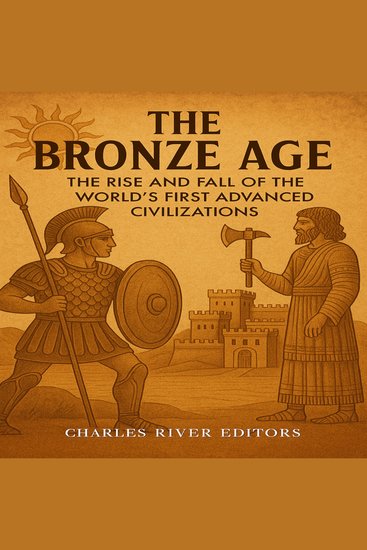
    When scholars look at the passage of history, certain epochs and transitions to new periods tend to stand out. The transition from the early modern to the Industrial Age in the late 18th century and the collapse of the Roman Empire are two of the more well known, but the transition from the Bronze to the Iron Age during the late 13th and early 12th centuries B.C. arguably changed the structure and course of world history more fundamentally than any period before or since. During this period, numerous wealthy and enduring kingdoms of the eastern Mediterranean Sea region collapsed, and new ones rose in their places.  
    While the Bronze Age is recognized as one of history’s most important phases, it’s been hard for historians to precisely date. The idea of the Bronze Age comes from a three-age system developed in the 19th century through which archaeologists and historians believe cultures evolve. These three ages are the Stone Age, the Bronze Age, and the Iron Age, and the concept of the system stems from the simultaneous development of museums in Europe during that time. In the Royal Museum of Nordic Antiquities in Denmark, Christian Jürgensen Thomsen, the director of the museum, began classifying objects of stone, bronze, or iron to better categorize and exhibit them. Each archaeological artifact was thus sorted according to their materials and further organized by shape and style. Through such methodology, working alongside archaeological reports, he was able to show how certain objects changed over time. 
    Such a typology, combined with stratigraphy noted in archaeological reports, was useful to early archaeologists with no reliable method for dating artifacts. By understanding which object came before or after, early archaeologists had a relative dating system with which to assess the age of an object or culture.
    Voir livre