Junte-se a nós em uma viagem ao mundo dos livros!
Adicionar este livro à prateleira
Grey
Deixe um novo comentário Default profile 50px
Grey
Assine para ler o livro completo ou leia as primeiras páginas de graça!
All characters reduced
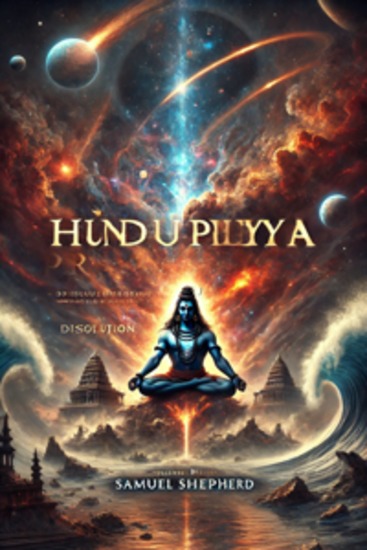
Hindu Pralaya - Dissolution - cover
LER

Hindu Pralaya - Dissolution

Samuel Shepherd

Editora: Samuel Shepherd

  • 0
  • 0
  • 0

Sinopse

🔥 Hindu Pralaya: Dissolution – The Ancient Secrets of Cosmic Endings and New Beginnings 🔥🕉️ What happens when the universe collapses? What lies beyond destruction? Is the end of the world truly an end—or just the beginning of something greater? Hindu philosophy has long understood that time is not linear but cyclical, where civilizations rise and fall, and even the gods themselves witness the dissolution of reality before it is reborn.📖 Hindu Pralaya: Dissolution is an extraordinary four-book series that unravels the mysteries of cosmic destruction (Pralaya), divine battles, apocalyptic science, and the spiritual rebirth that follows. Combining ancient Hindu texts, mythology, and modern scientific parallels, this collection reveals the profound truths hidden within the cycles of time.🌍 Four Books, One Ultimate Revelation 🌍🔹 Book 1: Pralaya – The Cosmic Cycles and the End of Time⏳ Dive into the vast Hindu concept of time, where the universe undergoes cycles of creation, destruction, and rebirth. Learn how the Yugas shape human destiny and why even the cosmos itself must dissolve into nothingness before being reborn.⚔️ Book 2: Myth and Reality – The Gods, Demons, and Battles of Pralaya💀 Witness the epic wars between gods and demons at the edge of time! From Vishnu’s final battles to Shiva’s cosmic dance of destruction, uncover the ancient myths that explain how chaos reigns before dharma is restored.🌪 Book 3: Science of the Apocalypse – Hindu Eschatology and Modern Catastrophes🔥 Could Hindu end-time prophecies be connected to real-world science? Discover how modern threats—climate change, nuclear war, solar storms, and cosmic disasters—mirror the ancient warnings of Pralaya.🌀 Book 4: Karmic Rebirth – Life, Death, and Renewal in Hindu Thought🕊 What happens after death? How does the soul navigate its journey through samsara? Explore the mysteries of karma, reincarnation, and moksha—the final liberation that frees the soul from the cycle of endless rebirth.✨ Why You Need This Series ✨🔮 Ancient Truths Meet Modern Understanding – Connect mythology with science to see the cycles of destruction and renewal in both the cosmos and personal life.🛕 A Journey into the Depths of Hindu Cosmology – Discover hidden knowledge from the Upanishads, Puranas, Bhagavad Gita, and esoteric texts that illuminate the nature of time and reality.🌍 The End Is Just the Beginning – Understand why Hinduism sees destruction not as final but as the key to transformation and rebirth, both in the universe and in the self.📜 Myth, History, and Science Interwoven – Explore how Hindu eschatology aligns with modern astrophysics, archaeology, and ecological collapse theories.🔥 Is This Book for You? 🔥✅ You’re fascinated by Hindu mythology, spirituality, and cosmic cycles.✅ You love exploring the mysteries of life, death, and the universe.✅ You want to connect ancient wisdom with modern reality.✅ You seek deeper meaning in the cycles of destruction and renewal.📖 Hindu Pralaya: Dissolution is an eye-opening journey into the heart of Hindu eschatology, revealing that beyond every end lies the promise of a new beginning. Whether you are a seeker, a scholar, or simply curious about the cosmic forces that shape our reality, this four-book series will transform the way you see the past, present, and future.🚀 Are You Ready to Unravel the Secrets of the Universe?🛒 Pre-order Now & Begin the Journey into Pralaya!
Disponível desde: 14/02/2025.

Outros livros que poderiam interessá-lo

  • Living Together - Inventing Moral Science - cover

    Living Together - Inventing...

    David Schmitz

    • 0
    • 0
    • 0
    Is moral philosophy more foundational than political theory? It is often assumed to be. David Schmidtz argues that the reverse is true: the question of how to live in a community is more fundamental than questions about how to live. This book questions whether we are getting to the foundations of human morality when we ignore contingent features of communities in which political animals live. 


    Schmidtz contends that theorizing about how to live together should take its cue from contemporary moral philosophy's attempts to go beyond formal theory, and ask which principles have a history of demonstrably being organizing principles of actual thriving communities at their best. Ideals emerging from such research should be a distillation of social scientific insight from observable histories of successful community building. What emerges from ongoing testing in the crucible of life experience will be path-dependent in detail even if not in general outline, partly because any way of life is a response to challenges that are themselves contingent, path dependent, and in flux. 


    Building on this view, Schmidtz argues that justice evolved as a device for grounding peace in the mutual recognition that everyone has their own life to live, and everyone has the right and the responsibility to decide for themselves what to want.
    Ver livro
  • Essays of Schopenhauer - cover

    Essays of Schopenhauer

    Arthur Schopenhauer

    • 0
    • 0
    • 0
    "Essays of Schopenhauer" by Arthur Schopenhauer is a captivating collection of philosophical essays that delve into the depths of human existence and offer profound insights into the complexities of life. In this thought-provoking anthology, Schopenhauer combines his keen intellect with his distinctive writing style to explore a range of philosophical ideas and themes. Throughout the essays, Schopenhauer contemplates the human condition, shedding light on the fundamental aspects of our existence. He reflects on the nature of suffering, the pursuit of happiness, and the inevitability of death, delving into the intricate relationship between desire and fulfillment. Read in English, unabridged.
    Ver livro
  • Medieval Architecture and Legacy - Building the Medieval World (3 in 1) - cover

    Medieval Architecture and Legacy...

    Harris Ropes

    • 0
    • 0
    • 0
    These three works highlight how architecture and intellectual ambition shaped the heart of the Middle Ages and left a legacy that endures to this day. 
    Begin with The Gothic Cathedral, a stunning symbol of spiritual devotion and engineering genius. Soaring spires, flying buttresses, and luminous stained glass windows combined to create sacred spaces that lifted hearts and minds toward heaven. These architectural marvels not only defined the skyline of medieval Europe but also reflected the era’s complex religious and social structures. 
    Next, delve into The Carolingian Renaissance, a revival of learning, literacy, and classical influence under Charlemagne's rule. This movement sparked architectural innovation, preserved ancient knowledge, and laid the foundations for a more cohesive European identity during a time of fragmentation and uncertainty. 
    Conclude with The Italian City-States, hubs of commerce, culture, and politics. Their wealth and rivalry fueled a vibrant civic life and groundbreaking urban planning that blended practicality with beauty. From Florence to Venice, these city-states bridged the medieval and Renaissance worlds, forever changing the course of European history. 
    Together, these works offer a window into how medieval people built not only physical structures—but also enduring cultural legacies.
    Ver livro
  • Aotearoa New Zealand - The Convergence and Histories - cover

    Aotearoa New Zealand - The...

    Lillian Brooks

    • 0
    • 0
    • 0
    Aotearoa New Zealand, located in the southwestern Pacific Ocean, is a country with a rich and diverse history that stretches back over a thousand years. Its historical and cultural journey has been shaped by the convergence of Māori and European influences, which has made Aotearoa one of the most unique nations in the world. The story of Aotearoa is not just one of migration and colonization but also of resilience, adaptation, and the constant negotiation of identity, land, and culture. 
    The Māori people, the indigenous inhabitants of New Zealand, arrived from eastern Polynesia in several waves of migration around the 13th century. Over the centuries, they developed a sophisticated culture, which included a rich oral tradition, strong tribal structures, and deep spiritual and cultural ties to the land. The Māori worldview was shaped by the concept of whenua (land), whakapapa (genealogy), and wairua (spirit), and their connection to the environment played a fundamental role in shaping their social and cultural practices. 
    The arrival of Europeans, led by explorers such as Abel Tasman in 1642 and Captain James Cook in 1769, marked a turning point in New Zealand’s history. Initial encounters between Māori and Europeans were characterized by curiosity, exchange, and occasional conflict. However, as European settlement expanded throughout the 19th century, the effects on Māori society became profound. The introduction of new technologies, ideas, and diseases, coupled with land confiscation and colonization, reshaped the cultural landscape of the country. This period led to the displacement of Māori from their ancestral lands and the beginning of a long history of legal and political struggles to protect their rights and sovereignty.
    Ver livro
  • Freedom's Battle - cover

    Freedom's Battle

    Mahatma Gandhi

    • 0
    • 0
    • 0
    "Freedom's Battle" by Mahatma Gandhi compiles powerful writings and speeches from Gandhi's relentless campaign for India's independence. Through eloquent reflections on nonviolent resistance, civil disobedience, and the ethical foundations of a free society, Gandhi articulates his vision for justice and equity. This compelling work provides profound insights into the principles that fueled the fight against colonial oppression and offers timeless lessons on courage, integrity, and the quest for human dignity.
    Ver livro
  • Persia and Islam: The History of the Islamic Empires that have Ruled Persia Since the Middle Ages - cover

    Persia and Islam: The History of...

    Editors Charles River

    • 0
    • 0
    • 0
    As the Persian Empire’s power makes clear, Persia has been a crucial area throughout history, and thus it has been fought over incessantly, watching empires rise and fall. For most of the past 1,400 years, Islamic powers have struggled for supremacy in the region.  
    The split between the two forms of Islam was already in the process of forming upon the death of the Prophet Muhammad. Muhammad had constructed around himself not only a potent new religious movement but also a powerful young state called the Ummah (the "Community" for lack of a better translation). Belonging to the Islamic faith also meant belonging to the Ummah, which was governed by its own laws and had many of its own institutions. 	Amid the upheaval in the Islamic world following Muhammad’s death, the Umayyad Caliphate lasted for less than a century, but in that time it managed to become one of the most influential of the major caliphates established following him. Its official existence was from 661-750, and the rulers were the male members of the Umayyad dynasty, roughly translated from Arabic as the “Sons of Umayyah.” Its primary base of power was in Syria following the creation of a dynastic, hereditary rule headed by one of Syria’s long-lasting governors, Muawiya ibn Abi Sufyan. 
    	The Ottoman Empire and Safavids would also vie for power in Persia after the caliphates, and the Ottomans in particular spent several centuries expanding their empire’s size, power, and influence, bumping up against Eastern Europe and becoming one of the world’s most important geopolitical players. It was a rise that would not truly start to wane until the 19th century.  Preserving its mixed heritage, coming from both its geographic position rising above the ashes of the Byzantine Empire and the tradition inherited from the Muslim Conquests, the Ottoman Empire lasted more than six centuries.
    Ver livro