Begleiten Sie uns auf eine literarische Weltreise!
Buch zum Bücherregal hinzufügen
Grey
Einen neuen Kommentar schreiben Default profile 50px
Grey
Jetzt das ganze Buch im Abo oder die ersten Seiten gratis lesen!
All characters reduced
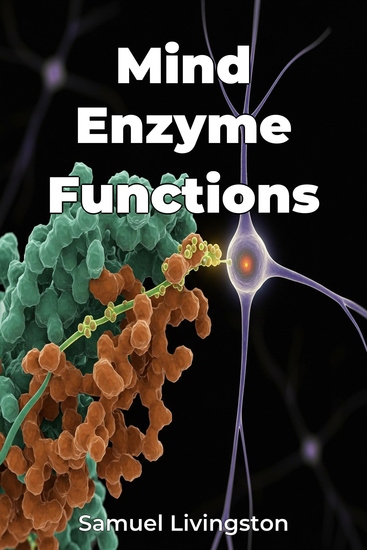
Mind Enzyme Functions - cover

Mind Enzyme Functions

Samuel Livingston

Übersetzer A AI

Verlag: Publifye

  • 0
  • 0
  • 0

Beschreibung

Mind Enzyme Functions explores the crucial role of enzymes in brain health and cognitive performance, focusing on how these biological catalysts influence everything from neurotransmitter synthesis to neural repair. Did you know that enzymes dictate how efficiently our brains adapt and recover, impacting conditions from cognitive decline to neurodegenerative diseases? The book delves into how understanding enzyme kinetics and regulation can unlock new therapeutic interventions.

 
The book progresses systematically, first establishing the principles of neuroenzymology before diving into specific enzyme systems. It examines their roles in neurotransmitter synthesis, antioxidant defense, and neural plasticity. By integrating biochemical details with clinical relevance, Mind Enzyme Functions offers a unique perspective on optimizing brain enzyme function through pharmaceutical, nutritional, and lifestyle modifications.
Verfügbar seit: 27.02.2025.
Drucklänge: 71 Seiten.
Weitere Bücher, die Sie mögen werden

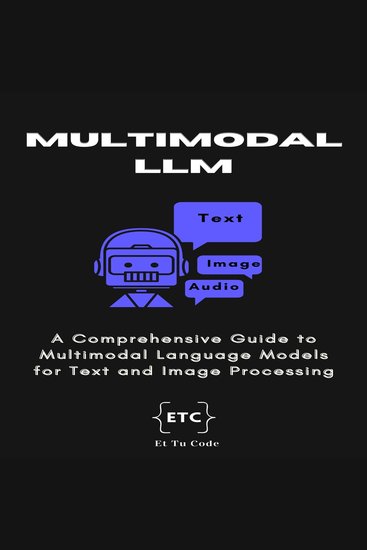
  • Multimodal LLM - A Comprehensive Guide to Multimodal Language Models for Text and Image Processing - cover

    Multimodal LLM - A Comprehensive...

    Et Tu Code

    • 0
    • 0
    • 0
    Dive into the cutting-edge world of Multimodal Language Models with our comprehensive guide!  
    In 'Introduction to Multimodal Language Models,' lay the foundation for your journey by understanding how these models seamlessly integrate text and image processing, revolutionizing communication. 
     Explore 'Building Multimodal Language Models' to grasp the intricate process of constructing these powerful tools. Then, fine-tune your understanding with 'Fine-tuning Multimodal Language Models,' where you'll learn to optimize models for specific tasks.  
    Dive into practical implementation with 'Implementing Multimodal LLMs with Python,' equipping yourself with essential coding skills. Feeling adventurous? 'Creating Your Own Multimodal LLM from Scratch' empowers you to customize models to suit your unique needs.  
    Discover the landscape of popular models, including those from Hugging Face, and explore real-world applications in 'Practical Applications of Multimodal LLMs.' Anticipate future challenges and directions in 'Challenges and Future Directions,' ensuring you stay ahead of the curve.  
    Conclude your journey with 'Conclusion,' where you'll reflect on your newfound knowledge and its implications. With insights, practical guidance, and hands-on tutorials, this audiobook equips you to navigate and harness the full potential of Multimodal Language Models for text and image processing.
    Zum Buch
  • Gardening Can Be Murder - How Poisonous Poppies Sinister Shovels and Grim Gardens Have Inspired Mystery Writers - cover

    Gardening Can Be Murder - How...

    Marta McDowell

    • 0
    • 0
    • 0
    This fun, engrossing book takes a look at the surprising influence that gardens and gardening have had on mystery novels and their authors. With their deadly plants, razor-sharp shears, shady corners, and ready-made burial sites, gardens make an ideal scene for the perfect murder. But the outsize influence that gardens and gardening have had on the mystery genre has been underappreciated. Now, Marta McDowell, a writer and gardener with a near-encyclopedic knowledge of the genre, illuminates the many ways in which our greatest mystery writers, from Edgar Allen Poe to authors on today’s bestseller lists, have found inspiration in the sinister side of gardens. From the cozy to the hardboiled, the literary to the pulp, and the classic to the contemporary, Gardening Can Be Murder is the first book to explore the mystery genre’s many surprising horticultural connections. Meet plant-obsessed detectives and spooky groundskeeper suspects, witness toxic teas served in foul play, and tour the gardens—both real and imagined—that have been the settings for fiction’s ghastliest misdeeds. A New York Times bestselling author herself, McDowell also introduces us to some of today’s top writers who consider gardening integral to their craft, assuring that horticultural themes will remain a staple of the genre for countless twisting plots to come.    “This book is dangerous. A veritable cornucopia of crime fiction and gardening lore, it faces the reader with multiple temptations—books to seek out, plants to obtain, garden tours to book.” —Vicki Lane, author of the Elizabeth Goodweather Appalachian Mysteries
    Zum Buch
  • Summary: Dare to Lead: Brave Work Tough Conversations Whole Hearts - by Brené Brown - cover

    Summary: Dare to Lead: Brave...

    EssentialInsight Summaries

    • 0
    • 0
    • 0
    "I define a leader as anyone who takes responsibility for finding the potential in people and processes, and who has the courage to develop that potential" – Brené Brown 
      
    Summary of Dare to Lead: Brave Work. Tough Conversations. Whole Hearts by Brené Brown 
      
    Brené Brown is an authority in the study of courage and vulnerability as it pertains to leadership. In brief, she shares subtle skills that encourage courage-building skills and also gives practical steps to apply these skills within organizations and any other form of social setting throughout this empowering book. 
      
    What to take from this book? 
    We all experience difficult conversations frequently. Our first instinct is usually to avoid these kinds of conversations due to the discomfort that they produce. However, this book is a practical guide that delivers the necessary skills to handle these situations competently, courageously, and productively. 
      
    Who is this book for? 
    This book is for readers who seek to exude more courage, confidence, and leadership. Employees who wish to build productive relationships, trusting and respectful connections with their colleagues, and happy, healthy relationships at all levels will enjoy this book. especially meant for leaders in any setting including military branches, business. NGOs, sports, and all vocations. The following main topics are covered in this book:Rumbling with Vulnerability.Living into our Values.Braving Trust.Learning to rise.
    Zum Buch
  • Digital Capitalism and Distributive Forces - cover

    Digital Capitalism and...

    Sabine Pfeiffer

    • 0
    • 6
    • 0
    Are robots taking away our jobs? Those who ask this question have misunderstood digitalisation - it is not an industrial revolution by other means. Sabine Pfeiffer searches for the actual novelties brought about by digitalisation and digital capitalism. In her analysis, she juxtaposes Marx's concept of productive force with the idea of distributive force. From the platform economy to artificial intelligence, Pfeiffer shows that digital capitalism is less about the efficient production of value, but rather about its fast, risk-free, and permanently secured realisation on the markets. The examination of this dynamic and its consequences also leads to the question of how destructive the distributive forces of digital capitalism might be.
    Zum Buch
  • Human Agency - 75% DNA 25% Free Will - cover

    Human Agency - 75% DNA 25% Free...

    Muren Herrid

    • 0
    • 0
    • 0
    Nature versus nurture has shaped centuries of debate—but what if the answer is neither, and both? 
    In Human Agency: 75% DNA, 25% Free Will, scientist and biotechnologist Muren Herrid, PhD, revisits the classic question of whether our lives are determined by genetics (nature) or environment and experience (nurture)—and argues that modern science demands a more nuanced answer. 
    Drawing on research in genetics, epigenetics, evolution, and biotechnology, this book examines how DNA powerfully shapes intelligence, behaviour, and physical traits, while also showing how environment, experience, and mental state can influence how genes are expressed—sometimes across generations. 
    Blending rigorous science with real-world examples and personal reflections, Human Agency explores:Why genetics explains more about human differences than we often admitHow epigenetics blurs the line between nature and nurtureWhether mental state and conscious behaviour can influence biologyWhat evolution looks like in the age of AI, gene editing, and NeuralinkHow humanity may actively participate in its own future evolution 
    Written for curious readers, science enthusiasts, policymakers, and professionals, this book challenges simplistic answers to the nature-versus-nurture debate and replaces them with a biologically grounded, evidence-based framework. 
    If you’ve ever asked whether your destiny is written in your DNA—or whether free will still matters—Human Agency offers a compelling scientific perspective on who we are, and how much choice we truly have.
    Zum Buch
  • Saving The Planet By Design - Reinventing Our World Through Ecomimesis - cover

    Saving The Planet By Design -...

    Ken Yeang

    • 0
    • 0
    • 0
    Can we ‘save the Planet’? For a resilient, durable and sustainable future for human society, we need to repurpose, reinvent, redesign, remake and recover our human-made world so that our built environment is benignly and seamlessly biointegrated with Nature to function synergistically with it. These are the multiple tasks that humanity must carry out imminently if there is to be a future for human society and all lifeforms and their environments on the Planet. Addressing this is the most compelling question for those whose daily work impacts on Nature, such as architects, engineers, landscape architects, town planners, environmental policy makers, builders and others, but it is a question that all of humanity needs to urgently address.Presented here are two key principles as the means to carry out these tasks – ‘ecocentricity’ being guided by the science of ecology, and ‘ecomimesis’ as designing and making the built environment including all artefacts based on the emulation and replication of the ‘ecosystem’ concept. Designing with ecology is contended here as the authentic approach to green design from which the next generation of green design will emerge, going beyond current use of accreditation systems. For those who subscribe to this principle, this is articulated here, showing how it can be implemented by design. Adopting these principles is fundamental in our endeavour to save our Planet Earth, and changes profoundly and in entirety the way we design, make, manage and operate our built environment.
    Zum Buch