Rejoignez-nous pour un voyage dans le monde des livres!
Ajouter ce livre à l'électronique
Grey
Ecrivez un nouveau commentaire Default profile 50px
Grey
Abonnez-vous pour lire le livre complet ou lisez les premières pages gratuitement!
All characters reduced
The Works of Samuel Johnson: Parlimentary Debates I - A Literary Insight into 18th-Century Parliamentary Discourse - cover

The Works of Samuel Johnson: Parlimentary Debates I - A Literary Insight into 18th-Century Parliamentary Discourse

Samuel Johnson

Maison d'édition: Good Press

  • 0
  • 0
  • 0

Synopsis

In "The Works of Samuel Johnson: Parliamentary Debates I," Samuel Johnson presents a meticulous collection of debates that encapsulate the fervor of 18th-century British politics. Employing a discourse style that is both eloquent and incisive, Johnson navigates the dramatics of parliamentary procedure while articulating the moral and philosophical implications of contemporary governance. The text is rich in rhetoric and critical analysis, showcasing Johnson's masterful command of language and keen understanding of political discourse. This work not only serves as a historical document but also reflects the Enlightenment ideals of reason and public accountability prevalent at the time. Samuel Johnson, a towering figure in English literature and lexicography, was indelibly shaped by the sociopolitical currents of his era. His deep engagement with language, coupled with a commitment to social justice and human understanding, informed his approach to political commentary. Johnson's insights were honed through his diverse experiences'Äîfrom his struggles with personal adversity to his interactions with influential figures of his time'Äîcontributing profoundly to his viewpoint on parliamentary practices and ethics. I highly recommend "The Works of Samuel Johnson: Parliamentary Debates I" to readers interested in the intersection of literature and politics. Johnson's articulate examination of parliamentary debates not only educates but also challenges readers to reflect on the broader implications of political rhetoric and civic responsibility.
Disponible depuis: 12/08/2023.
Longueur d'impression: 486 pages.

D'autres livres qui pourraient vous intéresser

  • Accountability after Economic Crisis - Retribution Truth or Acknowledgment? - cover

    Accountability after Economic...

    Iosif Kovras

    • 0
    • 0
    • 0
    Accountability after Economic Crisis reconstructs the captivating story of how different nations responded to the 2008 economic crisis, one of the most challenging economic downturns in modern history. Why did some countries look for explanations of the economic failure and seek to hold those responsible to account, while others looked the other way? If so, were certain methods more effective than others? Is there, in fact, a best way? 


    Iosif Kovras introduces an innovative framework to explain the varied political responses to an economic crisis, pushing the boundaries of traditional analysis by drawing on political economy, comparative politics, public administration, economic history, criminal law, and criminology. He identifies three distinct accountability mechanisms used by leaders: retribution—prosecuting those at fault; truth recovery—establishing commissions of inquiry to reveal the facts; official acknowledgment—issuing formal apologies. Zeroing in on each country in turn, he shows how these mechanisms were employed and with what effect. 


    Featuring original observations from a survey in Iceland and experimental data from a conjoint experiment, Accountability after Economic Crisis provides a thorough and engaging examination of how countries manage accountability in the wake of an economic crisis.
    Voir livre
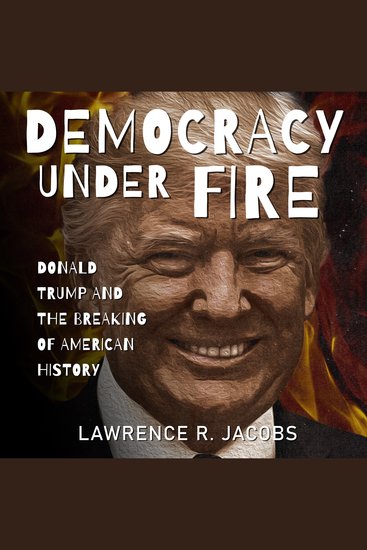
  • Democracy Under Fire - Donald Trump and the Breaking of American History - cover

    Democracy Under Fire - Donald...

    Lawrence R. Jacobs

    • 0
    • 0
    • 0
    Before Trump even ran for President, his disdain for the rules, procedures, and norms of American democracy and the US Constitution was well-known and led prominent Republicans to repudiate him as "unfit" for the GOP nomination. Given the clear-eyed assessment of candidate Trump, why did the Republican Party nominate him as its presidential candidate in 2016 and then stand by him during the next four years? 


    Much of the attention paid to Trump's rise to power has focused on his corrosive personality and divisive style of governing. But he alone is not the problem. The vulnerability is much broader and deeper. The ascendance of Trump is the culmination of nearly 250 years of political reforms that gradually ceded party nominations to small cliques of ideologically-motivated party activists, interest groups, and donors. 


    In Democracy under Fire, Lawrence Jacobs provides a highly engaging history of political reforms since the late-eighteenth century that over time dangerously weakened democracy, widened political inequality as well as racial disparities, and rewarded toxic political polarization. Jacobs's searing indictment of political reformers concludes with recommendations to restrain the unbridled ambition of politicians who thrive on division and instead generate broad citizen engagement with tangible policy making.
    Voir livre
  • Ugly Freedoms - cover

    Ugly Freedoms

    Elisabeth R. Anker

    • 0
    • 0
    • 0
    In Ugly Freedoms Elisabeth R. Anker reckons with the complex legacy of freedom offered by liberal American democracy, outlining how the emphasis of individual liberty has always been entangled with white supremacy, settler colonialism, climate destruction, economic exploitation, and patriarchy. These "ugly freedoms" legitimate the right to exploit and subjugate others. At the same time, Anker locates an unexpected second type of ugly freedom in practices and situations often dismissed as demeaning, offensive, gross, and ineffectual but that provide sources of emancipatory potential. She analyzes both types of ugly freedom at work in a number of texts and locations, from political theory, art, and film to food, toxic dumps, and multispecies interactions. Whether examining how Kara Walker's sugar sculpture A Subtlety, Or the Marvelous Sugar Baby reveals the importance of sugar plantations to liberal thought or how the impoverished neighborhoods in The Wire blunt neoliberalism's violence, Anker shifts our perspective of freedom by contesting its idealized expressions and expanding the visions for what freedom can look like, who can exercise it, and how to build a world free from domination.
    Voir livre
  • The Politics of Obedience - A Discourse on Voluntary Servitude - cover

    The Politics of Obedience - A...

    Etienne de la Botie

    • 0
    • 0
    • 0
    In this seminal work of political philosophy, Boetie asks one of the most obvious questions of political theory: why is it that a minority of rulers can remain in power over a majority of subjects who pay all the taxes? 
    The answer might be quite surprising to us all. The conclusion is that the people tend to enslave themselves, to let themselves be governed by tyrants. 
    Liberty is the natural condition of the people. Servitude, however, is fostered when people are raised in subjection. People are trained to adore rulers. While freedom is forgotten by many, there are always some who will never submit. 
    What is the answer then? 
    The author brilliantly and obviously outlines these points in the pages that follow in a way that is illuminating and also simple. It is we who enslave ourselves at the beck and call of 'authority'. Enjoy this classic work that roots sovereignty into philosophy and demonstrates how simply the tides can change.
    Voir livre
  • Stories are Weapons - Psychological Warfare and the American Mind - cover

    Stories are Weapons -...

    Annalee Newitz

    • 0
    • 0
    • 0
    In Stories Are Weapons, Annalee Newitz traces the way disinformation, propaganda, and violent threats have evolved from military weapons deployed against foreign adversaries into tools in domestic culture wars. Newitz delves into America's deep-rooted history with psychological operations, beginning with Benjamin Franklin's Revolutionary War–era fake newspaper and nineteenth-century wars on Indigenous nations, and reaching its apotheosis with the Cold War and twenty-first-century influence campaigns online. America's secret weapon has long been coercive storytelling. And there's a reason for that: operatives who shaped modern psychological warfare drew on their experiences as science fiction writers and in the advertising industry. 


    Now, through a weapons-transfer program long unacknowledged, psyops have found their way into the hands of culture warriors, transforming democratic debates into toxic wars over American identity. Newitz zeroes in on conflicts over race and intelligence, school board fights over LGBT students, and campaigns against feminist viewpoints, revealing how, in each case, specific groups of Americans are singled out and treated as enemies of the state. Crucially, Newitz delivers a powerful counternarrative, speaking with the researchers and activists who are outlining a pathway to achieving psychological disarmament and cultural peace.
    Voir livre
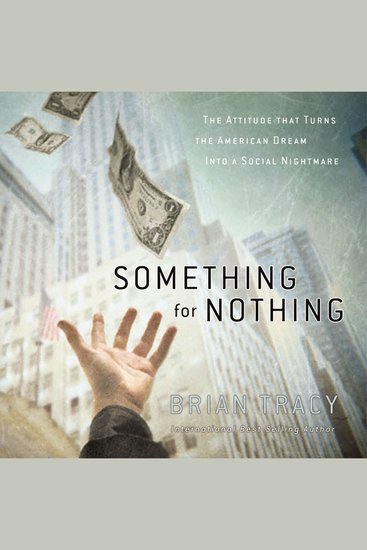
  • Something for Nothing - The All-Consuming Desire that Turns the American Dream into a Social Nightmare - cover

    Something for Nothing - The...

    Brian Tracy

    • 0
    • 0
    • 0
    America's greatness comes from people working hard to fulfill their dreams. But today that greatness is being undermined by people using the government to steal other people's dreams (and money). Rather than participate and innovate in the marketplace, generating goods and services that benefit society, people are increasingly vying for political advantage to live at the expense of others. Something for Nothing reveals the social and personal threats inherent in this emerging "grabbing match" culture, juxtaposing free-market virtues against government vices, explaining how the something-for-nothing mentality corrupts the political system, undermines corporate success, and stifles the individual's ability to prosper and contribute long-term to society. More than exposing the dangers, however, Tracy helps readers set a personal and culture-wide agenda for change.
    Voir livre