Rejoignez-nous pour un voyage dans le monde des livres!
Ajouter ce livre à l'électronique
Grey
Ecrivez un nouveau commentaire Default profile 50px
Grey
Abonnez-vous pour lire le livre complet ou lisez les premières pages gratuitement!
All characters reduced
The Vanity of Human Wishes (1749) and Two Rambler papers (1750) - Enriched edition - cover

The Vanity of Human Wishes (1749) and Two Rambler papers (1750) - Enriched edition

Samuel Johnson

Maison d'édition: DigiCat

  • 0
  • 0
  • 0

Synopsis

In "The Vanity of Human Wishes," Samuel Johnson presents a profound exploration of ambition, desire, and the inherent futility of human aspirations. With masterful use of an intricate verse structure and a wealth of classical allusion, Johnson critiques the chaotic pursuit of worldly success and the ephemeral satisfaction it brings. The poem draws heavily on the moral, philosophical, and aesthetic influences of the Augustan age, offering a reflective commentary that resonates with the disillusionment of the human condition. The two Rambler papers, also included, delve into themes of virtue, vice, and the social frictions of his time, showcasing Johnson's adeptness in essayistic prose that seeks to enlighten and entertain simultaneously. Samuel Johnson, an eminent figure in 18th-century English literature, was shaped by his tumultuous early life, including poverty and illness. His pursuit of knowledge led him to become a lexicographer and essayist of unparalleled significance, allowing him to imbue his works with both personal insight and rigorous moral philosophy. His experiences navigating the complexities of society uniquely inform the critical perspective present in both the poem and his essays. This book is essential for readers seeking to engage with the moral weight of Enlightenment thought and its dissection of personal ambition. Johnson's acute observations not only illuminate the foibles of human nature but also provoke deep reflection on the true essence of fulfillment. Encountering Johnson's work is thus an invitation to contemplate the deeper questions of existence in an era still relatable today.

In this enriched edition, we have carefully created added value for your reading experience:
- A comprehensive Introduction outlines these selected works' unifying features, themes, or stylistic evolutions.
- The Author Biography highlights personal milestones and literary influences that shape the entire body of writing.
- A Historical Context section situates the works in their broader era—social currents, cultural trends, and key events that underpin their creation.
- A concise Synopsis (Selection) offers an accessible overview of the included texts, helping readers navigate plotlines and main ideas without revealing critical twists.
- A unified Analysis examines recurring motifs and stylistic hallmarks across the collection, tying the stories together while spotlighting the different work's strengths.
- Reflection questions inspire deeper contemplation of the author's overarching message, inviting readers to draw connections among different texts and relate them to modern contexts.
- Lastly, our hand‐picked Memorable Quotes distill pivotal lines and turning points, serving as touchstones for the collection's central themes.
Disponible depuis: 16/09/2022.
Longueur d'impression: 24 pages.

D'autres livres qui pourraient vous intéresser

  • John - The World English Bible Book 43 (Unabridged) - cover

    John - The World English Bible...

    Various Authors

    • 0
    • 0
    • 0
    The Gospel of John is the fourth of the four canonical gospels. It contains a highly schematic account of the ministry of Jesus, with seven "signs" culminating in the raising of Lazarus (foreshadowing the resurrection of Jesus) and seven "I am" discourses (concerned with issues of the church-synagogue debate at the time of composition) culminating in Thomas' proclamation of the risen Jesus as "my Lord and my God". The gospel's concluding verses set out its purpose, "that you may believe that Jesus is the Christ, the Son of God, and that believing you may have life in his name.
    Voir livre
  • Money skills for teens decoded - easy steps to master how to budget save and invest to build wealth and avoid debt (what they don’t teach you in school) - cover

    Money skills for teens decoded -...

    Ryan Zein

    • 0
    • 0
    • 0
    Build Wealth and Avoid Debt Before You Graduate—Even If You Don’t Have Income Yet! 
    Feel like your money disappears the second you get it? Wonder why school teaches algebra but not how to open a bank account? You’re not alone—and that’s exactly why Money Skills for Teens Decoded exists. 
    This is your go-to guide for taking control of your finances, even if you don’t earn money yet. Whether you're saving for a car, figuring out how credit works, or just trying to keep more of your allowance, this book helps you build smart habits early. 
    No income? No problem. 
    The skills inside—budgeting, saving, investing, spending wisely—will set you up for long-term success. It’s like a cheat code for life after graduation. 
    Here’s what you’ll learn (without the boring stuff): 
    • Budget like a pro—even on a $0 income 
    • Save for big goals—college, car, tech, you name it 
    • Grow your money—simple investing strategies 
    • Dodge debt—learn credit before it learns you 
    • Turn hobbies into side hustles—get creative, earn cash 
    • Spend smart—resist impulse buys and peer pressure 
    • Use tech to your advantage—apps that make money easy 
    • Prepare for the unexpected—build an emergency fund 
    What Makes This Book Different? 
    Forget dull lectures. This is practical, fun, and packed with relatable advice and real teen success stories. You'll learn exactly what to do, why it works, and how to start today—no confusing jargon, no financial background required. 
    Think you don’t have enough money to manage? 
    That’s the biggest myth of all. It’s not about how much you have—it’s about what you do with it.
    Voir livre
  • Living Undivided - Loving Courageously for Racial Healing and Justice - cover

    Living Undivided - Loving...

    Chuck Mingo, Troy Jackson, Holly...

    • 0
    • 0
    • 0
    As the church and as a country, we've often neglected and avoided addressing the impact and ongoing reality of racism. We've been more focused on order than justice, more concerned with social media posturing than solidarity, more committed to judgment than repentance. But God's people are called to more. We need to lead the way to true racial healing, solidarity, and justice. 


    Through enlightening history and eye-opening personal stories, Living Undivided will equip and empower you with the biblical, transformative tools you need to move from just hoping and wishing for racial justice to actionable change that makes a difference in your life and the lives of churches, neighborhoods, and cities.
    Voir livre
  • A People's Guide to Capitalism - An Introduction to Marxist Economics - cover

    A People's Guide to Capitalism -...

    Hadas Thier

    • 0
    • 0
    • 0
    A lively, accessible, and timely guide to Marxist economics for those who want to understand and dismantle the world of the 1%. 


    Economists regularly promote Capitalism as the greatest system ever to grace the planet. With the same breath, they implore us to leave the job of understanding the magical powers of the market to the "experts." 


    Despite the efforts of these mainstream commentators to convince us otherwise, many of us have begun to question why this system has produced such vast inequality and wanton disregard for its own environmental destruction. This book offers answers to exactly these questions on their own terms: in the form of a radical economic theory.
    Voir livre
  • Medieval History of Montenegro The: The History of the Region’s Rulers and Culture Before the Modern Era - cover

    Medieval History of Montenegro...

    Editors Charles River

    • 0
    • 0
    • 0
    Much has been written about Western intervention during the breakup of Yugoslavia, and whether it made matters worse, prevented worse atrocities, or was simply ineffective. In early 1992, however, what was clear was that Europe was hopelessly divided over the best course of action to take towards Yugoslavia, and after several years of fighting, the Bosnian War was one of the most violent conflagrations in Europe since the end of World War II.  
    	That war had been the byproduct of centuries of tensions in the Balkans, and an attempt in the wake of World War I to redraw the political boundaries of Europe and the Middle East. That included forming the Kingdom of Yugoslavia, initially known as the Kingdom of Serbs, Croats and Slovenes, a particularly fragile enterprise, and there was almost constant tension between the majority Serbs and the other Yugoslav nationalities, especially the Croats. As a result, the Kingdom was a land of political assassinations, underground terrorist organizations, and ethnic animosities. In 1929, King Alexander I suspended democracy and ruled as a dictator until he himself was assassinated in 1934.  
    	Depending on the source, many authors have focused on different catalysts for Yugoslavia’s demise, but Vesna Drapac may have succinctly summed the situation up when he wrote that by the end, the state “lacked a reason to exist.” There is certainly something in this sentiment, but the disintegration came at an enormous cost. 
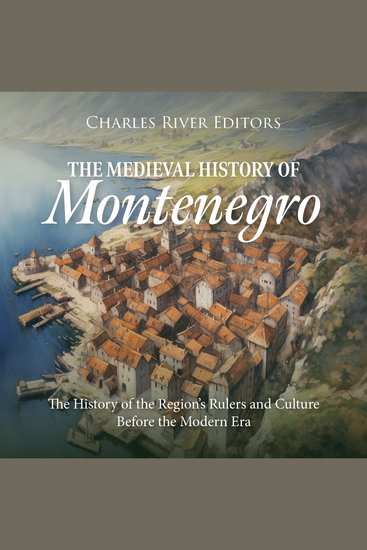
    	Given what happened in Yugoslavia, it should be little surprise the area that eventually became the modern nation of Montenegro has had a turbulent history for millennia, with shifting borders, different degrees of autonomy, and various conflicts occurring within it.  
    	  
      
    Voir livre
  • The Sistine Gaze - I too begin with scaffolding - cover

    The Sistine Gaze - I too begin...

    Seamus Cashman

    • 0
    • 0
    • 0
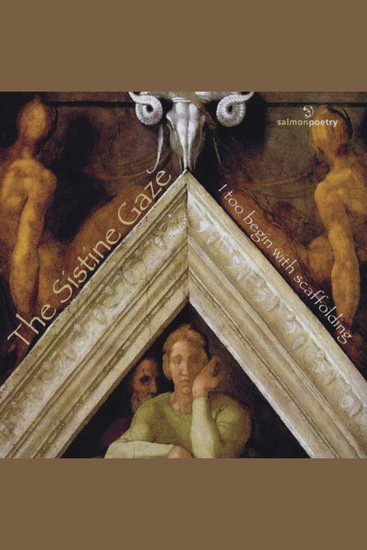
    Like the Ceiling and Wall to which the poet is lured by Michelangelo's muse, The Sistine Gaze dances between vision and fantasy in words, images and metaphors that are muscular, tangible, sensuous, erotic or at times cold and questioning. The poem's philosophic currents in rhythmic line and verse are meditations on existence in the swell and fall of activity, of changing lives. 
    The poem's 'gaze' fixes on the creative process as mythologies, the god, the ungodly, and the corporeal luxuriate int he riches of the great Michelangelo's genius. Human certainty, death and the artist at work are central strand, discovering magnificence in the human body and tasting its destiny. 
    This ekphrastic epic is orchestral, impressionistic, thought-provoking and controversial. Indeed its raison d'être seems elegantly framed in an aphoristic line inviting us, 'To balance life with death and venture bravely to be beautiful.'
    Voir livre