



Delia - Diana
Samuel Daniel, Henry Constable
Maison d'édition: Project Gutenberg
Synopsis
Veuillez nous excuser, nous ne disposons pas de synopsis de ce livre. Entrez le lire à 24symbols.com
Disponible depuis: 16/07/2006.

Maison d'édition: Project Gutenberg
Veuillez nous excuser, nous ne disposons pas de synopsis de ce livre. Entrez le lire à 24symbols.com

Mikhail Bulgakov was born on 15th May 1891 in Kiev, in the Kiev Governorate of the Russian Empire, into a Russian family.  He was one of seven children.

In 1901, Bulgakov attended the First Kiev Gymnasium, and developed a keen interest in Russian and European literature, theatre and opera.  After the death of his father in 1907, his mother assumed responsibility for his education.  After graduating Bulgakov entered the Medical Faculty of Kiev University and then took up a post as physician at the Kiev Military Hospital.

At the outbreak of the First World War, he volunteered as a doctor and was sent directly to the front, where he was badly injured at least twice.  To suppress chronic pain, especially in the abdomen, he injected morphine.  It took years to wean himself off.

He now took up medical posts in various towns and in 1919, he was mobilised by the Ukrainian People's Army and assigned to the Northern Caucasus.  There, he became seriously ill with typhus and barely survived.

After this illness, Bulgakov abandoned his medicine to pursue writing.  He moved to Vladikavkaz and had two plays staged there with great success.  He wrote too for various newspapers and other outlets, but his critics were many.  And growing.

When a Moscow's theatre director severely criticised Bulgakov, Stalin personally protected him, saying that a writer of Bulgakov's quality was above ‘party words’ like ‘left’ and ‘right’.   Indeed, it is said that Stalin watched ‘The Days of the Turbins’ at least 15 times.

It was not to last and by March 1929, Bulgakov's career was ruined when Government censorship stopped publication of any of his work and plays.

In despair, Bulgakov wrote a personal letter to Stalin.  He requested permission to emigrate.  He received a phone call from the Soviet leader, who asked the writer whether he really desired to leave. He replied that a Russian writer cannot live outside of his homeland.  Stalin thus gave him permission to continue working. In May 1930, he re-joined the theater, as stage director's assistant.

During the last stressful decade of his life, and in poor health, Bulgakov continued to work on ‘The Master and Margarita’, wrote plays, critical works, stories, and continued translations and dramatisations of novels.  Many of them were not published, others were derided by critics.

On 10th March 1940, Mikhail Afanasyevich Bulgakov died from nephrosclerosis.  He was 48.

‘The Master and Margarita’ was not published in any form until the mid-1960’s

Here Bulgakov relates a story as told by a doctor describing the terrible things that humanity is capable of doing in times of war.
Voir livre

"When Lazarus rose from the grave, after three days and nights in the mysterious thraldom of death, and returned alive to his home, it was a long time before anyone noticed the evil peculiarities in him that were later to make his very name terrible." One of Andreyev's best-known short stories, "Lazarus" follows the Eastern Orthodox tradition that Lazarus never smiled again, and it explores what happened to the biblical figure after his resurrection from the dead. The unsettling coldness that exudes from the man who cheated death cannot be denied by anyone who meets him. As his notoriety increases, few can resist the chance of an audience with the man who has seen beyond the realms of life, but be they urchin or Emperor, none can stand to be in the presence of Lazarus for long. "Lazarus", first published in Russian in 1906, deals with themes of faith, mortality and the human condition. This recording is based on a translation by Thomas Seltzer.Voir livre

Romeo and Juliet is Shakespeare's famous tragedy of two "star-crossed lovers" from rival houses. Romeo and Juliet meet at a party and fall instantly in love, realizing too late that their families, the Montagues and the Capulets, are mortal enemies. Braving parental opposition, the teenage lovers marry in secret, with the aid of the well-intentioned Friar Lawrence. Yet, as Shakespeare has often observed, the course of true love does not run smoothly, and Romeo and Juliet must risk death to be together.Voir livre
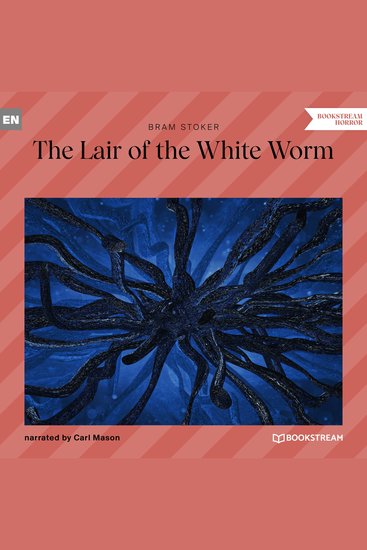
The Lair of the White Worm is a horror novel by the Irish writer Bram Stoker. It was first published by Rider and Son of London in 1911 - the year before Stoker's death - with colour illustrations by Pamela Colman Smith. The story is based on the legend of the Lambton Worm. It has also been issued as The Garden of Evil.Voir livre

Adela Nora Rogers St. Johns (May 20, 1894 - August 10, 1988) was an American journalist, novelist, and screenwriter for silent movies. She is best remembered for her groundbreaking exploits as "The World's Greatest Girl Reporter" in the 1920s and 30s, and her celebrity interviews for Photoplay magazine.Voir livre

Betrayed by his rivals and falsely accused of sedition by a justice system that is anything but, Edmond Dantes is thrown into the dungeon of the Chateau d'If and left for dead. A chance encounter with a mad priest leads to the resurrection of hope, a frightening escape, and the discovery of untold riches. Twenty four years after his incarceration, Edmond Dantes reemerges as the mysterious and vampire like Count of Monte Cristo, with the sole intention of extracting vengeance on those who profited from his disappearance. This classic thriller by Alexandre Dumas has been reimagined many times over the centuries, but this audiobook recording, taken from the original English translation, edited and performed by award winning narrator Joshua Macrae, takes Dumas' Shakespearean poetry and wit and blends it with the craft of modern audio story telling. It's a wild ride from start to finish . . .Voir livre





