Rejoignez-nous pour un voyage dans le monde des livres!
Ajouter ce livre à l'électronique
Grey
Ecrivez un nouveau commentaire Default profile 50px
Grey
Abonnez-vous pour lire le livre complet ou lisez les premières pages gratuitement!
All characters reduced
Human Echolocation Ability - cover

Human Echolocation Ability

Sage Greenwood

Traducteur A AI

Maison d'édition: Publifye

  • 0
  • 0
  • 0

Synopsis

Human Echolocation Ability explores the fascinating world of how some blind individuals navigate using sound, a skill rooted in auditory perception and sensory substitution. This book examines the science and psychology behind this adaptive behavior, revealing how the brain interprets acoustic environments to create a mental map.

 
Did you know that human echolocation isn't just about hearing echoes? It also involves complex cognitive processing to understand the size, shape, and distance of objects. The book progresses from the basic physics of sound to the neural pathways involved in processing echoes.

 
By examining case studies and research findings, the book argues that echolocation isn't merely a compensatory mechanism, but a latent ability present in all humans. This exploration challenges traditional views of sensory deprivation and highlights the remarkable brain plasticity that allows individuals to develop this skill, potentially aiding in rehabilitation and offering insights into neuroscience.
Disponible depuis: 27/02/2025.
Longueur d'impression: 65 pages.


D'autres livres qui pourraient vous intéresser

  • The Magic in the Tragic - Rewriting the Script on Grief and Discovering Happiness in Our Darkest Days - A New Approach to Resilience Grieving and Healing in the Midst of Tragedy or Trauma - cover

    The Magic in the Tragic -...

    John Tsilimparis

    • 0
    • 0
    • 0
    Read by the author.  
    Discover a new way to think about your grief and loss. Esteemed psychotherapist and bereavement counselor John Tsilimparis, MFT, shows you the ways grief and loss intertwine with beauty, tenderness, and human connection to empower you to build emotional resilience in a difficult world. 
    What if you could flip the script on the pain in your life and learn how to cultivate purpose and joy—not after grief but during it, not despite hardship but because of it? What if you could find a type of magic in your tragedy? A way to understand your emotions and reframe your grief that opens you up rather than shuts you down? 
    Drawing on his own story, scientific and philosophical evidence, the soothing effects of the arts and nature, and three decades of experience as a psychotherapist and grief counselor, John Tsilimparis offers a new take on adversity in The Magic in the Tragic. In these uncertain times, you'll be equipped to:Approach grief in an empowering wayAcquire the tools needed to develop emotional resiliencyAddress fear and uncertainty head-on rather than avoid itEmbrace difficult times without sugarcoating themAccess the unseen beauty of your deepest emotionsDiscover the healing power and belonging of music, art, and nature 
      
    The Magic in the Tragic powerfully explores how the hardest things in life intersect purpose and meaning, splendor and connectedness. When you embrace the magic in your tragic seasons, you can step into the future with hope, knowing that even when grief comes, it comes with an invitation to new life.
    Voir livre
  • Saratoga and Yorktown: The History of the American Revolution’s Most Important Campaigns - cover

    Saratoga and Yorktown: The...

    Editors Charles River

    • 0
    • 0
    • 0
    At the end of 1776, the American war effort was on the verge of collapse, and despite Washington’s success at Trenton, the British were confident that they could quell the rebellion in 1777. That winter, the British planned a complicated campaign in which British armies from Canada and New York would strike out across New England and link up, with the goal of cutting off the Northern colonies. Indeed, 1777 did prove to be the pivotal year of the war, but not in the way the British intended. 
    In December 1776, Benjamin Franklin was sent by Congress to France to attempt to secure a critically needed alliance. Franklin was an ideal choice for Enlightened France, which revered Franklin for his scientific accomplishments and his known reputation as a brilliant man. Franklin had also been a diplomat before the Revolution, spending several years in London on behalf of the colonies. However, the French refused to provide more than arms and money throughout 1777, until they learned in December 1777 about Saratoga and Burgoyne’s surrender. With that news, French King Louis XVI entered into a formal military alliance with the United States, and in February 1778, France joined the war. 
    Yorktown was a former tobacco trading post now in decline, not much bigger than a large village. But Yorktown was tucked away on the northern edge of the York peninsula in rural Virginia, and in 1781 it became the site of a brief siege between two small armies, fought with all the decorum and formality of 18th century European warfare. As he made his dispositions at Yorktown in September 1781, he had every reason to expect another British success. The ensuing siege panned out rather differently. On October 19, 1781, for just the second time during the war (the other at Saratoga), an entire British field army surrendered to the rebel patriots.
    Voir livre
  • Karma Yoga - cover

    Karma Yoga

    Bhikshu

    • 0
    • 0
    • 0
    The lessons included in this book are written by an Asiatic for the English-speaking peoples of the world, and suffer from the fact that the mother tongue of the writer is not English nor Sanskrit and that his metaphysic is oriental. Much of the teaching that 1s given here has been given out privately in the Yogic schools of the select, though not in the practical form herein presented. The excuse for the book is the need of arrangement before doubting, enquiring minds prepared to question every argument and assertion; of facts and theories so that they fit in with the composite scheme presented by the Yogi philosophy.
    Voir livre
  • First Guns The: The History and Legacy of the Invention of Firearms - cover

    First Guns The: The History and...

    Editors Charles River

    • 0
    • 0
    • 0
    The Chinese developed what were later dubbed the “Four Great Inventions of China,” and one of those was none other than gunpowder, which was developed no later than the 9th century and was being used for military purposes by the 11th century. Its use slowly spread through South Asia and the Middle East before making it to Europe in the late 13th century.  
    For a time it was a mere curiosity, but its destructive power and military potential would be realized quickly. The first record of a cannon in Europe comes from a manuscript written in 1326, which has an illustration showing an armored man with what looks like a slow match lighting a vase-shaped object. This crude cannon was called a pot de fer in French and vasi in Italian.  
    While medieval engineers developed new types of cannons and explosives capable of destroying walls and castles, others were making the first handguns possible. European sources first mentioned the widespread use of handgonnes, as they were often called, in the late 14th century, precisely the time when gunpowder became cheaper. These were short metal barrels stuck on the end of wooden hafts that could be tucked under the arm, the powder being lit through a touchhole with the free hand. While they were not terribly accurate and had a shorter range and slower rate of fire than longbows or crossbows, they had the advantage of being better able to punch through armor than longbows and crossbows, and they were simple to make and use.  
    By the late 15th century, handgonners had become a major part of the leading armies, and weapons that relied on gunpowder would remain a staple of warfare throughout the 19th century, paying deadly homage to one of history’s most important inventions. Of course, that would also bring about innovative new military strategies, and some of the first people to think outside of the box would be credited with putting together the makings of the first modern armies. 
    Voir livre
  • Hanna tells about slavery - cover

    Hanna tells about slavery

    Hanna

    • 0
    • 0
    • 0
    This audiobook is narrated by an AI Voice. History is often told through the voices of the victors. This book gives voice to those who were silenced. 
    Journey into the forgotten history of Suriname, where Indigenous communities lived in peace until the arrival of European colonizers changed their world forever. Through powerful historical storytelling, this book explores the devastating impact of colonization, the violent displacement of Indigenous peoples, and the brutal rise of plantation slavery. 
    Discover how the transatlantic slave trade transformed Suriname into a colonial plantation economy, as countless men, women, and children were forcibly taken from Africa and subjected to unimaginable suffering. Learn how wealth flowed into the Netherlands through the labor of enslaved people, while the human cost remained hidden from much of Europe. 
    Covering the roles of colonial leaders, the Dutch West India Company, and the economic forces that fueled slavery, this book examines one of history's darkest chapters with honesty and compassion. It sheds light on the resilience of those who endured oppression and the lasting legacy that continues to shape societies today. 
    Perfect for readers interested in colonial history, the transatlantic slave trade, Indigenous history, Suriname, Dutch colonialism, and the untold stories behind the rise of European empires, this compelling work challenges readers to confront the past and better understand its impact on the present.
    Voir livre
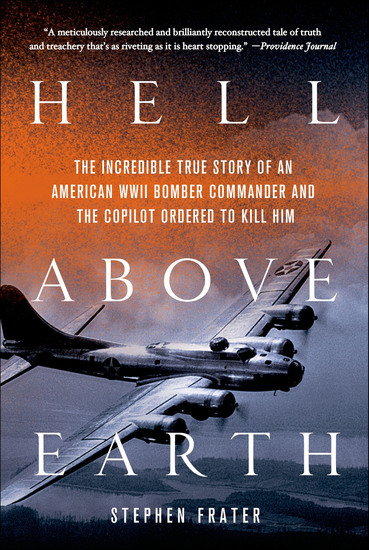
  • Hell Above Earth - The Incredible True Story of an American WWII Bomber Commander and the Copilot Ordered to Kill Him - cover

    Hell Above Earth - The...

    Stephen Frater

    • 0
    • 0
    • 0
    "After the twists and turns in Goering's many missions, Frater finishes with a stunning revelation . . . the author delivers an exciting read full of little-known facts about the war. A WWII thrill ride." - Kirkus Reviews The U.S. air battle over Nazi Germany in WWII was hell above earth. For bomber crews, every day they flew was like D-Day, exacting a terrible physical and emotional toll. Twenty-year-old U.S. Captain Werner Goering, accepted this, even thrived on and welcomed the adrenaline rush. He was an exceptional pilot—and the nephew of Hermann Göring, leading member of the Nazi party and commander-in-chief of the Luftwaffe. The FBI and the American military would not prevent Werner from serving his American homeland, but neither would they risk the propaganda coup that his desertion or capture would represent for Nazi Germany. J. Edgar Hoover issued a top-secret order that if Captain Goering's plane was downed for any reason over Nazi-occupied Europe, someone would be there in the cockpit to shoot Goering dead. FBI agents found a man capable of accomplishing the task in Jack Rencher, a tough, insular B-17 instructor who also happened to be one of the Army's best pistol shots. That Jack and Werner became unlikely friends is just one more twist in one of the most incredible untold tales of WWII.
    Voir livre