Begleiten Sie uns auf eine literarische Weltreise!
Buch zum Bücherregal hinzufügen
Grey
Einen neuen Kommentar schreiben Default profile 50px
Grey
Jetzt das ganze Buch im Abo oder die ersten Seiten gratis lesen!
All characters reduced
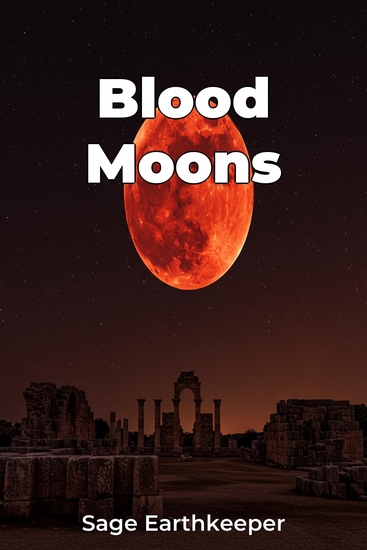
Blood Moons - cover

Blood Moons

Sage Earthkeeper

Übersetzer A AI

Verlag: Publifye

  • 0
  • 0
  • 0

Beschreibung

"Blood Moons" explores the captivating history and cultural impact of lunar eclipses, particularly "blood moons," revealing how these celestial events have been interpreted as omens and prophecies across different societies. The book examines the astronomical realities behind lunar eclipses and dives into the diverse ways cultures, from ancient civilizations to modern religious movements, have perceived their meaning. Did you know that some cultures believed eclipses were caused by celestial beings devouring the moon? Or that these events have, at times, influenced political decisions? This book uniquely combines scientific explanations with a nuanced understanding of religious and cultural beliefs, avoiding sensationalism while exploring why these beliefs persist. Structured in three parts, "Blood Moons" begins with the astronomy of eclipses, transitions to cultural interpretations, and culminates with an analysis of modern-day prophecies related to blood moons and their impacts. It is a balanced, accessible read for anyone intrigued by the intersection of science, religion, and history.
Verfügbar seit: 27.02.2025.
Drucklänge: 65 Seiten.

Weitere Bücher, die Sie mögen werden

  • Running After Paradise - Hope Survival and Activism in Brazil’s Atlantic Forest - cover

    Running After Paradise - Hope...

    Colleen M. Scanlan Lyons

    • 0
    • 0
    • 0
    Brazil’s Atlantic Forest is a paradise to many. In Southern Bahia, surfers, billionaires, travelers, and hippies mingle with environmentalists, family farmers, quilombolas (descendants of formerly enslaved people), and nativos, or “locals.” Each of these groups has connections to the unique environment, culture, and character of this region as their home, their source of a livelihood, or perhaps their vacation escape. And while these connections sometimes converge, at other times they clash. 
    The pressures on this tropical forest are palpable, and people’s responses to these pressures are also varied. What was once the state’s economic mainstay, cacao production, is only now beginning to make a comeback after a disease decimated the crops of large and small farmers alike. Tourism, another economic hope, is susceptible to economic crises and pandemics. And the threat of a massive state-led infrastructure project involving mining, a railroad, and an international port has loomed over the region for well over a decade. 
    Southern Bahia is at a crossroads: develop a sustainable, forest-based economy or risk losing the identity and soul of this place forevermore. Through the lives of environmentalists, farmers, quilombolas, and nativos—people who are in and of this place—this book brings the people alive who are grappling with this dilemma. 
    Anthropologist Colleen M. Scanlan Lyons brings the eye of a storyteller to present this complex struggle, weaving in her own challenges of balancing family and fieldwork alongside the stories of the people who live in this dynamic region. Intertwined tales, friendships, and hope emerge as people both struggle to sustain their lives in a biodiversity hotspot and strive to create their paradise. 
    For those interested, this book is also available in e-book and physical print formats, which contain the table of contents, maps, acknowledgements, pictures of the people and stories featured, footnotes, references, and an index.
    Zum Buch
  • Six Steps to Managing Alzheimer's Disease and Dementia - A Guide for Families - cover

    Six Steps to Managing...

    MD Andrew E. Budson, PsyD...

    • 0
    • 0
    • 0
    Caregiving for a loved one with Alzheimer's disease or dementia is hard. It's hard whether you're caring for your spouse, parent, grandparent, sibling, other family member, or friend. And caring for a loved one with dementia can sometimes feel like a long, lonely journey. 


    Six Steps to Managing Alzheimer's Disease and Dementia can help, addressing concerns such as: 


    ● Is the problem Alzheimer's, dementia, or something else? 


    ● How do you approach problems in dementia? How do you manage problems with memory, language, and vision? How do you cope with emotional and behavioral problems? 


    ● What are the best ways to manage troubles with sleep and incontinence? Which medications can help? Which medications can actually make things worse? 


    ● How do you build your care team? Why is it important to care for yourself? How do you sustain your relationship with your loved one? 


    ● How do you plan for the progression of dementia? How do you plan for the end and beyond?
    Zum Buch
  • Boost Your AI Game - "Supercharge your AI skills! Dive into dynamic audio lessons for peak performance and success" - cover

    Boost Your AI Game -...

    Cyrus Merriweather

    • 0
    • 0
    • 0
    Boost Your AI Game 
    ⭐⭐ A Simplified Guide & Explanations Included ⭐⭐ 
    Are you ready to advance in your career and solidify your knowledge to unlock your potential, empower your growth, and enhance your customer experience? 
    Looking for an all-encompassing guide that includes everything you need to succeed? 
    Your search ends here! 
    This guide is your ultimate companion for deepening your understanding and applying your skills through practical exercises. With it, you’ll be well-prepared for success. 
    Updated for the 2025 Exam Structure. 
    Key Features of this Enhanced Guide: 
    - In-depth insights about the 2025 Certification 
    - Comprehensive explanations to unlock potential 
    - Effective strategies for preparation and tackling challenges 
    Our guide sets itself apart with thorough coverage, essential for your success. Concepts are explored in detail, rather than glossed over. 
    Please note that this guide is an independent resource and is not affiliated with any official entity. 
    Crafted with a clear structure and easy-to-understand language, our guide ensures smooth transitions between topics. Say goodbye to complex jargon and welcome clear, precise, and technically accurate content. 
    So, why wait? Click the BUY NOW button, secure your guide, and start your journey toward success in unlocking your potential, empowering your growth, and enhancing customer experiences! 
    Don't miss out on the opportunity to elevate your AI game!
    Zum Buch
  • Sex is a Spectrum - The Biological Limits of the Binary - cover

    Sex is a Spectrum - The...

    Agustin Fuentes

    • 0
    • 0
    • 0
    Being human entails an astonishingly complex interplay of biology and culture, and while there are important differences between women and men, there is a lot more variation and overlap than we may realize. Sex Is a Spectrum offers a bold new paradigm for understanding the biology of sex, drawing on the latest science to explain why the binary view of the sexes is fundamentally flawed. 


    In this lively and provocative book, leading biological anthropologist Agustín Fuentes begins by tracing the origin and evolution of sex, describing the many ways in the animal kingdom of being female, male, or both. Turning to humans, he presents evidence from the fossil and archaeological record that attests to the diversity of our ancestors' sexual bonds, gender roles, and family and community structures, and shows how the same holds true in the lived experiences of people today. Fuentes tackles hot-button debates around sports and medicine, explaining why we can acknowledge that females and males are not the same while also embracing a biocultural reality where none of us fits neatly into only one of two categories. 


    Bringing clarity and reason to a contentious issue, Sex Is a Spectrum shares a scientist's perspective on why a binary view of sex and gender is not only misguided but harmful, and why there are multitudes of ways of being human.
    Zum Buch
  • Real-Time Data Processing - Harnessing the Power of Streaming Data - cover

    Real-Time Data Processing -...

    Chuck Sherman

    • 0
    • 0
    • 0
    In today's fast-paced digital landscape, the ability to process and act on data in real time has become a cornerstone of success for organizations across industries. Real-Time Data Processing: Harnessing the Power of Streaming Data provides a comprehensive guide to understanding, implementing, and mastering real-time data processing solutions. 
    This book explores the technologies, tools, and architectures that enable businesses to transform streams of raw data into actionable insights, from handling high-velocity data ingestion to deploying scalable distributed systems. 
    Key topics include:The fundamentals of real-time data processing and its applications across industries.Architecting robust pipelines for processing data at scale with tools like Apache Kafka, Spark Streaming, and Flink.Leveraging edge computing and IoT to enhance real-time data workflows.Integrating machine learning models for predictive analytics in streaming environments.Strategies for ensuring data consistency, fault tolerance, and low-latency processing. 
    This book provides actionable insights, case studies, and best practices to help you stay ahead in the data-driven world. 
    Empower your organization to make smarter, faster decisions—dive into the transformative world of real-time data processing today! 
     
    Zum Buch
  • Reader Come Home - The Reading Brain in a Digital World - cover

    Reader Come Home - The Reading...

    Anonym

    • 0
    • 0
    • 0
    From the author of Proust and the Squid, a lively, ambitious, and deeply informative epistolary book that considers the future of the reading brain and our capacity for critical thinking, empathy, and reflection as we become increasingly dependent on digital technologies. 
    A decade ago, Maryanne Wolf’s Proust and the Squid revealed what we know about how the brain learns to read and how reading changes the way we think and feel. Since then, the ways we process written language have changed dramatically with many concerned about both their own changes and that of children. New research on the reading brain chronicles these changes in the brains of children and adults as they learn to read while immersed in a digitally dominated medium. 
    Drawing deeply on this research, this book comprises a series of letters Wolf writes to us—her beloved readers—to describe her concerns and her hopes about what is happening to the reading brain as it unavoidably changes to adapt to digital mediums. Wolf raises difficult questions, including:Will children learn to incorporate the full range of ""deep reading"" processes that are at the core of the expert reading brain?Will the mix of a seemingly infinite set of distractions for children’s attention and their quick access to immediate, voluminous information alter their ability to think for themselves?With information at their fingertips, will the next generation learn to build their own storehouse of knowledge, which could impede the ability to make analogies and draw inferences from what they know?Will all these influences, in turn, change the formation in children and the use in adults of ""slower"" cognitive processes like critical thinking, personal reflection, imagination, and empathy that comprise deep reading and that influence both how we think and how we live our lives?Will the chain of digital influences ultimately influence the use of the critical analytical and empathic capacities necessary for a democratic society?How can we preserve deep reading processes in future iterations of the reading brain?Who are the ""good readers"" of every epoch? 
    Concerns about attention span, critical reasoning, and over-reliance on technology are never just about children—Wolf herself has found that, though she is a reading expert, her ability to read deeply has been impacted as she has become, inevitably, increasingly dependent on screens. 
    Wolf draws on neuroscience, literature, education, technology, and philosophy and blends historical, literary, and scientific facts with down-to-earth examples and warm anecdotes to illuminate complex ideas that culminate in a proposal for a biliterate reading brain. Provocative and intriguing, Reader, Come Home is a roadmap that provides a cautionary but hopeful perspective on the impact of technology on our brains and our most essential intellectual capacities—and what this could mean for our future.
    Zum Buch