Rejoignez-nous pour un voyage dans le monde des livres!
Ajouter ce livre à l'électronique
Grey
Ecrivez un nouveau commentaire Default profile 50px
Grey
Abonnez-vous pour lire le livre complet ou lisez les premières pages gratuitement!
All characters reduced
ONE - Opportunities Never End - cover

ONE - Opportunities Never End

Safia Hussein Guerras

Maison d'édition: Austin Macauley Publishers

  • 0
  • 0
  • 0

Synopsis

Safia Hussein Guerras' book, O.N.E - Opportunities Never End, is a profound exploration of the human experience, woven through a rich tapestry of philosophical musings and poetic reflections. The narrative delves deep into the essence of what it means to be human, contemplating the intricacies of love, pain, faith, and the eternal struggle between good and evil. At the heart of Guerras' work lies a poignant understanding of life's dualities and the constant search for meaning in a world fraught with contradictions. Each page resonates with profound insights, challenging the reader to ponder the complexities of existence, the nature of happiness, and the pursuit of inner peace. This book is not just a collection of thoughts; it is a journey into the depths of the soul, inviting us to reflect on our own lives, beliefs, and the choices that shape our destiny. With its blend of poetic eloquence and philosophical depth, O.N.E - Opportunities Never End is a beacon of light for those seeking understanding and enlightenment in the tumultuous sea of life.
Disponible depuis: 26/04/2024.
Longueur d'impression: 32 pages.
D'autres livres qui pourraient vous intéresser

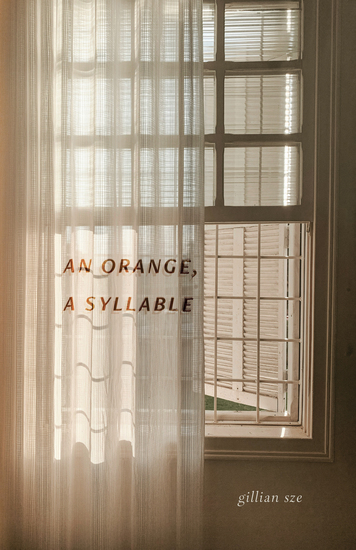
  • An Orange A Syllable - cover

    An Orange A Syllable

    Gillian Sze

    • 0
    • 0
    • 0
    The latest book by Gillian Sze, author of the Pat Lowther Memorial Award–winning book Quiet Night Think
    		 
    This prosimetrical work is a meditation on motherhood, language, and art. The central speaker witnesses the earliest utterances of her child and launches into a poetic inquiry of words themselves, asking, How to measure one’s mouth by its words? The speaker seeks an answer amidst the language that surrounds her — words misspoken, mispronounced, remembered, unwritten — and, in doing so, struggles with signification and significance.
    		 
    Each prose poem in the five-part collection darts between the many meanings of “fit” — as in “a sudden burst of emotion” or “to be the right size and shape,” and the archaic “fytte” (a section of a poem). A text becomes an open mouth, a square day of a calendar, or a bare fragment of a narrative. The final section of the book is an intimate and ekphrastic engagement with the work of Danish painter Vilhelm Hammershøi. Drawn to Hammershøi’s paintings of the empty rooms of his apartment, the speaker recognizes a familiar space of art’s insistence.
    		 
    An Orange, A Syllable details a period of maternal and artistic transformation.
    Voir livre
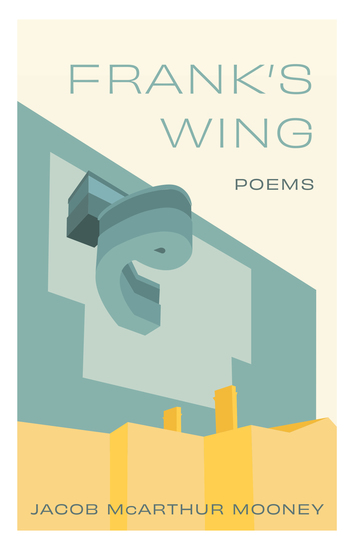
  • Frank’s Wing - Poems - cover

    Frank’s Wing - Poems

    Jacob McArthur Mooney

    • 0
    • 0
    • 0
    “… my relationship with most art living or lost / is the same as yours: we will pass it by” bemoans the last poem in Jacob McArthur Mooney’s latest collection. Written as a sequence of “ghost ekphrastics” (poems inspired by works of art that neither the poet nor most living people have ever seen), Frank’s Wing constructs a whole world of lost or destroyed artifacts that have been rearticulated and resurrected, brought back to life by a fictional property baron as a dying gift to Toronto’s Art Gallery of Ontario.
    		 
    From “decadent” modern paintings torched by Nazis, to lost films, to never-performed performance art, the abiding premise of the book is that art invites mourning: not because it is mournful, but because it is vast. It taunts the plans of mortals while “a week / of kids’ videos and lip syncs / siphon through the internet each second.” Bordering ideas about FOMO and mortality are considerations of destruction itself, as the book recalls loss events predicted by both the considered works’ historical contexts and the frailties of their makers. Concerned with consuming art as much as with making it, Frank’s Wing examines the positions made available to the art-consumer: owner, overhearer, interrogator, and potentially, both destroyer and the thing that art destroys.
    Voir livre
  • Chock Full of Fuckery - cover

    Chock Full of Fuckery

    Aristah Noble

    • 0
    • 0
    • 0
    Chock Full of Fuckery is a captivating collection of poems, short stories, and musings told through the lens of a mixed, Gen X chick who is ridiculously sick of everyone's shit. Including her own.
    Blended with pain and humor, this book gives a glimpse into raw and often absurd aspects of her life, and offers a gentle reminder that life is a tapestry of experiences interwoven with darkness and light, tragedy and triumph.
    Be ready to embrace the beautiful mess of one woman's history. Why? Because this could be just what you need right now.
    Voir livre
  • Smile People are watching - cover

    Smile People are watching

    Faaiz Mbelizi

    • 0
    • 0
    • 0
    Faaiz Mbelizi is an actor, writer and spoken word artist. This poetry collection is an accumulation of his poetry over the years. 
    In this poetry collection Mbelizi delves deep into the realms of pain and anxiety through vivid verses. A raw and honest representation of the struggles and inner turmoils faced. 
    Through evocative imagery and metaphors this collection explores the nature of these emotions and goes back and forth between darkness and moments of hope. Throughout the audiobook listeners are taken on a cathartic journey that resonates with their own experiences, providing solace and understanding in the midst of emotional upheaval.
    Voir livre
  • The Little French Lawyer - cover

    The Little French Lawyer

    Beaumont and Fletcher

    • 0
    • 0
    • 0
    The Little French Lawyer by Francis Beaumont and John Fletcher is a lively Jacobean comedy that blends romance, satire, and clever legal intrigue into an engaging theatrical experience. Set in a stylized version of France, the play humorously explores themes of justice, honor, deception, and the often absurd entanglement of law and personal relationships.
    
    At the center of the story is Dinant, a young man known for his sharp wit and questionable grasp of legal matters, whose involvement in disputes leads to a series of misunderstandings and comedic complications. His actions intertwine with the lives of noble characters whose romantic pursuits and rivalries are frequently disrupted by legal quarrels and mistaken intentions. The result is a world where courtroom logic and matters of the heart collide in unpredictable and entertaining ways.
    
    Beaumont and Fletcher skillfully use the character of the inexperienced yet confident legal figure to satirize formal justice systems and highlight the gap between theoretical law and lived human behavior. The play unfolds through a sequence of humorous situations, disguises, and verbal sparring, all of which contribute to its fast-paced and engaging structure.
    
    Beneath its comedic surface, the work also reflects on deeper questions about fairness, authority, and the complexity of resolving disputes in a world driven by emotion as much as reason. The interplay between legal procedure and personal desire creates a dynamic tension that drives the narrative forward.
    
    The Little French Lawyer remains a vibrant example of early modern comedy, showcasing Beaumont and Fletcher's talent for blending wit with social observation. Its playful treatment of law and love continues to entertain readers, offering both humor and insight into the complexities of human behavior within structured systems of order.
    Voir livre
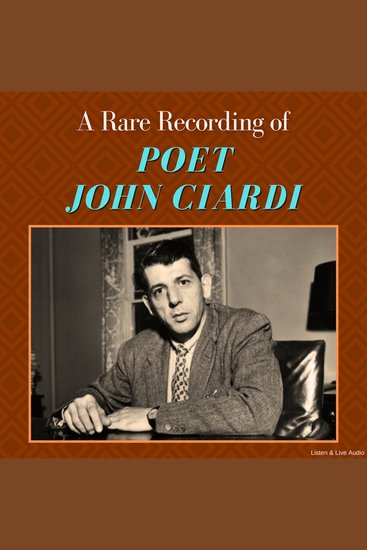
  • A Rare Recording of Poet John Ciardi - cover

    A Rare Recording of Poet John...

    John Ciardi

    • 0
    • 0
    • 0
    John Anthony Ciardi (June 24, 1916 - March 30, 1986) was an American poet, translator, and etymologist. While primarily known as a poet, Ciardi pursued etymology, contributed to the Saturday Review as a columnist and long-time poetry editor, directed the Bread Loaf Writers' Conference in Vermont, and recorded commentaries for National Public Radio. In 1959, Ciardi published a book on how to read, write, and teach poetry, How Does a Poem Mean?, which has proven to be among the most-used books of its kind. The following recording is from a speech Ciardi gave in 1965.
    Voir livre