Begleiten Sie uns auf eine literarische Weltreise!
Buch zum Bücherregal hinzufügen
Grey
Einen neuen Kommentar schreiben Default profile 50px
Grey
Jetzt das ganze Buch im Abo oder die ersten Seiten gratis lesen!
All characters reduced
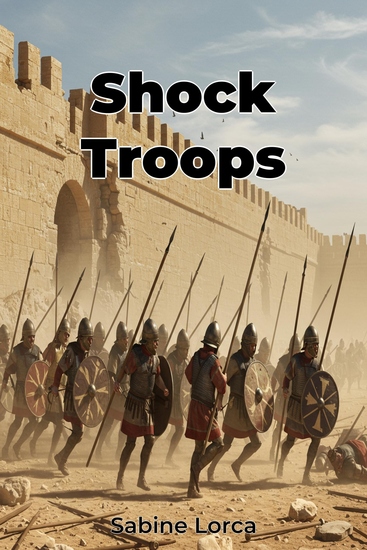
Shock Troops - cover

Shock Troops

Sabine Lorca

Übersetzer A AI

Verlag: Publifye

  • 0
  • 0
  • 0

Beschreibung

Shock Troops explores the evolution and impact of elite military units designed to break enemy lines. It analyzes how tactical deployment of concentrated force, combined with a warrior ethos emphasizing aggression, creates units capable of achieving breakthroughs that conventional forces cannot. The book reveals how shock troops, from ancient phalanxes to modern special forces, have adapted to changing battlefield conditions. Interestingly, their effectiveness relies not just on brute strength, but also on identifying and exploiting vulnerabilities in enemy defenses. 

 
The book progresses by first outlining the core principles of shock warfare and then moves into specific eras and conflicts, examining case studies of both successful and unsuccessful shock troop operations. It emphasizes that the strategic implications of employing shock troops can lead to decisive victories. What sets this book apart is its holistic approach, viewing shock troops as complex systems within dynamic environments, drawing from history, tactical theory, and behavioral science.
Verfügbar seit: 29.03.2025.
Drucklänge: 71 Seiten.
Weitere Bücher, die Sie mögen werden

  • The Shortest History of India - From the World's Oldest Civilization to Its Largest Democracy—A Retelling for Our Times - cover

    The Shortest History of India -...

    John Zubrzycki

    • 0
    • 0
    • 0
    5,000 years of history—from the Bhagavad Gita to Bollywood—fill this masterful portrait of the world's most populous nation and a rising global power. 


    India—a cradle of civilization with five millennia of history, a country of immense consequence and contradiction—often defies ready understanding. What holds its people together—across its many cultures, races, languages, and creeds—and how has India evolved into the liberal democracy it is today? 


    From the Harappan era to Muslim invasions, the Great Mughals, British rule, independence, and present-day hopes, John Zubrzycki distills India's colossal history into a gripping true story filled with legendary lives: Alexander the Great, Akbar, Robert Clive, Tipu Sultan, Lakshmi Bai, Lord Curzon, Jinnah, and Gandhi. India's gifts to the world include Buddhism, yoga, the concept of zero, the largest global diaspora—and its influence is only growing. Already the world's largest democracy, in 2023, India became the most populous nation. 


    Can India overcome its political, social, and religious tensions to be the next global superpower? As the world watches—and wonders—this Shortest History is an essential, clarifying must-listen.
    Zum Buch
  • Stolen Smuggled Sold - On the Hunt for Cultural Treasures - cover

    Stolen Smuggled Sold - On the...

    Nancy Moses

    • 0
    • 0
    • 0
     “A riveting look at the backstory of what’s in the display cases at your local museum. The author profiles seven historic objects with checkered pasts.” —Library Journal   There are many books about museum heists, Holocaust artwork, insider theft, trafficking in antiquities, and stolen Native American objects. Now, there’s finally a book for the general public that covers the entire terrain.   Stolen, Smuggled, Sold features seven vivid and true stories in which the reader joins the author as she uncovers a cultural treasure and follows its often-convoluted trail. Along the way author and reader encounter a cast of fascinating characters from the underbelly of the cultural world: unscrupulous grave robbers, sinister middlemen, ruthless art dealers, venal Nazis, canny lawyers, valiant academics, unstoppable investigative reporters, unwitting curators, and dedicated government officials. Stories include Gustav Klimt’s Portrait of Adele Bloch Bauer 1, the typset manuscript for Pearl Buck’s The Good Earth, a ceremonial Ghost Dance shirt from the massacre at Wounded Knee, the theft of 4,800 historical audio discs by a top official at the National Archives, a missing original copy of The Bill of Rights, the mummy of Ramses I, and an ancient treasure from Iraq.   While each story is fascinating in and of itself, together they address one of the hottest issues in the museum world: how to deal with the millions of items that have breaks in the chain of ownership, suspicious ownership records, or no provenance at all. The issue of ownership touches on professional practices, international protocols, and national laws. It’s a financial issue since the illicit trade in antiquities and cultural items generates as much as $4 billion to $8 billion a year.  
    Zum Buch
  • Harriet Beecher Stowe: A short biography - 5 Minutes: Short on time - long on info! - cover

    Harriet Beecher Stowe: A short...

    5 Minutes, 5 Minute Biographies,...

    • 0
    • 0
    • 0
    Harriet Beecher-Stowe, fighter for emancipation and novelist: Life and works in a short biography! Everything you need to know, brief and concise. Infotainment, education and entertainment at its best!
    Zum Buch
  • Dark Psychology - Toxic Minds and Difficult People who Manipulate and Control - cover

    Dark Psychology - Toxic Minds...

    Wesley Felt

    • 0
    • 0
    • 0
    This book consists of three titles, which are the following: 
    Dark Psychology: Influencing Others and Avoiding Manipulation and Blackmail 
    Dark Psychology: Detecting Lies, Spotting Manipulators, and Seeing through People 
    Dark Psychology: Dealing with Difficult People, Abuse, Liars, and Manipulators 
    These titles discuss topics such as leadership, deception, Cognitive Behavioral Therapy, jealous, emotions, trauma, manipulation, and emotional intelligence.
    Zum Buch
  • Fighter Aces of World War II - The Legendary Pilots Who Dominated the Skies - cover

    Fighter Aces of World War II -...

    Sage Winters

    • 0
    • 0
    • 0
    The concept of the "fighter ace" emerged during the early days of aerial warfare, capturing the imagination of the public and military strategists alike. A fighter ace, typically defined as a pilot who has achieved five or more confirmed aerial victories, became a symbol of skill, bravery, and national pride during World War II. These men and women were not only warriors of the sky but also icons of an evolving form of combat that would change the course of modern warfare.  
      
    World War I introduced the world to aerial dogfights, with pilots like Manfred von Richthofen, famously known as the "Red Baron," becoming household names. By the time World War II erupted, the art and science of air combat had evolved dramatically. Advancements in aircraft technology, tactics, and strategy led to the emergence of a new generation of fighter aces who would dominate the skies. From the skies over Europe to the vast expanse of the Pacific, these pilots played a pivotal role in shaping the outcome of the war.  
      
    The rise of the fighter ace was closely tied to the rapid development of aviation during the interwar period. Nations raced to design faster, more maneuverable, and better-armed aircraft, setting the stage for the intense aerial battles of the 1930s and 1940s. Fighter pilots were trained to master these technological marvels, combining instinctive reflexes with rigorous discipline. They became the elite warriors of their respective air forces, often celebrated as heroes at home and feared by their enemies in the skies. 
    Zum Buch
  • MIDLIFE - Humanity's Secret Weapon - cover

    MIDLIFE - Humanity's Secret Weapon

    Andrew Jamieson

    • 0
    • 0
    • 0
    Only two species of mammal have a post-reproductive life that lasts longer than their reproductive life: the killer whale, whose elders are able to sniff out food supplies over vast oceanic distances to keep their pods fed, and Homo sapiens. While the evolutionary purpose of the killer whale's extensive life seems clear, what is the point of ours?
    
    This was a question that intrigued psychoanalyst Carl Jung, who observed that if a culture is to maintain its deepest, profoundest roots while moving forward to embrace the challenges of historical and technological change, it needs to find an equilibrium between the energy, vigour and creativity of those in the ego-driven first half of life and the experience, dignity and wisdom of those in the second. But to make it to that second half of life, we need to traverse the dreaded 'middle years', when so many of us find ourselves discontent with our jobs, unhappy in our relationships and lamenting our fetishized youths.
    
    Drawing on history, psychology, science and literature, Jamieson shows just how ubiquitous, and crucial, the 'midlife crisis' is, and the devastating consequences for society at large if we continue to regard it as something we can, and should, avoid.
    Zum Buch