Begleiten Sie uns auf eine literarische Weltreise!
Buch zum Bücherregal hinzufügen
Grey
Einen neuen Kommentar schreiben Default profile 50px
Grey
Jetzt das ganze Buch im Abo oder die ersten Seiten gratis lesen!
All characters reduced
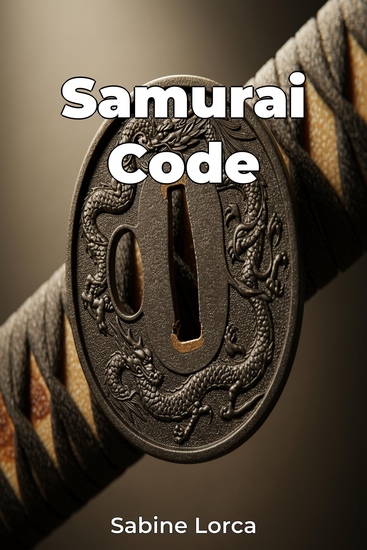
Samurai Code - cover

Samurai Code

Sabine Lorca

Übersetzer A AI

Verlag: Publifye

  • 0
  • 0
  • 0

Beschreibung

"Samurai Code" explores Bushido, the warrior code that governed the lives of Japan's samurai. More than just a set of rules, Bushido was a dynamic philosophy shaping their ethics, military strategies, and societal roles. The book reveals that Bushido was rooted in Confucianism, Zen Buddhism, and Shintoism, creating a unique blend of beliefs that influenced samurai conduct. The book argues that Bushido adapted to changing circumstances while upholding honor and loyalty. Beginning with Bushido's historical development, the book progresses through the virtues like righteousness and courage, illustrated by historical examples, and concludes with its practical applications in military strategy and daily life. This approach distinguishes "Samurai Code" by examining how these principles were applied in real-world situations, offering insights into military history and the enduring legacy of the samurai.
Verfügbar seit: 20.03.2025.
Drucklänge: 52 Seiten.

Weitere Bücher, die Sie mögen werden

  • If Women Ran the World Sh*t Would Get Done - Celebrating all the wonderful amazing stupendous inspiring butt-kicking things women do - cover

    If Women Ran the World Sh*t...

    Shelly Rachanow

    • 0
    • 0
    • 0
    Packed with little-known sheroes and empowering journaling prompts, this book and interactive journal is a must-have for those who believe the world would be a better place with women in charge. 


    Dream about the kind of world you'd run. Author Shelly Rachanow shares the many ways in which women do for others, from their families to their friends to the wider world (hint: the list goes on and on). She then asks listeners to consider how much woman power has shaped the world, and turns the question to us: what are our buttkicking ideas for changing the world around us? These empowering journal prompts ask us to look inward, at our own role as women, and decide how we will make the world a better place for our children and those who come after us.  


    Dive into this interactive journal and learn more about: 


    ● The many significant accomplishments of women throughout history 


    ● The role each of us plays in changing the world for the better 


    ● How to join the movement for female empowerment 


    If you enjoyed books like Badass Affirmations, Bad Girls Throughout History, The Book of Gutsy Women, or Made Out of Stars, then you'll love If Women Ran the World, Sh*t Would Get Done.
    Zum Buch
  • Great Escapes of World War I The: The History of the Most Famous Prisoner Breakouts during the Great War - cover

    Great Escapes of World War I...

    Editors Charles River

    • 0
    • 0
    • 0
    In the first half of the 20th century, war was fought on a global and industrial scale. Millions of men were flung into the grinder of World War I and World War II, leading to commensurately huge numbers of prisoners of war (POWs). Camps were built to hold thousands of captives, with their own barracks blocks, parade grounds, and even farms. In World War I, there were several fronts in the war - Britain, France, Belgium, and Germany faced each other on the Western Front, fought mostly in northeast France and Belgium, while Germany and Austria Hungary faced Russia on the Eastern Front, where much of the war was fought in East Prussia and what is now Poland. The Italians and Austrians fought in the region of northeast Italy, and the Austrians and Bulgarians faced Serbia and then later an Allied army based in Salonica in the Balkans. The Ottomans faced Russia in northeast Anatolia, the British and Allied forces in the Mesopotamian campaign (mainly in today’s Iraq), the British in Palestine, and the Allies at Gallipoli.  
    	Regardless of rank, throughout the war, many of these men did not sit idle. Many spent their time preparing elaborate escape plans in the hopes of returning to their home nations and back to the fight. Following World War I, several books were published giving romantic accounts of successful escapes. For example, the wildly popular film The Great Escape (1963), has been a main factor in how the public views prisoners of war, and while that film was based on a book that details a mass escape of British and Allied prisoners from a World War II German prison camp for aviators, Stalag Luft III, a real escape from a German prisoner camp in World War I inspired the 1944 great escape from Stalag Luft III. 
    Zum Buch
  • The History of the Peloponnesian War - cover

    The History of the Peloponnesian...

    Thucydides

    • 0
    • 0
    • 0
    The History of the Peloponnesian War is a historical account of the Peloponnesian War (431–404 BC), which was fought between the Peloponnesian League (led by Sparta) and the Delian League (led by Athens). It was written by Thucydides, an Athenian historian who also served as an Athenian general during the war. His account of the conflict is widely considered to be a classic and regarded as one of the earliest scholarly works of history. The History is divided into eight books. 
    Analyses of the History generally occur in one of two camps. On the one hand, some scholars such as J. B. Bury view the work as an objective and scientific piece of history. The judgment of Bury reflects this traditional interpretation of the History as "severe in its detachment, written from a purely intellectual point of view, unencumbered with platitudes and moral judgments, cold and critical." 
    On the other hand, in keeping with more recent interpretations that are associated with reader-response criticism, the History can be read as a piece of literature rather than an objective record of the historical events. This view is embodied in the words of W. R. Connor, who describes Thucydides as "an artist who responds to, selects and skillfully arranges his material, and develops its symbolic and emotional potential.
    Zum Buch
  • History of the Middle East - Various Aspects of the Region (6 in 1) - cover

    History of the Middle East -...

    Kelly Mass

    • 0
    • 0
    • 0
    This book consists of 6 titles, all related to history stories and events from the Middle East, both modern and ancient: 
    1 - Darius the Great: Biography of the Persian Ruler during the Achaemenid Empire 
    2 - History of Iran: Events, Turning Points, Religion, and Empirical Conquests 
    3 - Islamic Golden Age: A History of Economic, Cultural, and Artistic Growth 
    4 - Osman I: Biography of the Founder of the Ottoman Dynasty 
    5 - Saddam Hussein: Warmonger, Invader, Dictator, and Oil Trader 
    6 - The Kurds: History of a Forgotten Ethnic Minority 
    Get this discounted bundle of books now!
    Zum Buch
  • Stoicism - A Very Short Introduction - cover

    Stoicism - A Very Short...

    Brad Inwood

    • 0
    • 0
    • 0
    Stoicism is two things: a long past philosophical school of ancient Greece and Rome, and an enduring philosophical movement that still inspires people in the twenty-first century to rethink and reorganize their lives in order to achieve personal satisfaction. What is the connection between them? 


    This Very Short Introduction provides an introductory account of Stoic philosophy, and tells the story of how ancient Stoicism survived and evolved into the movement we see today. Exploring the roots of the school in the philosophy of fourth century BCE Greece, Brad Inwood examines its basic history and doctrines and its relationship to the thought of Plato, Aristotle, and his successors, and the Epicureans. Sketching the history of the school's reception in the western tradition, he argues that, despite the differences between ancient and contemporary Stoics, there is a common core of philosophical insight that unites the modern version not just to Seneca, Epictetus, and Marcus Aurelius but also to the school's original founders, Zeno, Cleanthes, and Chrysippus. Inwood concludes by considering the place of Stoicism in modern life.
    Zum Buch
  • Anger and resentment meditation Transmutation to power - mood management bitterness blame rage spiritual awareness heal the emotional cause letting go back to balance body mind wellness - cover

    Anger and resentment meditation...

    Think ThinkAndBloom

    • 0
    • 0
    • 0
    Are you ready to release your anger and resentment? Are you ready to find peace within your heart?  
    Holding onto anger and resentment is very unhealthy to our body, mind, and spirit. It keeps you in the past and not able to move forward in life. Of course, you have every right to be angry. But expressing your anger and letting them go is essential to allow your healthy energy to flow, leaving the past behind and creating a new chapter in your life. In this meditation, we allow ourselves to reopen to the possibility of a new chapter, a new flow of energy by releasing the anger and resentments. 
    In this audiobook, you willReleasing anger and resentments in a gentle way Heal your heart Receiving the healing we need let go of your past storiesUnlocking our true identity and future move forward in life remove shame traumas hurts and pains free your soul 
    After this meditation, you will feel lighter and more optimistic in life. It will help you to let go, open, and make a deeper connection with yourself, life, and your future. When you are open and receptive, miracles happen.
    Zum Buch