Join us on a literary world trip!
Add this book to bookshelf
Grey
Write a new comment Default profile 50px
Grey
Subscribe to read the full book or read the first pages for free!
All characters reduced
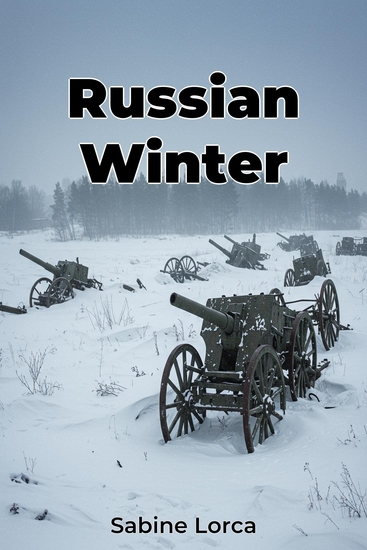
Russian Winter - cover

Russian Winter

Sabine Lorca

Translator A AI

Publisher: Publifye

  • 0
  • 0
  • 0

Summary

"Russian Winter" examines the critical role of Russia's harsh climate in determining the outcomes of military campaigns, particularly Napoleon's invasion of 1812 and Nazi Germany's assault during World War II. The book meticulously analyzes how the severe winter conditions acted as a formidable, often decisive, ally for the Russian forces. It highlights the meteorological realities faced by invading armies, contrasting them with historical climate norms to reveal the true extent of the environmental challenge. Logistical nightmares induced by frozen supply lines and crippled equipment are also explored, demonstrating how the climate amplified strategic weaknesses.

 
The book delves into the psychological toll exacted by the relentless cold, hunger, and disease on invading soldiers, drawing comparisons between the experiences of Napoleon's Grande Armée and the Wehrmacht. By integrating environmental history with military history, "Russian Winter" offers a unique perspective on well-known events.

 
The book progresses from establishing a climatological baseline to analyzing logistical challenges and the human impact of the winter, ultimately demonstrating how the Russian climate consistently undermined invaders' strengths, contributing significantly to their defeat on the Eastern Front.
Available since: 03/20/2025.
Print length: 52 pages.

Other books that might interest you

  • The Legacy of the Roman Empire - cover

    The Legacy of the Roman Empire

    Rogan Fish

    • 0
    • 0
    • 0
    The rise of Rome is one of the most remarkable stories in world history, transforming from a small settlement on the banks of the Tiber River into one of the most powerful empires the world has ever seen. The foundation of Rome is traditionally dated to 753 BCE, attributed to the legendary figure Romulus. Over time, Rome evolved through three major phases: the monarchy, the republic, and the empire, each contributing to its dominance. The city's location played a crucial role in its growth, offering natural protection, fertile land, and access to trade routes that facilitated economic and military expansion. 
    During the period of the Roman Kingdom, Rome was ruled by a series of kings, who laid the groundwork for its legal and social structures. However, dissatisfaction with monarchical rule led to the establishment of the Roman Republic in 509 BCE. This new form of government introduced a complex system of checks and balances, with power divided among elected officials, including consuls, senators, and popular assemblies. The republic was built on the idea of civic duty and military service, which helped unify its citizens under a shared sense of identity. It was during this time that Rome expanded its influence, conquering neighboring territories through strategic military campaigns. The Roman legions, known for their discipline and tactical superiority, played a key role in these conquests. 
    Rome’s transition from a republic to an empire was marked by internal conflicts and power struggles. As Rome’s territories expanded, so did the challenges of governance. The late republic saw growing economic inequality, political corruption, and civil wars between powerful leaders. Figures like Julius Caesar, Pompey, and Crassus sought control, leading to the eventual downfall of the republic. The assassination of Caesar in 44 BCE created further instability, but it ultimately paved the way for the rise of Augustus, who became the first emperor in 27 BCE.
    Show book
  • The Book of Five Rings - cover

    The Book of Five Rings

    Miyamoto Musashi

    • 0
    • 0
    • 0
    'When you attain the Way of strategy, there will not be one thing you cannot see.'
    
    Shortly before his death in 1645, the undefeated swordsman Miyamoto Musashi retreated to a cave to live as a hermit. There he wrote five scrolls describing the "true principles" required for victory in the martial arts and on the battlefield. Instead of relying on religion or theory, Musashi based his writings on his own experience, observation, and reason.
    Show book
  • Socrates’ Children - An Introduction to Philosophy from the 100 Greatest Philosophers: Volume IV: Contemporary Philosophers - cover

    Socrates’ Children - An...

    Peter Kreeft

    • 0
    • 0
    • 0
    Peter Kreeft, esteemed philosophy professor and author of over eighty books, has taught college philosophy for sixty years. Throughout those decades, he yearned for a beginner's philosophy text that was clear, accessible, enjoyable, and exciting (perhaps even funny). Finding none that met those criteria, he eventually decided to write it himself.  In this four-volume series, Kreeft delivers, with his characteristic wit and clarity, an introduction to philosophy via the hundred greatest philosophers of all time. Socrates’ Children examines the big ideas of four major eras―ancient, medieval, modern, and contemporary―and immerses the reader in the “great conversation,” the ongoing dialogue among the great thinkers of history, including the most influential philosopher of all: Socrates, the father of Western philosophy.  Volume IV: Contemporary Philosophers surveys the great philosophers of the last two hundred years and observes the splintering of philosophy into a wide array of philosophical enterprises. Some, unhinged from the past, rebel against the very endeavor of philosophy, but others, seeking to revitalize ancient conversations, return to and renew the deepest questions of meaning, happiness, and the human person.
    Show book
  • Commando - A Boer Journal of the Anglo-Boer War - cover

    Commando - A Boer Journal of the...

    Deneys Reitz

    • 0
    • 0
    • 0
    The definitive account of Commando: A Boer Journal of the Anglo-Boer War, published word-for-word as Reitz first wrote it in the English translation; edited and annotated by historian and Anglo-Boer War expert, Professor Fransjohan Pretorius.
    In 1899, Deneys Reitz, then aged seventeen, enlisted in the Boer army to fight the British. He had learnt to ride, shoot and swim almost as soon as he could walk. He made full use of these skills and the endurance he had acquired in the next three years of the war, during which he fought with the Boer commandos.
    He was involved in major actions, like the battle of Spioen Kop, and he interacted with prolific political and military figures of the time, such as President Paul Kruger, Boer generals Piet Joubert, Louis Botha, Koos de la Rey, Christiaan Beyers, Jan Smuts and British commander Lord Kitchener. He even met the young Winston Churchill as a prisoner-of-war in Pretoria. Reitz forged a strong personal and political friendship with General Jan Smuts after the war, built on reciprocal respect.
    Commando is more than a historical document; it is a literary masterpiece that transcends time.
    With prose that captures both the brutality and the beauty of war, Reitz weaves a narrative that resonates with authenticity and passion.
    As relevant today as when it was first penned, Commando has become a South African classic and stands as a testament to the indomitable human spirit.
    Show book
  • Harmony - The Balanced Coexistence - cover

    Harmony - The Balanced Coexistence

    Esther Jameson

    • 0
    • 0
    • 0
    Harmony is the delicate balance that governs the universe, present in nature, relationships, and even within ourselves. It is not merely the absence of conflict but a state where opposing forces coexist in a way that fosters growth and stability. From the rhythmic flow of the seasons to the intricate balance of ecosystems, harmony ensures that everything functions in a synchronized and sustainable manner. 
    In many ancient philosophies, harmony is considered the key to a fulfilled life. Eastern traditions such as Taoism emphasize the importance of living in alignment with the natural flow of the universe, often referred to as the Tao. Similarly, Greek philosophers like Pythagoras and Plato believed in the mathematical and moral symmetry of existence. Across cultures, the idea of balance as a foundation for well-being has been deeply ingrained in spiritual and philosophical teachings. 
    In nature, harmony manifests through the interplay of elements. Water nourishes the land, the sun provides warmth, and the wind shapes the terrain. Each component of the natural world relies on another to maintain equilibrium. Predators and prey, flora and fauna, all exist within an intricate web where every action influences the greater whole. When this balance is disrupted—whether by natural disasters or human intervention—the consequences ripple through the environment, leading to instability.
    Show book
  • On the Duty of Civil Disobedience - cover

    On the Duty of Civil Disobedience

    Henry David Thoreau

    • 0
    • 0
    • 0
    Motivated by his disgust with the US government, Henry David Thoreau’s seminal philosophical essay enjoins individuals to stand against the ruling forces that seek to erase their free will. It is the duty of a good citizen, he argues, not only to disobey a bad law, but also to protest an unjust government. His message of nonviolence and appeal to value one’s own conscience over political legislation have resonated throughout American and world history. Peppered with the author’s poetry and social commentary, Civil Disobedience has become a manifesto for civil dissidents, revolutionaries, and protestors everywhere. Indeed, originally so unpopular with readers that Thoreau was forced to buy back over half of the books from his publisher, this work has gone on to inspire the likes of Mahatma Gandhi and Martin Luther King Jr.
    Show book