Begleiten Sie uns auf eine literarische Weltreise!
Buch zum Bücherregal hinzufügen
Grey
Einen neuen Kommentar schreiben Default profile 50px
Grey
Jetzt das ganze Buch im Abo oder die ersten Seiten gratis lesen!
All characters reduced
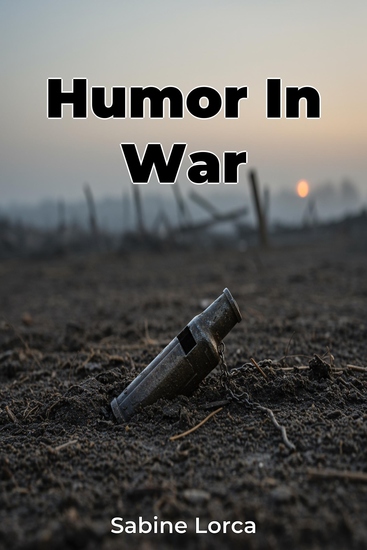
Humor In War - cover

Humor In War

Sabine Lorca

Übersetzer A AI

Verlag: Publifye

  • 0
  • 0
  • 0

Beschreibung

Humor In War explores the unexpected role of humor as a vital coping mechanism during wartime. It delves into how soldiers and civilians use jokes, satire, and gallows humor to navigate the horrors of conflict. The book isn't about military strategy but instead focuses on the resilience of the human spirit, highlighting how humor serves as stress relief and helps build camaraderie amid chaos. One intriguing aspect explored is the distinction between officially sanctioned humor, like propaganda, and the subversive, underground jokes that reflect genuine anxieties. The book examines the diverse forms of wartime humor and its psychological functions, considering social and cultural contexts. It draws on personal letters, diaries, and military archives, analyzing humor through psychology, sociology, and cultural studies. The approach challenges traditional war narratives by emphasizing everyday acts of resilience. Understanding the impact of humor as a coping mechanism is crucial, as it allows individuals to process trauma and maintain a sense of control. The book progresses from establishing a theoretical framework to case studies across different conflicts, from World War I to the present, examining specific humor forms and their target audiences. Ultimately, Humor In War considers the long-term effects of wartime humor on collective memory and national identity, offering insights into psychological resilience and the maintenance of sanity.
Verfügbar seit: 29.03.2025.
Drucklänge: 59 Seiten.

Weitere Bücher, die Sie mögen werden

  • The Man Who Shook Mountains - In the footsteps of my ancestors - cover

    The Man Who Shook Mountains - In...

    Lesley Mofokeng

    • 0
    • 0
    • 0
    'This is a South African story of an unsung hero, a man forgotten by history – though not by me, nor by the people who knew and respected him …'
    When his grandfather gave sermons, he was 'capable of shaking mountains', a church leader tells journalist and author Lesley Mofokeng. 'Ntate Mofokeng pulled people towards God with the great and rare talent of a motivator.'
    In this revealing book, Mofokeng investigates the life of his grandfather, Mongangane Wilfred Mofokeng, a prominent Dutch Reformed Church evangelist. In the 1950s, as Black South Africans were being evicted from the cities to live in reserves and homelands, Mongangane set out to build a community at a dusty cattle post in the far North West province. There he managed to establish a resilient community that mostly lived outside the repressions of the apartheid regime. The journey takes the author from Johannesburg's Marabi-soaked townships of the 1930s to his childhood home of Gelukspan near Lichtenburg and then to rural Free State and the mountain kingdom of Lesotho. In what becomes a spiritual quest, he traces the inspirational footsteps of his ancestors and the legendary King Moshoeshoe.
    Mofokeng also explores the politics and history of the Dutch Reformed Church's Black constituency and uncovers why to this day it is called Kereke ya Fora – or 'Church of the French' – and its hymns are sung across denominations and in social spaces outside the church.
    Zum Buch
  • Caesar’s Civil War: The History of the Conflict against Pompey the Great that Ended the Roman Republic - cover

    Caesar’s Civil War: The History...

    Editors Charles River

    • 0
    • 0
    • 0
    The ultimate conqueror, statesman, dictator, visionary, and opportunist, during his time in power, Julius Caesar expanded the borders of Rome to almost twice their previous size, revolutionized the infrastructure of the Roman state, and destroyed the Roman Republic for good, leaving a line of emperors in its place. His legacy is so strong that his name has become, in many languages, synonymous with power: the emperors of Austria and Germany bore the title Kaiser, and the Tsars of Russia also owe the etymology of their title to Caesar. 
    Even in his time, Caesar was in many ways larger than life, and because of his legacy as virtual founder of the Roman Empire, much of what was written about – and by – him during his life and immediately after his assassination was politically motivated. The fact that he was murdered on the Ides of March is universal knowledge, but it’s often forgotten that he was stabbed while entering the Curia of Pompey, one of the Senate’s meeting places, in March of 44 BCE. The curia was a theater dedicated to Pompey the Great, Caesar’s rival in the civil war that ended the Republic and made Caesar dictator. When Caesar was stabbed, he fell at the base of a colossal statue of Pompey. 
    Thanks to Caesar’s victory in the civil war, Pompey is mostly remembered not for being one of Rome’s greatest generals, but for being defeated by Caesar and then ignominiously murdered after he fled to Egypt, where the boy pharaoh Ptolemy XIII decapitated Pompey and offered his head to Caesar as a gift. Although Caesar was there chasing Pompey’s men, he quickly became involved in Egypt’s own civil war. As a consequence of Ptolemy’s barbarity, Caesar impulsively decided to side with his sister Cleopatra in her bid for the throne of Egypt, escalating what was rapidly becoming an all-out civil war.
    Zum Buch
  • A History of Ancient Egypt’s Most Famous Sites - cover

    A History of Ancient Egypt’s...

    Editors Charles River

    • 0
    • 0
    • 0
    Africa may have given rise to the first humans, and Egypt probably gave rise to the first great civilizations, which continue to fascinate modern societies across the globe nearly 5,000 years later. From the Library and Lighthouse of Alexandria to the Great Pyramid at Giza, the Ancient Egyptians produced several wonders of the world, revolutionized architecture and construction, created some of the world’s first systems of mathematics and medicine, and established language and art that spread across the known world.  
    For almost four millennia, the Great Pyramids of Ancient Egypt have been widely hailed as the single greatest archeological feat man has ever accomplished. The Great Pyramid at Giza is the only one of the seven wonders of the ancient world to have survived into the modern age. Unlike so many pieces of the historical record which have been “re-discovered,” relatively recently (in the grand scheme of things,” in their four thousand years of existence, the Great Pyramids have never allowed themselves to be truly forgotten by the human civilization which has never ceased to regard them with wonder and awe. 
    Egypt also impressed its contemporaries. The 5th century B.C. Greek historian Herodotus wrote that Egypt was “the gift of the Nile” because the river made its soil so fertile and thus helped create one of the first great civilizations. Indeed, the land of Egypt so impressed the Greeks that when Alexander the Great conquered the Nile Valley in the 4th century B.C., he decided that he would build a new city on its soil and name it Alexandria. After Alexander, the city of Alexandria grew and became the most important city in the world for centuries as it watched and played a role in the rise and fall of numerous dynasties. The city also became home to one of the Seven Wonders of the Ancient World – the Lighthouse of Alexandria – and a center of culture and learning, which was exemplified by the Library of Alexandria.
    Zum Buch
  • Equality or Equity - Toward a Model of Community-Responsive Education - cover

    Equality or Equity - Toward a...

    Jeffrey M. R. Duncan-Andrade, H....

    • 0
    • 0
    • 0
    A leading scholar-practitioner and ardent proponent of culturally responsive forms of education, Jeffrey M. R. Duncan-Andrade aims to settle the debates over whether we should work toward a public education system built on the goal of equality, in which identical resources are provided for all students, or equity, in which different resources are offered in response to differences in student interests and needs. Duncan-Andrade centers his argument on the importance of creating meaningful education experiences for all students, particularly for low-income students of color and immigrant students, who have gained relatively fewer benefits from decades of equality-focused education reform. 


    Drawing on research from across a range of disciplines, including neuroscience, social epidemiology, public health, and social work, Duncan-Andrade introduces three essential domains of a pedagogy that are both culturally and community responsive: relationships, relevance, and responsibility. He enlists the voices of practitioners to provide grounded examples of what community-responsive pedagogy looks like in each of these domains. These examples demonstrate how equitable classroom practices can enrich student engagement, enhance trauma responsiveness, and improve educational outcomes.
    Zum Buch
  • Rediscovering Scripture's Vision for Women - Fresh Perspectives on Disputed Texts - cover

    Rediscovering Scripture's Vision...

    Lucy Peppiatt, Scot McKnight

    • 0
    • 0
    • 0
    IVP Readers' Choice Award 


    Does God call women to serve as equal partners in marriage and as leaders in the church? 


    The answer to this straightforward question is deeply contested. Into the fray, Lucy Peppiatt offers her work on interpretation of the Bible and Christian practice. With careful exegetical work, Peppiatt considers relevant passages in Ephesians, Colossians, 1 Peter, 1 Timothy, and 1 Corinthians. There she finds a story of God releasing women alongside men into all forms of ministry, leadership, work, and service on the basis of character and gifting, rather than biological sex. 


    Those who see the overturning of male-dominated hierarchy in the Scriptures, she argues, are truly rediscovering an ancient message—a message distorted by those who assumed that a patriarchal world, which they sometimes saw reflected in the Bible, was the one God had ordained.
    Zum Buch
  • Discourse on the Method of Rightly Conducting One's Reason and of Seeking Truth in the Sciences - cover

    Discourse on the Method of...

    René Descartes

    • 0
    • 0
    • 0
    Unlock the Foundations of Modern Thought with Discourse on the Method by René Descartes 
    René Descartes’ Discourse on the Method is more than just a philosophical treatise; it's the bedrock of modern rational thought. Famous for introducing the statement "Cogito, ergo sum" ("I think, therefore I am"), this seminal work has shaped the fields of philosophy and science.  
    In it, Descartes breaks from centuries-old traditions to establish a new method based on doubt and reason. This accessible text is organized into six parts, where Descartes methodically questions everything to build a secure foundation for knowledge. From proving the existence of God to discussing the interplay between body and soul, Descartes invites readers to rethink their approach to knowledge and existence. 
    Ideal for thinkers, students, and anyone curious about the origins of modern philosophy, Discourse on the Method is a must-have. It not only challenges your perceptions but enhances your analytical skills, encouraging a deeper understanding of the world through rigorous, methodical inquiry. 
    Dive into this cornerstone of intellectual history with Descartes’ Discourse on the Method, and embark on a journey of understanding that promises to enlighten and transform your perspective on knowledge and existence. 
    This audiobook was narrated and produced by RAM Studios, where humans and artificial intelligence collaborate to create an excellent listening experience. (The reading is done primarily by AI)
    Zum Buch