¡Acompáñanos a viajar por el mundo de los libros!
Añadir este libro a la estantería
Grey
Escribe un nuevo comentario Default profile 50px
Grey
Suscríbete para leer el libro completo o lee las primeras páginas gratis.
All characters reduced
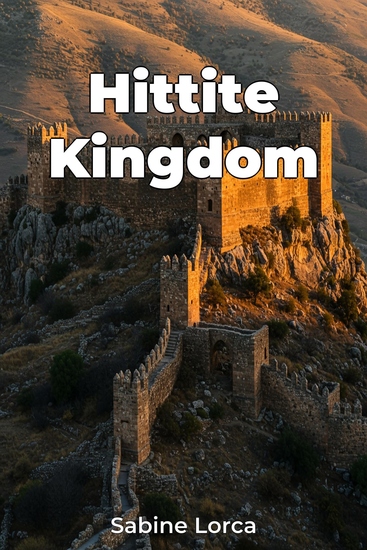
Hittite Kingdom - cover

Hittite Kingdom

Sabine Lorca

Traductor A AI

Editorial: Publifye

  • 0
  • 0
  • 0

Sinopsis

"Hittite Kingdom" unveils the significant role of the Hittites, a Bronze Age superpower often overshadowed by better-known civilizations. This book explores the Hittites' sophisticated governance, including the king's role and the 'pankus' council, innovative military strategies like chariot warfare, and intricate diplomatic relations with Egyptian and Mesopotamian powers. The Hittites' interactions weren't isolated; they were part of a complex web of alliances and conflicts that shaped the ancient Near East. Of particular interest is their debated use of iron weaponry and the strategic importance of Hattusa, their capital.

 
The book provides a comprehensive overview, starting with the historical and geographical context of the Hittite Empire. It delves into their unique blend of centralized authority, adaptive military tactics, and shrewd diplomacy. By examining treaties, royal decrees, and military accounts, the book reconstructs a detailed picture of Hittite society.

 
It progresses through the political structure, military innovations, and interactions with neighboring empires, culminating in an analysis of the empire's decline and lasting influence on subsequent Anatolian cultures. This approach emphasizes the interconnectedness of the ancient world.
Disponible desde: 20/03/2025.
Longitud de impresión: 55 páginas.

Otros libros que te pueden interesar

  • Slave Uprisings that Shook the South The: The History and Legacy of America’s Biggest Revolts in the 19th Century - cover

    Slave Uprisings that Shook the...

    Editors Charles River

    • 0
    • 0
    • 0
    As the issue of slavery roiled the country, few people became as controversial or consequential as Nat Turner, who was one of millions of slaves in the South before the Civil War but ultimately led the nation’s most notorious slave uprising. In August 1831, Turner led a rebellion that terrorized Virginia for several days, killing dozens of whites and freeing slaves as his band moved from plantation to plantation. The Richmond Enquirer reported, “A fanatic preacher by the name of Nat Turner (Gen. Nat Turner) who had been taught to read and write, and permitted to go about preaching in the country, was at the bottom of this infernal brigandage. He was artful, impudent and vindicative, without any cause or provocation, that could be assigned.” Even after the uprising was put down, Turner evaded capture for a few months, and after he was captured, his “confessions” were taken down and published before he was executed. Virginia would put a total of 56 slaves to death for the uprising. 
    While Turner’s rebellion remains famous today, a far larger uprising took place a generation earlier. In January 1811, hundreds of slaves in Louisiana attempted to make a new beginning for themselves or die trying. Armed with muskets, cane knives, and axes, and wearing stolen United States militia uniforms, they set out to conquer the city of New Orleans. The goal was to establish a free republic where slavery was outlawed and blacks had control over their own lives. Understandably discontented with their status and no longer willing to accept it, they were ready to engage in extreme violence to win their freedom, fully aware that death would be the only alternative.  
    The fallout from John Brown's raid on Harpers Ferry was intense. In the South, conspiracy theories ran wild about who had supported the raid, and Brown’s raid has often been considered one of the main precursors to the Civil War.
    Ver libro
  • Awakening The (Unabridged Version) - cover

    Awakening The (Unabridged Version)

    Kate Chopin

    • 0
    • 0
    • 0
    Immerse yourself in the captivating world of "The Awakening (Unabridged Version)" by Kate Chopin, expertly narrated for your listening pleasure. This groundbreaking novel takes you on a transformative journey alongside Edna Pontellier as she defies societal norms and embarks on a quest for self-discovery and liberation.With a crisp and clear narration that breathes life into every sentence, this audiobook allows you to fully immerse yourself in the poignant prose of Kate Chopin. The talented narrator's voice transports you to the sultry atmosphere of 19th-century New Orleans, where Edna's longing for independence clashes with the constraints of her era.This faithful adaptation remains loyal to the original text, ensuring that you experience the full impact of Chopin's powerful storytelling. Delve into the complexities of human desires, societal expectations, and the struggle for personal freedom in this masterful work that continues to resonate with readers across generations.Perfect for fans of literary classics and those seeking thought-provoking narratives, "The Awakening (Unabridged Version)" yearns to captivate your imagination and leave you pondering the boundaries of self-discovery and societal norms.
    Ver libro
  • Getting to the Promised Land - Black America and the Unfinished Work of the Civil Rights Movement - cover

    Getting to the Promised Land -...

    Kevin W. Cosby

    • 0
    • 0
    • 0
    Too often, all oppressed people in America are lumped together under the moniker people of color, as if each group's experience under the yoke of systemic racism has the same economic and social repercussions. But the American Descendants of Slavery (ADOS) hold a unique claim to economic and reparative justice: for ADOS, after all, is the only group whose ancestors were forcibly brought to America, enslaved, built much of the wealth of the country, yet continue to be specifically excluded from the same social, political, and economic rights of other Americans. To that end, Rev. Dr. Kevin W. Cosby lays out the first theology of the ADOS movement, turning the traditional lens of Black liberation theology from Moses leading escaped Hebrew slaves in Exodus to other biblical leaders like Solomon, Daniel, and Nehemiah. 


    In the stories of Nehemiah and other biblical leaders, Cosby finds inspiration on how to rebuild Black America including the necessity of government reparations for ADOS. Cosby calls all Americans to move from a place of relative nonengagement and detachment to a place of active support of ADOS's efforts for justice and healing.
    Ver libro
  • The Republic - cover

    The Republic

    Plato

    • 0
    • 0
    • 0
    The Republic (Greek: Politeia) is a Socratic dialogue, written by Plato around 380 BC, concerning the definition of (justice), the order and character of the just city-state and the just man, reason by which ancient readers used the name On Justice as an alternative title (not to be confused with the spurious dialogue also titled On Justice). The dramatic date of the dialogue has been much debated and though it must take place some time during the Peloponnesian War, "there would be jarring anachronisms if any of the candidate specific dates between 432 and 404 were assigned".    It is Plato's best-known work and has proven to be one of the most intellectually and historically influential works of philosophy and political theory. In it, Socrates along with various Athenians and foreigners discuss the meaning of justice and examine whether or not the just man is happier than the unjust man by considering a series of different cities coming into existence "in speech", culminating in a city (Kallipolis) ruled by philosopher-kings; and by examining the nature of existing regimes.    The participants also discuss the theory of forms, the immortality of the soul, and the roles of the philosopher and of poetry in society. Short Summary (Epilogue): X.1—X.8. 595a—608b. Rejection of Mimetic Art X.9—X.11. 608c—612a. Immortality of the Soul X.12. 612a—613e. Rewards of Justice in Life X.13—X.16. 613e—621d. Judgment of the Dead The paradigm of the city — the idea of the Good, the Agathon — has manifold historical embodiments, undertaken by those who have seen the Agathon, and are ordered via the vision. The centre piece of the Republic, Part II, nos. 2–3, discusses the rule of the philosopher, and the vision of the Agathon with the allegory of the cave, which is clarified in the theory of forms.    The centre piece is preceded and followed by the discussion of the means that will secure a well-ordered polis (City). Part II, no. 1, concerns marriage, the community of people and goods for the Guardians, and the restraints on warfare among the Hellenes. It describes a partially communistic polis. Part II, no. 4, deals with the philosophical education of the rulers who will preserve the order and character of the city-state. In Part II, the Embodiment of the Idea, is preceded by the establishment of the economic and social orders of a polis (Part I), followed by an analysis (Part III) of the decline the order must traverse. The three parts compose the main body of the dialogues, with their discussions of the "paradigm", its embodiment, its genesis, and its decline. The Introduction and the Conclusion are the frame for the body of the Republic.    The discussion of right order is occasioned by the questions: "Is Justice better than Injustice?" and "Will an Unjust man fare better than a Just man?" The introductory question is balanced by the concluding answer: "Justice is preferable to Injustice". In turn, the foregoing are framed with the Prologue (Book I) and the Epilogue (Book X). The prologue is a short dialogue about the common public doxai (opinions) about "Justice". Based upon faith, and not reason, the Epilogue describes the new arts and the immortality of the soul.
    Ver libro
  • The Aitareya Upanishad 101 - an original translation in modern language made plain and simple - cover

    The Aitareya Upanishad 101 - an...

    Matthew Barnes

    • 0
    • 0
    • 0
    Do you believe in evolution, but do not see this belief as necessarily negating the existence of an advanced Intelligence?  
    If so, you may find comfort, inspiration, and perhaps even proof for your beliefs within this ancient Hindu work.  
    The Aitareya Upanishad, which dates back to somewhere around 600-500 BCE, takes us through a journey … the journey of creation. It then leads us through the evolutionary changes that have brought us into this day and age and beyond, into the stage of existence that the ancient Hindus believed would come next. We were all created, the Hindus tell us, for a reason, and we are all evolving towards a particular state of beingness.  
    How can the Hindus be so sure that evolution is fact, and how can they be so sure that there is some sort of Intelligence behind it all? The Hindu religion is the oldest on earth. Their ancestors claim to have actually witnessed a small portion of evolution in action, and through their experiences, also claim to have discovered the underlying intent of life (both in the general and the individual sense). This work goes into these experiences and the insights the Hindus claim to have gained from them. 
    Also included in this narrative is an early Hindu concept of time and space that is extremely difficult to wrapt the human mind around. These concepts, however, coincide very closely with the findings of modern physics. 
    This work is my interpretation of the Aitareya Upanishad. I have endeavored to simplify its teachings, expand where needed, and include modern concepts, discoveries, and quotes to make the central concepts found within it more digestible to modern seekers, especially beginners.  
    Would you like to know more? 
    If so, scroll up and dive in now!
    Ver libro
  • Gorgias - Plato - cover

    Gorgias - Plato

    Plato

    • 0
    • 0
    • 0
    Gorgias is a philosophical dialogue written by Plato, set in Athens in the early 5th century BC. The dialogue is named after the renowned Greek sophist Gorgias of Leontini, who is the main interlocutor in the conversation. 
    The dialogue begins with a discussion about the nature of rhetoric and its relationship to truth. Socrates, the main protagonist of the dialogue, argues that rhetoric is merely a skill of persuasion, and that its practitioners do not necessarily possess knowledge of the subject matter they are discussing. Gorgias and his student Polus disagree, and argue that rhetoric can be used to achieve both knowledge and persuasion. 
    The discussion then turns to the question of whether or not it is better to suffer injustice or to commit injustice. Socrates argues that it is better to suffer injustice than to commit it, and that it is always better to do what is right rather than what is expedient. Gorgias and Polus, however, disagree and argue that it is better to be the one who is in power and able to do as they please. 
    The dialogue concludes with a discussion about the nature of happiness and whether or not it can be achieved through the pursuit of power and wealth. Socrates argues that true happiness comes from living a life of virtue and wisdom, rather than from external circumstances such as wealth and power. 
    Overall, Gorgias is a profound exploration of some of the most fundamental questions of philosophy, including the nature of truth, justice, and happiness. It remains one of Plato's most famous and influential works, and is essential reading for anyone interested in the history of philosophy.
    Ver libro