Rejoignez-nous pour un voyage dans le monde des livres!
Ajouter ce livre à l'électronique
Grey
Ecrivez un nouveau commentaire Default profile 50px
Grey
Abonnez-vous pour lire le livre complet ou lisez les premières pages gratuitement!
All characters reduced
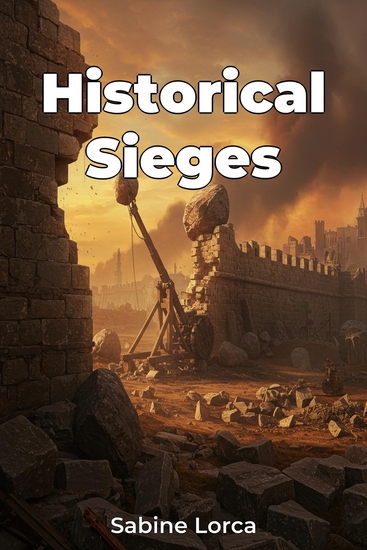
Historical Sieges - cover

Historical Sieges

Sabine Lorca

Traducteur A AI

Maison d'édition: Publifye

  • 0
  • 0
  • 0

Synopsis

Historical Sieges explores how siege warfare shaped history, impacting empires and civilizations through dynamic interactions of offensive and defensive tactics. The book examines pivotal sieges, like the siege of Constantinople, through strategic, tactical, and technological lenses. Understanding these historical events offers insights into military strategy, engineering innovations, and societal resilience under extreme conditions.

 
The book progresses chronologically, detailing the evolution of siege technologies, from ancient battering rams to gunpowder artillery. It analyzes strategies employed by both besiegers and defenders, such as blockades, mining, and sorties. 

 
The narrative also considers the social and economic impact of sieges, including the disruption of trade and the spread of disease. The siege of Tenochtitlan, for example, illustrates how sieges could decide the fate of entire civilizations.

 
Drawing from primary accounts and expert analysis, Historical Sieges offers a balanced view of these complex events, acknowledging their ethical dimensions. The book's value lies in its unique approach, connecting military history with broader fields like engineering and sociology, offering a deeper understanding of warfare’s lasting impact on societies.
Disponible depuis: 29/03/2025.
Longueur d'impression: 70 pages.
D'autres livres qui pourraient vous intéresser

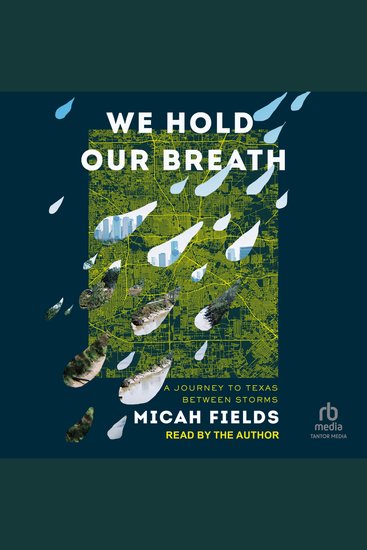
  • We Hold Our Breath - A Journey to Texas Between Storms - cover

    We Hold Our Breath - A Journey...

    Micah Fields

    • 0
    • 0
    • 0
    Developed as the commercial hub of the Texas cotton and sugarcane industries, Houston was designed for profit, not stability. Its first residents razed swamplands into submission to construct a maze of highways and suburbs, giving the city a sprawling, centerless energy as storms and floods rattled coastal Texas. 


    When Hurricane Harvey made landfall in 2017, Fields set off from his home in Iowa back to the battered city of his childhood to rescue his mother. Fields tracks the devastation of Hurricane Harvey, one storm in a long lineage that threatens the fourth largest city in America. 


    Fields depicts the history of Houston with reverence and lyrical certainty, investigating the conflicting facets of Texan identity that are steeped in racial subjugation, environmental collapse, and capitalist greed. He writes of the development of the modern city in the wake of the destruction of Galveston in 1900; of the oil booms and busts that shaped the city; of the unchecked lust for growth that makes Houston so expressive of the American dream. 


    We Hold Our Breath is a portrait of a city that exists despite it all, a city whose story has always been one of war waged relentlessly against water.
    Voir livre
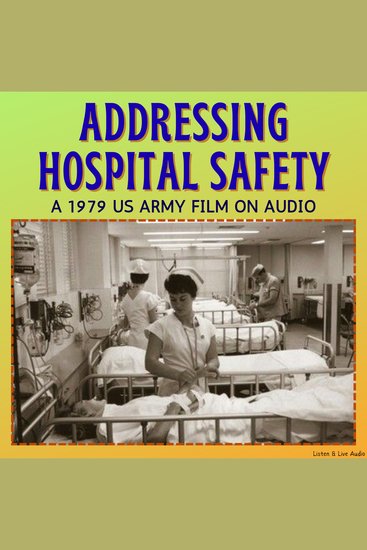
  • Addressing Hospital Safety A 1979 US Army Film on Audio - cover

    Addressing Hospital Safety A...

    US Army

    • 0
    • 0
    • 0
    The following is the audio track for the 1979 educational film developed by the US Army addressing safety hazards in the hospital environment that endanger patients and workers, as well as, the various ways to eliminate or lessen these dangerous situations.
    Voir livre
  • A Rare Recording of Jacqueline Kennedy - cover

    A Rare Recording of Jacqueline...

    Jacqueline Kennedy

    • 0
    • 0
    • 0
    Jacqueline Lee "Jackie" Bouvier Kennedy (July 28, 1929 to May 19, 1994), born in Southampton, NY, was the First Lady of the United States from 1961 to 1963, as the wife of John F. Kennedy, the 35th president of the United States. She redefined the mostly ceremonial role into a platform for arts and culture, by hosting multiple high-profile events at the White House and leading its restoration into a historical site. Through her fashion and cultural literacy, she improved the global standing of the United States during the politically volatile Cold War. The following recordings include an interview by actress Myrna Loy, an appeal to Spanish-speaking voters in a 1960 JFK presidential campaign tv spot, a March 24, 1961 television interview, a December 29, 1962 speech in Spanish at the Orange Bowl in Miami honoring members of Brigade 2506 which participated in the unsuccessful Bay of Pigs invasion of Cuba, and a heartfelt thank you to the American public for their support after the assassination of her husband President John F. Kennedy.
    Voir livre
  • Battle of Dunkirk: Operation Dynamo - The Miracle of the Dunkirk Evacuation During World War 2 - cover

    Battle of Dunkirk: Operation...

    Liam Dale

    • 0
    • 0
    • 0
    Join The History Journals for an hourly history tour. In this edition, uncover the true tale of the Battle of Dunkirk and the heroism of civilians who rescued Allied troops from the Nazis. 
     
    The phrase "spirit of Dunkirk" embodies the indomitable British mentality, but many know little beyond its association with WWII and its location in France. However, Dunkirk's story, marked by incredible bravery of both military and civilians, is profoundly moving and inspirational. This journal transports you to 1940, a journey to discover true courage amid dire adversity. 
     
    Winston Churchill coined it the "miracle" of Dunkirk, a dramatic escape occurring in May and June 1940. To fully appreciate this event, it's essential to grasp its context - a Europe in turmoil under Adolf Hitler's relentless pursuit of global supremacy.
    Voir livre
  • Unlearning Languages That Control the Mind - cover

    Unlearning Languages That...

    Vladan Sutanovac

    • 0
    • 0
    • 0
    The edited collection Unlearning Languages That Control the Mind (ULCM) is to be listened to as a continuous multi–voiced work on what takes place when we forget that unlearning is a part of our existence as much as learning. As the world as we know it finds itself at a critical juncture yet again, how we talk about the continuously amassing genocidal invasions and authoritarian occupations of our minds, thoughts, bodies and environments will affect how we experience, process and counter them on a day–to–day basis. Based on this, ULCM offers its listeners a singular interdisciplinary blueprint of the inner and outer workings of motivated language use when in service of mind engineering and engineered acting. As such, it is a valuable enabling resource for anyone looking to identify and unlearn the languages that mask belief traps and cognitive distortions set up by various antisocial actors to keep our day–to–day cognition and acting confined to society as engineered laboratory. With its interdisciplinary breadth and engaging multimodal content, this handbook breaks new grounds in actionable application of science as an accessible community–enabling tool for seeing through, i.e. dismantling belief traps and mental distortions that turn language use into mindbody abuse.
    Voir livre
  • Spanish Armada and English Armada The: The History of Both Nations’ Ill-Fated Naval Campaigns against Each Other - cover

    Spanish Armada and English...

    Editors Charles River

    • 0
    • 0
    • 0
    On July 12, 1588, the legendary Spanish Armada headed for the English Channel. The Spanish plan was to take this invasion, led by the Duke of Parma, to the coast of southeast England, where they would be unleashed to conquer Elizabethan England for Spain’s King Philip II and Catholic Christendom. The Armada included over 150 ships, 8,000 sailors, and 18,000 soldiers, and it boasted a firepower of 1,500 brass guns and 1,000 iron guns. Just leaving port itself took the entire Armada two days.  
    	As everyone who has been taught history now knows, the Armada was one of the most famous military debacles in history. Regardless of the debate over whether it was simple mathematical miscalculation or plain bad luck, coupled with English fire ships assailing the Spanish ships, the Armada was decisively defeated. The Armada ultimately found its reluctant way home in awful conditions, having permanently lost over a third of the ships, and on the Irish coast, the Armada suffered further losses.  
    	What has since been overlooked is that the undeclared Anglo-Spanish War continued, and it would do so until 1604. The English and their Dutch allies responded to the spectacular and unexpected defeat of the Armada with an attempt of their own to attack Spain with a fleet often called the "Counter Armada" in English. In 1589, once the impact of the previous year upon the Hapsburg naval power became clear, Elizabeth ordered Drake to gather the English fleet to take advantage of the situation. Unlike the Spanish, the English had no illusions of being able to invade their opponent's homelands and overthrow their state; instead, the English had far more modest goals. The English wanted to seek out the remainder of the Spanish fleet and burn it, land troops in Portugal and raise a revolution in that country, and capture the Azores Islands. If possible, they would use a base in the Azores to capture the anticipated treasure fleet from the New World. 
    Voir livre