Rejoignez-nous pour un voyage dans le monde des livres!
Ajouter ce livre à l'électronique
Grey
Ecrivez un nouveau commentaire Default profile 50px
Grey
Abonnez-vous pour lire le livre complet ou lisez les premières pages gratuitement!
All characters reduced
Amphibious Assaults - cover

Amphibious Assaults

Sabine Lorca

Traducteur A AI

Maison d'édition: Publifye

  • 0
  • 0
  • 0

Synopsis

Amphibious Assaults explores the complex dynamics of projecting military power from the sea onto hostile shores, offering insights into what makes these operations succeed or fail. The book examines historical case studies, like the D-Day landings, and modern strategic implications to understand the critical elements of amphibious warfare. It highlights that successful operations require effective integration of technological advancements, thorough intelligence, and adaptable tactical doctrines.

 
One intriguing fact is the crucial role of pre-assault bombardment in weakening enemy defenses, while another is the logistical support needed to sustain forces once ashore.

 
The book progresses by first establishing foundational principles of amphibious warfare, including intelligence gathering and inter-service coordination. It then analyzes key historical operations, such as island-hopping campaigns in the Pacific Theater, emphasizing planning, execution, and outcomes. Finally, it examines modern amphibious capabilities and the future of amphibious warfare, taking into account emerging technologies and geopolitical shifts. This approach provides a comprehensive understanding for military professionals, historians, and anyone interested in military history and naval history.
Disponible depuis: 29/03/2025.
Longueur d'impression: 81 pages.

D'autres livres qui pourraient vous intéresser

  • Mexican History - Drug Cartels Wars and Heroes (3 in 1) - cover

    Mexican History - Drug Cartels...

    Kelly Mass

    • 0
    • 0
    • 0
    This book includes three titles about Mexico's history: 
    Cristero War - The Cristero War, also known as the Cristero Rebellion or La Cristiada [la kistjaa], was a widespread and deeply significant conflict that unfolded in central and western Mexico during the late 1920s. It was primarily driven by a violent response to the secularist and anti-clerical provisions of the 1917 Mexican Constitution, which sought to curtail the influence of the Catholic Church over the country's political and social life. The Constitution introduced sweeping reforms, including the restriction of church property rights and the severe limitations placed on the clergy’s ability to engage in public life. 
    Mexican Drug Cartels - The Mexican drug war, also known as the Guerra contra el narcotráfico en México, is the Mexican theater of the global war on drugs, a campaign led by the United States federal government. This war has resulted in a protracted, asymmetric low-intensity conflict between the Mexican government and various drug trafficking organizations. The Mexican government’s main objective when it intervened militarily in 2006 was to curb drug-related violence, which had escalated in the preceding years. The government’s stated aim, in collaboration with U.S. officials, was to eliminate the cartels and reduce the demand for drugs trafficking. 
    Pancho Villa - Francisco Villa, better known as Pancho Villa, was a key figure in the Mexican Revolution, known for his transformation from a bandit to one of the revolution’s most influential commanders. Villa’s rise to prominence in the early 20th century marked him as a central player in the violent upheavals that reshaped Mexico’s political landscape. In 1911, Villa became a significant actor in the revolutionary violence that led to the overthrow of President Porfirio Díaz, ushering in Francisco I. Madero’s government.
    Voir livre
  • American Civil War The: An Enthralling Overview of the War Between States - cover

    American Civil War The: An...

    Enthralling History

    • 0
    • 0
    • 0
    A nation divided, a war between brothers, and immense political and social consequences—the American Civil War is certainly one of the most famous conflicts in world history. 
    Everyone has heard of the bloody conflict that cost the lives of over one million people. When people think of the Civil War, they think of Abraham Lincoln, the Emancipation Proclamation, and the North-South divide between the American states, but there is so much more to uncover about the American Civil War. 
    This audiobook will dive into the details of the Civil War and explore what caused it, how it unfolded, and its short- and long-term consequences. 
    You will discover the following in this audiobook:        The socio-political situation of 19th-century America before the war        Roots of the problem of slavery        Abraham Lincoln and the creation of the Republican Party        The infamous North-South divide        Causes of secession and the beginning of the war        Main actors on both sides, including Ulysses S. Grant, Jefferson Davis, and Robert E. Lee        Military campaigns that shaped the four-year-long war        The influential battles of Gettysburg, Chancellorsville, Vicksburg, and Fredericksburg        The passing of the Emancipation Proclamation        The assassination of President Lincoln 
    Scroll up and click the “add to cart” button to begin unpacking the history of the US Civil War!
    Voir livre
  • Here Begins the Dark Sea - Venice a Medieval Monk and the Creation of the Most Accurate Map of the World - cover

    Here Begins the Dark Sea -...

    Meredith F. Small

    • 0
    • 0
    • 0
    The remarkable story of the cartographic masterpiece—the Venetian mappa mundi—that revolutionized how we see the world.In 1459 a Venetian monk named Fra Mauro completed an astonishing map of the world. Seven feet in diameter, Fra Mauro's mappamundi is the oldest and most complete Medieval map to survive into modernity. And in its time, this groundbreaking mappamundi provided the most detailed description of the known world, incorporating accurate observation, and geographic reality, urging viewers to see water and land as they really existed. Fra Mauro's map was the first in history to show that a ship could circumnavigate Africa, and that the Indian "Sea" was in fact an ocean, enabling international trade to expand across the globe. Acclaimed anthropologist Meredith F. Small reveals how Fra Mauro's mappamundi made cartography into a science rather than a practice based on religion and ancient myths.Here Begins the Dark Sea brings Fra Mauro's masterpiece to life as a work of art and a window into Venetian society and culture. In telling the story of this cornerstone of modern cartography, Small takes the listener on a fascinating journey as she explores the human urge to find our way. Here Begins the Dark Sea is a riveting testament to the undeniable impact Fra Mauro and his mappamundi have had over the past five centuries and still holds relevance today.
    Voir livre
  • Emile Volume 2 - cover

    Emile Volume 2

    Jean-Jacques Rousseau

    • 0
    • 0
    • 0
    In this influential work, Rousseau outlines his educational philosophy, emphasizing the importance of natural development and the role of the teacher in guiding a child's education. The text is structured as a fictional dialogue between a tutor and his pupil, Emile, and explores themes such as the importance of play, physical exercise, and moral education. Rousseau argues that education should be tailored to the individual needs and abilities of each child, and that the ultimate goal of education is to help the child develop into a virtuous and independent adult. The work has had a significant impact on the development of modern education systems and continues to influence educational theory and practice.
    Voir livre
  • The Man Who Shook Mountains - In the footsteps of my ancestors - cover

    The Man Who Shook Mountains - In...

    Lesley Mofokeng

    • 0
    • 0
    • 0
    'This is a South African story of an unsung hero, a man forgotten by history – though not by me, nor by the people who knew and respected him …'
    When his grandfather gave sermons, he was 'capable of shaking mountains', a church leader tells journalist and author Lesley Mofokeng. 'Ntate Mofokeng pulled people towards God with the great and rare talent of a motivator.'
    In this revealing book, Mofokeng investigates the life of his grandfather, Mongangane Wilfred Mofokeng, a prominent Dutch Reformed Church evangelist. In the 1950s, as Black South Africans were being evicted from the cities to live in reserves and homelands, Mongangane set out to build a community at a dusty cattle post in the far North West province. There he managed to establish a resilient community that mostly lived outside the repressions of the apartheid regime. The journey takes the author from Johannesburg's Marabi-soaked townships of the 1930s to his childhood home of Gelukspan near Lichtenburg and then to rural Free State and the mountain kingdom of Lesotho. In what becomes a spiritual quest, he traces the inspirational footsteps of his ancestors and the legendary King Moshoeshoe.
    Mofokeng also explores the politics and history of the Dutch Reformed Church's Black constituency and uncovers why to this day it is called Kereke ya Fora – or 'Church of the French' – and its hymns are sung across denominations and in social spaces outside the church.
    Voir livre
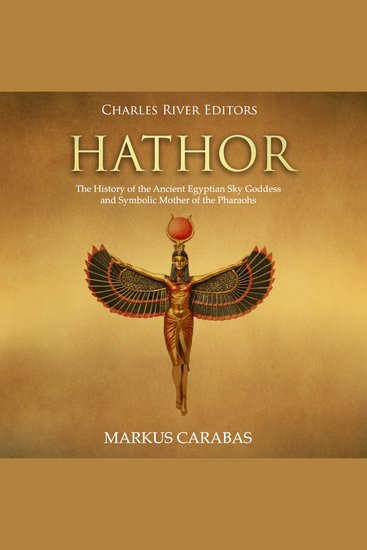
  • Hathor: The History of the Ancient Egyptian Sky Goddess and Symbolic Mother of the Pharaohs - cover

    Hathor: The History of the...

    Markus Carabas, Charles River...

    • 0
    • 0
    • 0
    Africa may have given rise to the first human beings, and Egypt probably gave rise to the first great civilizations, which continue to fascinate modern societies across the globe nearly 5,000 years later. From the Library and Lighthouse of Alexandria to the Great Pyramid at Giza, the Ancient Egyptians produced several wonders of the world, revolutionized architecture and construction, created some of the world’s first systems of mathematics and medicine, and established language and art that spread across the known world. With world-famous leaders like King Tut and Cleopatra, it’s no wonder that today’s world has so many Egyptologists.  
     
    Today, the goddess Hathor is one of the least known deities in the ancient Egyptian pantheon, and the ancient Egyptians would surely be surprised by this fact. Hathor enjoyed a principal position among the gods of ancient Egypt for much of Egyptian history. If anything, she was ubiquitous, with several key cult centers at Dendera, Memphis, and Thebes, and she played various roles for Egyptian society. 
     
    Like many Egyptian deities, Hathor took the form of animals at times. She could "become" a vulture, a cow, or a human, but she was most often depicted as the latter. She is identified in her human form by her long black hair, tied back with a filet beneath a pair of cow horns with the sun disk in between them. The presence of the disk between the horns is a clear indication of her association with the sun deity. That she wore a uraeus - the upright snake seen on the forehead of royal gods and humans - is a sign of her association with royalty, too.  
     
    Whenever an ancient Egyptian deity was associated with royalty, they invariably had a connection with one of the first divine kings: Ra, Osiris, or Horus. Hathor, however, had connections with all three. In the case of her cult center at Dendera, she was not just the wet nurse or mother of Horus‒as was the case later, with Isis‒but she was also his consort. In this way, she became the consort of all kings and as such, garnered the characteristics of an "ideal" partner or queen. This consort of kings was also adept at magic, particularly healing magic, which would become a more predominant characteristic of Hathor in the myths in which she appeared with Horus. Aside from this more mundane role, she was also the "great cow of the heavens that gave birth to the sun" at Dendera.  
     
    It was, perhaps, this great multiplicity that resulted in her losing prominence in the conscious memory of the world. Many deities in world religions often have a small coterie of roles that could be logically spliced together to make a single, divine figure whose character can easily be described, but this is not the case for Hathor. She appears in creation stories as the principle bringing forth the universe and is similarly referred to as the great mother goddess of the sky whose symbolic tree both nourishes and nurtures. Yet she is also the alluring goddess of love whose ecstatic cult practices were born from a grotesque myth involving the floodplains of the Nile being saturated with the blood of humans she massacred. She may be difficult to sum up by a person who has grown up surrounded by the symbols of monotheism, but she is an excellent example of the multi-faceted concepts the ancient Egyptians reconciled in their religion. To understand a little more about Hathor, it will be useful to gain a better understanding of how the ancient Egyptians thought. 
     
    Hathor: The History of the Ancient Egyptian Sky Goddess and Symbolic Mother of the Pharaohs examines the history of the deity, her characteristics, and her lasting legacy on Egypt. Along with pictures depicting important people, places, and events, you will learn about Hathor like never before.
    Voir livre