Rejoignez-nous pour un voyage dans le monde des livres!
Ajouter ce livre à l'électronique
Grey
Ecrivez un nouveau commentaire Default profile 50px
Grey
Abonnez-vous pour lire le livre complet ou lisez les premières pages gratuitement!
All characters reduced
Curious Myths of the Middle Ages - cover

Curious Myths of the Middle Ages

Sabine Baring-Gould

Maison d'édition: DigiCat

  • 0
  • 0
  • 0

Synopsis

In "Curious Myths of the Middle Ages," Sabine Baring-Gould masterfully intertwines folklore, superstition, and historical analysis to explore the rich tapestry of medieval legend. The book delves into various myths, ranging from the myth of the unicorn to the lost accounts of the Holy Grail, providing insightful commentary on how these tales reflect the societal fears, beliefs, and values of the time. Baring-Gould's narrative style is both engaging and thorough, employing a mix of academic rigor and a storyteller's flair, which invites readers to not only learn but also to ponder the origins and implications of these enduring legends in a medieval context. Baring-Gould, a prolific writer and noted folklorist of the 19th century, drew upon his extensive background in anthropology and theology to craft this compelling examination of myth. His dedication to recording oral traditions and unearthing historical foundations enabled him to present a captivating synthesis of myth and reality. His personal experiences traveling through Europe and engaging with various cultures further enriched his understanding of the socio-religious undercurrents influencing medieval narratives. For readers captivated by the enchanting world of folklore or those seeking to better understand the historical roots of modern myths, "Curious Myths of the Middle Ages" is an indispensable read. Baring-Gould's exploration serves not only as a reflection of the past but also invites contemplation on how these age-old beliefs resonate within our contemporary landscape. Immerse yourself in this scholarly yet accessible work to rediscover the myths that once shaped the medieval mind.
Disponible depuis: 11/10/2022.
Longueur d'impression: 135 pages.
D'autres livres qui pourraient vous intéresser

  • Camel From Kyzylkum - A Memoir of My Life Journey - cover

    Camel From Kyzylkum - A Memoir...

    Lara Gelya

    • 0
    • 0
    • 0
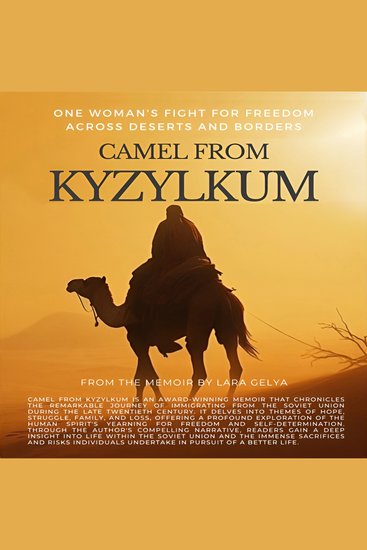
    Camel from Kyzylkum: A Memoir 
    What does it take to leave everything behind in search of freedom? 
    Born in Ukraine and later working in the Kyzylkum Desert of Uzbekistan, Lara Gelya spent the first half of her life behind the Iron Curtain. In 1989, at the age of thirty-nine, she fled the crumbling Soviet Union as a stateless refugee — carrying little more than hope. Her journey took her across Austria and Italy before she finally reached the United States, where she began the long and difficult process of rebuilding her life. 
    With honesty and vivid detail, Lara shares her experiences of growing up under Soviet rule, navigating cultural dislocation, and finding strength in the face of uncertainty. Camel from Kyzylkum is more than a memoir of immigration — it is a story of resilience, courage, and the universal search for freedom and belonging. 
    Perfect for listeners of historical memoirs, refugee stories, and anyone who values the enduring power of the human spirit.
    Voir livre
  • The Great Betrayal - The Great Siege of Constantinople - cover

    The Great Betrayal - The Great...

    Ernle Bradford

    • 0
    • 0
    • 0
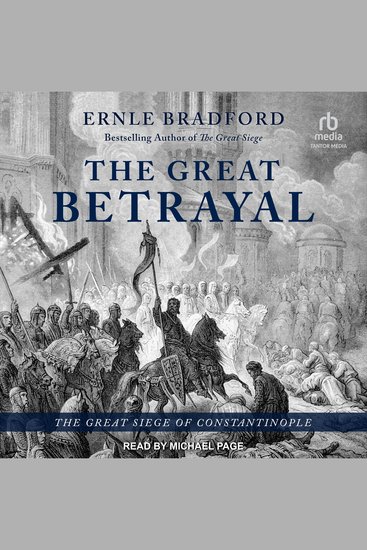
    An engrossing chronicle of the Fourth Crusade and the fall of the Holy Roman Empire, from the bestselling author of Thermopylae. 


    At the dawn of the thirteenth century, Constantinople stood as the bastion of Christianity in Eastern Europe. The capital city of the Byzantine Empire, it was a center of art, culture, and commerce that had commanded trading routes between Asia, Russia, and Europe for hundreds of years. But in 1204, the city suffered a devastating attack that would spell the end of the Holy Roman Empire. 


    The army of the Fourth Crusade had set out to reclaim Jerusalem, but under the sway of their Venetian patrons, the crusaders diverted from their path in order to lay siege to Constantinople. With longstanding tensions between the Roman Catholic and Eastern Orthodox churches, the crusaders set arms against their Christian neighbors, destroying a vital alliance between Eastern and Western Rome. 


    In The Great Betrayal, historian Ernle Bradford brings to life this powerful tale of envy and greed, demonstrating the far-reaching consequences this siege would have across Europe for centuries to come.
    Voir livre
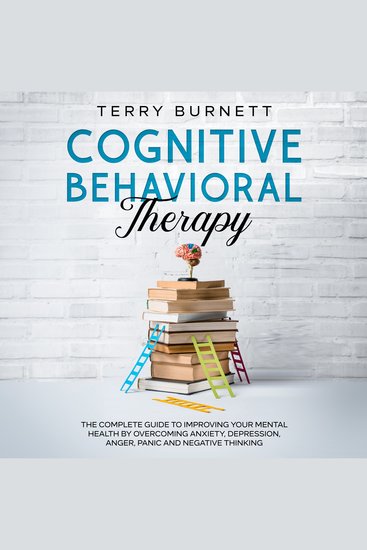
  • Cognitive Behavioral Therapy - cover

    Cognitive Behavioral Therapy

    Terry Burnett

    • 0
    • 0
    • 0
    Have you heard a lot of great things about Cognitive Behavioral Therapy (CBT) being very effective for fighting stress, anxiety and depression and wish to adopt it to enjoy its benefits but are clueless on how exactly to go about it and are looking for a guide to take away all the guesswork?If you’ve answered YES,Let This Audiobook Show You Exactly How To Unlock The Full Power Of Cognitive Behavioral Therapy To Neutralize Stress, Anxiety, Depression And More For A Happier, More Fulfilled Life!CBT is touted as being just as effective as prescription drugs in combating stress, anxiety and depression, but without the negative effects of drugs and without creating dependence.But how does CBT work to make this happen?How do you adopt it?What’s the right way to adopt CBT to deal with stress, anxiety, depression and more?If you have these and other related questions, this audiobook is for you so keep reading.In it, you will discover:    • The basics of CBT, including what it entails, its three phases and how it works to bring results    • The benefits you can expect from adopting CBT    • The fundamental principles of CBT and why they matter    • How to adopt CBT for anxiety, panic attacks, OCD, stress, mental illnesses, bipolar, back pain, Fibromyalgia, insomnia, eating disorders, ADHD, migraines, weight loss, trauma and much more    • The specific things you need to be aware of when adopting CBT for various problems    • Comparison and contrast between CBT and pharmacological interventions    • And much more!Even if you’ve tried everything you can think of to fight stress, anxiety, depression, mental illnesses and other sicknesses unsuccessfully using both natural and pharmaceutical drugs, this audiobook will give you hope that you can turn things around!Scroll up and click Buy Now to get your copy!
    Voir livre
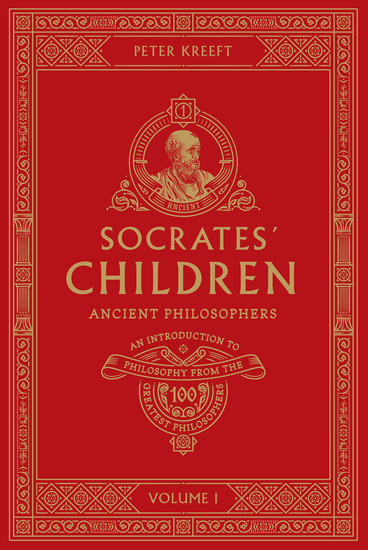
  • Socrates’ Children - An Introduction to Philosophy from the 100 Greatest Philosophers: Volume I: Ancient Philosophers - cover

    Socrates’ Children - An...

    Peter Kreeft

    • 0
    • 0
    • 0
    Peter Kreeft, esteemed philosophy professor and author of over eighty books, has taught college philosophy for sixty years. Throughout those decades, he yearned for a beginner's philosophy text that was clear, accessible, enjoyable, and exciting (perhaps even funny). Finding none that met those criteria, he eventually decided to write it himself.  In this four-volume series, Kreeft delivers, with his characteristic wit and clarity, an introduction to philosophy via the hundred greatest philosophers of all time. Socrates’ Children examines the big ideas of four major eras―ancient, medieval, modern, and contemporary―and immerses the reader in the “great conversation,” the ongoing dialogue among the great thinkers of history, including the most influential philosopher of all: Socrates, the father of Western philosophy.  Volume I: Ancient Philosophers investigates the foundations of philosophy laid by the ancient sages, Greeks, and Romans and introduces the philosophers who asked the first great philosophical questions―about good and evil; truth and falsehood; wisdom, beauty, and love; and the self, the world, and God. 
    Voir livre
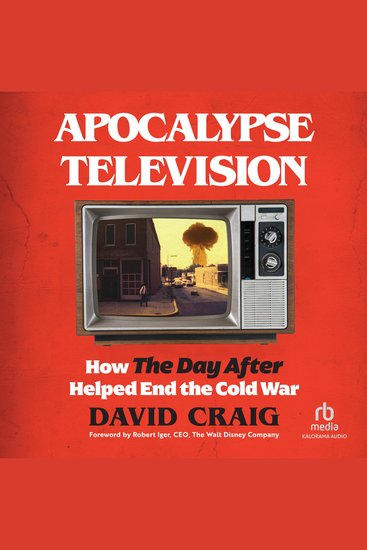
  • Apocalypse Television - How The Day After Helped End the Cold War - cover

    Apocalypse Television - How The...

    David Craig, Robert Iger

    • 0
    • 0
    • 0
    On November 20, 1983, a three-hour made-for-TV movie, The Day After, premiered on ABC. Set in the heartland of Lawrence, Kansas, the film depicted the events before, during, and after a Soviet nuclear attack with vivid scenes of the post-apocalyptic hellscape that would follow. The film was viewed by over 100 million Americans and remains the highest rated TV movie in history. 


    The path to primetime for The Day After proved nearly as treacherous as the film's narrative. Battles ensued behind the scenes at the network, between the network and the filmmakers. But these skirmishes pale in comparison to the culture wars triggered by the film in the press, alongside a growing Nuclear Freeze movement, and from a united, pro-nuclear Right. Once efforts to alter the script failed, the White House conducted a full-throttled propaganda campaign to hijack the film's message. 


    Apocalypse Television features a dramatic insider's account of the making of and backlash against The Day After. No other book has told this story in similar fashion, venturing behind-the-scenes of the programming and news divisions at ABC, the backlash from the conservative movement and Religious Right, the challenges encountered by the film's production team, and the experiences of the citizens of Lawrence, Kansas, where the film was set and shot.
    Voir livre
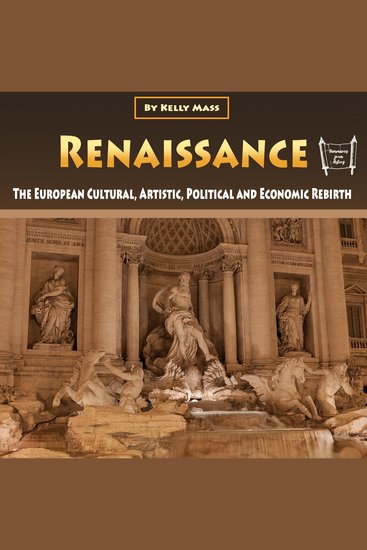
  • Renaissance - The European Cultural Artistic Political and Economic Rebirth - cover

    Renaissance - The European...

    Kelly Mass

    • 0
    • 0
    • 0
    When we think of the Renaissance, we often think of paintings. And indeed, many painters and sculptors were part of the artistic transformation the Renaissance caused. But there was more. The Renaissance basically formed a period of collective enlightenment and freedoms that put an end to certain tyrannies and false notions from the Middle Ages. 
    The Renaissance is a time in European history marking the shift from the Middle Ages to modernity and covering the 15th and 16th centuries, identified by an effort to restore and exceed ideas and accomplishments of classical antiquity. It happened after the Crisis of the Late Middle Ages and was related to great social change. Aside from the basic periodization, advocates of a "long Renaissance" might put its start in the 14th century and its end in the 17th century. 
    Rather than a few years or specific dates, let’s take a look at what the extensive time period of the Renaissance provided, and what it leaves us with today.
    Voir livre