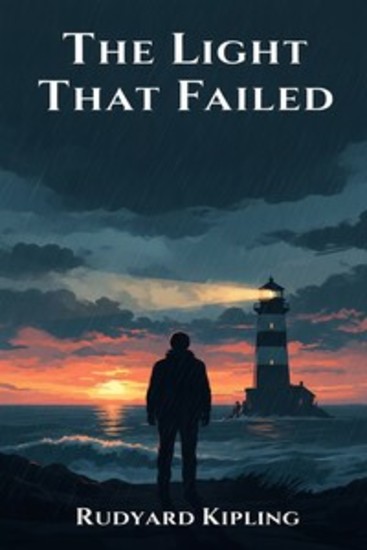
The Light That Failed
Rudyard Kipling
Verlag: Bu Classics Books
Beschreibung
A talented artist faces a tragic race against time as his eyesight fades, forcing him to confront the shattering loss of his passion and his independence.
Verlag: Bu Classics Books
A talented artist faces a tragic race against time as his eyesight fades, forcing him to confront the shattering loss of his passion and his independence.
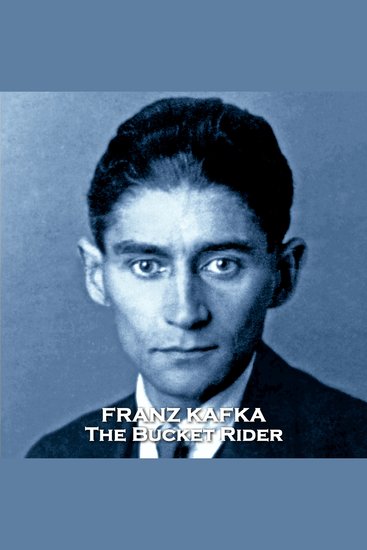
Franz Kafka was born on 3rd July 1883 in Prague, then in Bohemia, the eldest of 6, into a middle-class Jewish family. Life for the young Kafka and his passion for literature was often made an ordeal by his over-bearing and domineering entrepreneur of a father. In 1889 Kafka was sent to the Deutsche Knabenschule, an elementary school in Prague. His father would only allow him to be educated in German-speaking schools and even went so far as to limit visits to the synagogue to four a year. In 1901 he graduated from the classics-oriented Altstädter Gymnasium. Kafka did well there and across a large range of subjects. He now enrolled at the Charles Ferdinand University, to study chemistry, but quickly switched to law for which he obtained his degree in June 1906 and then performed the mandatory year of unpaid service as clerk at the civil and criminal courts. A job at an Italian insurance company left him little time to write and after a year he took another job with the Worker's Accident Insurance Institute for the Kingdom of Bohemia where he stayed until ill health led to his resignation in 1922. Although he saw work as a means to pay the bills and to allow him time to write, he received several promotions and was noted as a good employee. By 1917 Kafka was suffering from tuberculosis, which required frequent periods of convalescence. Interspersed with this, were several intense affairs before he settled in Berlin with Dora Diamant, a 25-year-old kindergarten teacher who herself having left the ghetto now influenced Kafka's interest in the book of Jewish law, the Talmud. Kafka’s on-going health was littered with problems. Apart from TB there were several other ailments, including migraines, insomnia, boils, depression, all usually brought on by excessive stresses and strains. He attempted to counteract all of this by naturopathic treatments, a vegetarian diet and consuming large quantities of unpasteurized milk. His tuberculosis still worsened. He returned to Prague, where he died on 3rd June 1924. He was 40. His literary works are few in number but towering in influence. His masterpieces include ‘The Trial’, ‘The Metamorphosis’ as well as a number of short stories which reveal facets of humankind that truthfully could only be born from Kafka’s brain and pen.Zum Buch
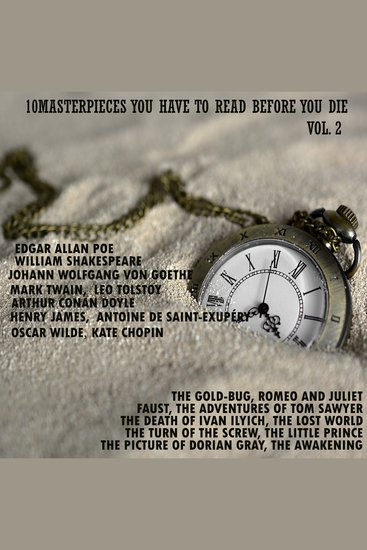
This book contains the following works:1. Edgar Allan Poe: The Gold Bug2. William Shakespeare: Romeo And Juliet3. Johann Wolfgang Von Goethe: Faust4. Mark Twain: Adventures of Tom Sawyer5. Leo Tolstoy: The Death of Ivan Ilyich (Translator: Constance Garnett)6. Arthur Conan Doyle: The Lost World7. Henry James: The Turn of the Screw8. Antoine de Saint-Exupery: The Little Prince (Translator: Marina Zhigalova)9. Oscar Wilde: The Picture of Dorian Gray10. Kate Chopin: The AwakeningZum Buch
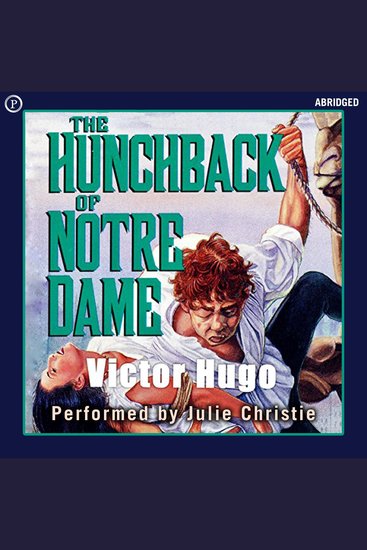
When Quasimodo appears before the masses as the "Pope of Fools," the crowd beholds an enormous cyclops-like creature— the hunchback's whole body seems a twisted grimace. Yet, with all his deformity, there is a certain grace and agility in him, and he possesses an endearing passion. When Esmerelda, the beautiful Romani woman, stands between his two executioners, Quasimodo makes the ultimate sacrifice.Zum Buch
Librivox volunteers bring you 10 recordings of "Spring Song of the Swallow", by Marietta Holley (better known as Josiah Allen's Wife). This was the weekly poem for March 22-29, in honour of spring 2015! - Summary by RachelZum Buch
Bernard Edward Joseph Capes was born on the 30th August 1854 in London. He was one of 11 children. His early work was as a journalist and this developed into writing many short stories for the periodicals of the time including Blackwood's, Cassell's, Cornhill Magazine, Illustrated London News, Macmillan's Magazine, Mall Magazine, Pearson's Magazine, The Idler, and The Queen. It took him many years to decide that writing full-time could be a sustainable career path. His initial success came with ‘The Mill of Silence’. As well as being published it garnered second prize at a competition sponsored by the Chicago Record. He exceeded that by winning it the following year with ‘The Lake of Wine’. Capes quickly became both prolific and popular. As well as his stories and articles for the periodicals he wrote around 40 volumes across novels, poetry, history as well as romance and mystery novels. Bernard Capes died on 2nd November 1918 in the flu epidemic.Zum Buch
Being acknowledged for what you do is always very welcome. When it comes to Oscar’s, Emmy’s, Pulitzer’s and Nobel’s it’s also international news and for many, the pinnacle of their career. The Nobel Prize is much lauded and very difficult to secure. In this volume we list ten of its winners over the decades who were famed for their literature. The prize is given with an emphasis on its contribution to literature and its influence in the world and for the individual, more usually, for the body of work created. So, whilst none of the stories in this volume were winners in their own right, their authors most certainly were. They perfectly illustrate both the nature and mastery of the writing and the power and the purpose set within its storied prose. 1 - The Nobel Prize - Ten Winners - An Introduction 2 - The Father by Bjornstjerne Bjornson 3 - The Phantom Rickshaw by Rudyard Kipling 4 - The Victory by Rabindranath Tagore 5 - An Arch Rascal by Knut Hamsun 6 - The Daughter of Lilith by Anatole France 7 - Dhoya by W B Yeats 8 - Speed by Sinclair Lewis 9 - The Salvation of a Forsythe - Part 1 by John Galsworthy 10 - The Salvation of a Forsythe - Part 2 by John Galsworthy 11 - Son by Ivan Bunin 12 - Sicilian Limes by Luigi PirandelloZum Buch