¡Acompáñanos a viajar por el mundo de los libros!
Añadir este libro a la estantería
Grey
Escribe un nuevo comentario Default profile 50px
Grey
Suscríbete para leer el libro completo o lee las primeras páginas gratis.
All characters reduced
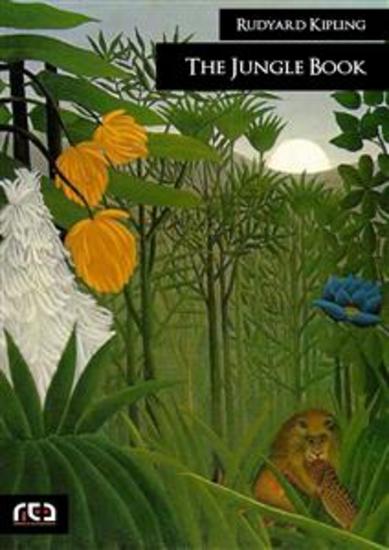
The Jungle Book - cover

The Jungle Book

Rudyard Kipling

Editorial: REA Multimedia

  • 0
  • 0
  • 0

Sinopsis

The Jungle Book (1894) is a collection of stories by the English author Rudyard Kipling. Most of the characters are animals such as Shere Khan the tiger and Baloo the bear, though a principal character is the boy or "man-cub" Mowgli, who is raised in the jungle by wolves. The stories are set in a forest in India; one place mentioned repeatedly is "Seeonee" (Seoni), in the central state of Madhya Pradesh.
A major theme in the book is abandonment followed by fostering, as in the life of Mowgli, echoing Kipling's own childhood. The theme is echoed in the triumph of protagonists including Rikki-Tikki-Tavi and The White Seal over their enemies, as well as Mowgli's. Another important theme is of law and freedom; the stories are not about animal behaviour, still less about the Darwinian struggle for survival, but about human archetypes in animal form. They teach respect for authority, obedience, and knowing one's place in society with "the law of the jungle", but the stories also illustrate the freedom to move between different worlds, such as when Mowgli moves between the jungle and the village. Critics have also noted the essential wildness and lawless energies in the stories, reflecting the irresponsible side of human nature.
Disponible desde: 29/08/2023.

Otros libros que te pueden interesar

  • The Sentinel - cover

    The Sentinel

    Arthur C. Clarke

    • 0
    • 0
    • 0
    Written in 1948 and first published in 1951 as Sentinel of eternity, this is the short story on which the 1968 movie 2001: A Space Odyssey was based, and the beginning of Clarke's Space Odyssey series.The story deals with the discovery during an expedition of an artefact on Earth's Moon that will be a turning point for humanity.
    Ver libro
  • The Art of War - cover

    The Art of War

    Sun Tzu

    • 0
    • 0
    • 0
    The Art of War (Chinese: 孫子兵法; lit. 'Sun Tzu's Military Method') is an ancient Chinese military treatise dating from the Late Spring and Autumn Period (roughly 5th century BC). The work, which is attributed to the ancient Chinese military strategist Sun Tzu ("Master Sun"), is composed of 13 chapters. Each one is devoted to a different set of skills (or "art") related to warfare and how it applies to military strategy and tactics. For almost 1,500 years it was the lead text in an anthology that was formalized as the Seven Military Classics by Emperor Shenzong of Song in 1080. The Art of War remains the most influential strategy text in East Asian warfare and has influenced both Far Eastern and Western military thinking, business tactics, legal strategy, lifestyles and beyond.
    The book contains a detailed explanation and analysis of the 5th-century BC Chinese military, from weapons and strategy to rank and discipline. Sun also stressed the importance of intelligence operatives and espionage to the war effort. Considered one of history's finest military tacticians and analysts, his teachings and strategies formed the basis of advanced military training for millennia to come.
    The book was translated into French and published in 1772 (re-published in 1782) by the French Jesuit Jean Joseph Marie Amiot. A partial translation into English was attempted by British officer Everard Ferguson Calthrop in 1905 under the title The Book of War. The first annotated English translation was completed and published by Lionel Giles in 1910. Military and political leaders such as the Chinese communist revolutionary Mao Zedong, Japanese daimyō Takeda Shingen, Vietnamese general Võ Nguyên Giáp, and American military general Norman Schwarzkopf Jr. are all cited as having drawn inspiration from the book.
    Ver libro
  • Kaa's Hunting - The First Jungle Book - cover

    Kaa's Hunting - The First Jungle...

    Rudyard Kipling

    • 0
    • 0
    • 0
    "Kaa's Hunting" is an 1893 short story by Rudyard Kipling featuring Mowgli. Chronologically the story falls between the first and second halves of Mowgli's Brothers, and is the second story in The Jungle Book (1894) where it is accompanied by the poem "Road Song of the Bandar-log".
    During the time Mowgli was with the wolf pack, he is abducted by the Bandar-log monkeys to the ruined city. Baloo and Bagheera set out to rescue him with Kaa the python.
    Kaa defeats the Bandar-log, frees Mowgli, and hypnotises the monkeys and the other animals with his dance. Mowgli rescues Baloo and Bagheera from the spell.
    Ver libro
  • Snow Queen The - Story Time Episode 78 (Unabridged) - cover

    Snow Queen The - Story Time...

    Hans Christian Andersen

    • 0
    • 0
    • 0
    "The Snow Queen" (Danish: Snedronningen) is an original fairy tale written by Danish author Hans Christian Andersen. The tale was first published 21 December 1844 in New Fairy Tales. First Volume. Second Collection. 1845. (Danish: Nye Eventyr. Første Bind. Anden Samling. 1845.) The story centres on the struggle between good and evil as experienced by Gerda and her friend, Kai. The story is one of Andersen's longest and most highly acclaimed stories. It is regularly included in selected tales and collections of his work and is frequently reprinted in illustrated storybook editions for children.
    Ver libro
  • The Picture of Dorian Gray - cover

    The Picture of Dorian Gray

    Oscar Wilde

    • 0
    • 0
    • 0
    The Picture of Dorian Gray is an acclaimed novel by Oscar Wilde, first published in 1890. It tells the story of a handsome and wealthy young man, Dorian Gray, who discovers a portrait of himself. After making a wish to stay young and beautiful forever, the painting begins to age instead of him and Dorian must keep it hidden from the world. As he lives a life of pleasure and excess, the painting continues to reveal Dorian's true self and ultimate fate. With its themes of morality, innocence, and self-destruction, The Picture of Dorian Gray remains one of the most important and influential works of literature. 
    Oscar Wilde (1854-1900) was an Irish playwright, novelist, poet, and wit. He was one of the most prominent figures of the late Victorian era and a leading light of the Aesthetic Movement. Wilde is best known for his plays “The Importance of Being Earnest” and “An Ideal Husband”, as well as his novel “The Picture of Dorian Gray”. His work was heavily influenced by his Irish background, as well as his love of the theater. His witticisms and epigrams are still widely quoted today. Wilde was also an outspoken critic of Victorian morality, often challenging the conventions of the day. His personal life was also the subject of much controversy and he was imprisoned for two years for “gross indecency”. Wilde’s life and work have inspired generations of writers, artists, and thinkers. He is still regarded as one of the most influential writers in English literature.
    Ver libro
  • A Psychological Experiment - From their pens to your ears genius in every story - cover

    A Psychological Experiment -...

    Richard Marsh

    • 0
    • 0
    • 0
    Richard Bernard Heldmann was born on 12th October 1857, in St Johns Wood, North London.  
    By his early 20’s Heldmann began publishing fiction for the myriad magazine publications that had sprung up and were eager for good well-written content.  
    In October 1882, Heldmann was promoted to co-editor of Union Jack, a popular magazine, but his association with the publication ended suddenly in June 1883. It appears Heldman was prone to issuing forged cheques to finance his lifestyle.  In April 1884 He was sentenced to 18 months hard labour.  
    In order to be well away from the scandal and damage this had caused to his reputation Heldmann adopted a pseudonym on his release from jail. Shortly thereafter the name ‘Richard Marsh’ began to appear in the literary periodicals. The use of his mother’s maiden name as part of it seems both a release and a lifeline. 
    A stroke of very good fortune arrived with his novel The Beetle published in 1897.  This would turn out to be his greatest commercial success and added some much-needed gravitas to his literary reputation.   
    Marsh was a prolific writer and wrote almost 80 volumes of fiction as well as many short stories, across many genres from horror and crime to romance and humour.
    Ver libro