Begleiten Sie uns auf eine literarische Weltreise!
Buch zum Bücherregal hinzufügen
Grey
Einen neuen Kommentar schreiben Default profile 50px
Grey
Jetzt das ganze Buch im Abo oder die ersten Seiten gratis lesen!
All characters reduced
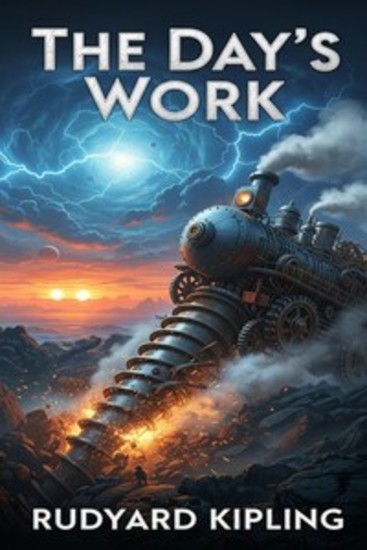
The Day's Work - cover

The Day's Work

Rudyard Kipling

Verlag: Bu Classics Books

  • 0
  • 0
  • 0

Beschreibung

The intersection of professional duty and human emotion takes center stage in these stories celebrating the quiet heroism of those who build and maintain the modern world.
Verfügbar seit: 06.03.2026.
Drucklänge: 419 Seiten.

Weitere Bücher, die Sie mögen werden

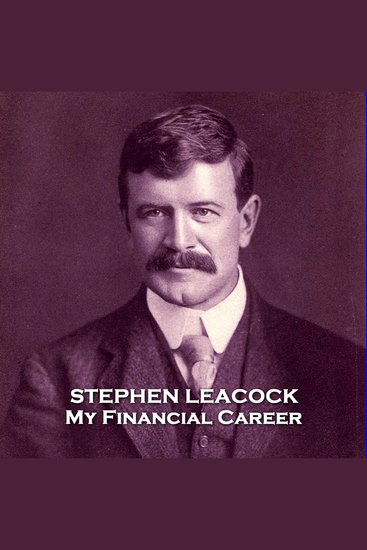
  • My Financial Career - From their pens to your ears genius in every story - cover

    My Financial Career - From their...

    Stephen leacock

    • 0
    • 0
    • 0
    Stephen P H Butler Leacock FRSC was born on 30th December 1869 in Swanmore, near Southampton, England.  He was the third of eleven children. 
    The family emigrated to Canada in 1876, settling on a 100-acre farm in Sutton, Ontario.  There Leacock was home-schooled until, funded by his grandfather, he was enrolled into the elite private school Upper Canada College in Toronto.  Academically he was very strong.  In 1887, at age 17, he became head boy and then proceeded on to the University of Toronto to study languages and literature.  Despite completing two years of study in only one, he was obliged to leave the university because his father, an alcoholic, had abandoned the family and finances could not be stretched to continue his attendance.  Leacock now enrolled in a three-month course at Strathroy Collegiate Institute to become a qualified high school teacher with a regular income. 
    He worked at Upper Canada College from 1889 through 1899 and later resumed his studies part-time at the University of Toronto, graduating with a B A in 1891.  It was during this period that he was first published in The Varsity, a campus newspaper.  But his passion was now economics and political theory.  In 1899 he enrolled for postgraduate studies at the University of Chicago and earned his PhD in 1903. 
    Leacock had married Beatrix Hamilton in 1900 and 15 years later the couple had their only child, Stephen.  In time father and son developed a love-hate relationship, partially caused by his son’s diminutive stature of only four feet.  
    Accepting a post at McGill University Leacock would remain there until he retired in 1936.  In 1906, he wrote ‘Elements of Political Science’, quickly adopted as a standard textbook for the next two decades and his most profitable book.  He also began public speaking and lecturing, and took a year's leave of absence in 1907 to speak throughout Canada on the subject of national unity.  
    Leacock had submitted humourous articles to the Toronto magazine Grip in 1894, and was soon published in other Canadian and US magazines.  In 1910, he printed privately a collection of these as ‘Literary Lapses’.  Acquired by the British publisher, John Lane, it was released in London and New York.   He was now a commercially successful writer.  There soon followed ‘Nonsense Novels’ (1911) and the sentimental favourite, ‘Sunshine Sketches of a Little Town’ (1912).  His ‘Arcadian Adventures with the Idle Rich’ (1914) is a darker collection that satirizes city life.  Collections of sketches continued to be published almost annually, filled with a mixture of light-hearted whimsy, parody, nonsense, and satire. 
    In later life, he wrote on the art of humour writing and published biographies on Twain and Dickens.  Together with continued speaking tours he also added to his non-fiction with many well-regarded and award-winning volumes on Canada. 
    Politically Leacock was a social conservative and a partisan Conservative.  He opposed women’s right to vote and had a varied record on non-English immigration.  He was a champion of Empire but an advocate of social welfare legislation and wealth redistribution, but he often caused friction with his racist views towards blacks and Indigenous peoples. 
    Leacock has for some time been forgotten as an economist, but it’s often quoted that in 1911 more people had heard of him than had heard of Canada.  For the decade after 1915 Leacock was the most popular humorist in the English-speaking world. 
    Stephen Leacock died on 28th March 1944 of throat cancer in Toronto, Canada.  He was 74.  He was buried in the St George the Martyr Churchyard, Sutton, Ontario.
    Zum Buch

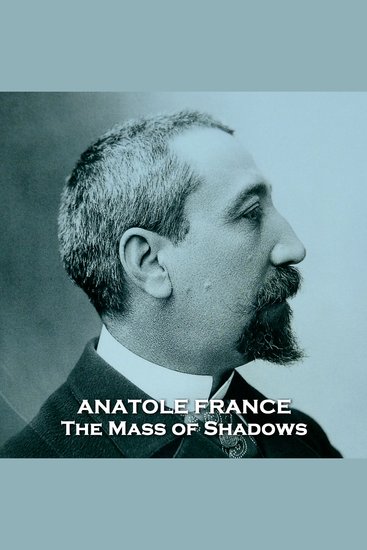
  • The Mass of Shadows - From their pens to your ears genius in every story - cover

    The Mass of Shadows - From their...

    Anatole France

    • 0
    • 0
    • 0
    François-Anatole Thibault was born on the 16th April 1844 in Paris, France, the son of a bookseller and bibliophile. 
    He studied at the Collège Stanislas, a private Catholic school, and after graduating joined his father in the bookstore, which specialised in works on the French Revolution.  Several years later he secured a position as cataloguer at Bacheline-Deflorenne and at Lemerre before being appointed librarian for the French Senate in 1876. 
    His literary career had begun as a journalist and as a poet before publishing his novel ‘Le Crime de Sylvestre Bonnard’ in 1881.  Praised for its elegant prose, it won him a prestigious prize from the Académie Française, which later elected him to its storied ranks. 
    His works were profound and thoughtful and often couched in surreal and outlandish expressions; whether penguins baptized by a near-blind Abbott transformed themselves into humans or of a guardian angel who becomes an atheist, his stories turned established thought into startling literature. 
    His short stories run in the same vein.  The premise may seem plausible but his distinctive style turns them into an individual viewpoint which invokes both discussion and admiration. 
    In his private life his relationships with women were often turbulent.  A Socialist, he was a fervent supporter of the Russian Revolution and the early years of the French Communist party. 
    He was awarded the Nobel Prize in 1921 but the following year his entire canon of works was placed on the prohibited list of the Catholic Church, which he thought of as a credit to his name. 
    Anatole France died on the 12th October 1924 in Tours.  He was 80.
    Zum Buch
  • Waiting for the Long Night Moon - Stories - cover

    Waiting for the Long Night Moon...

    Amanda Peters

    • 0
    • 0
    • 0
    From the bestselling author of The Berry Pickers 
      
    In her debut collection of short fiction, Amanda Peters describes the Indigenous experience from an astonishingly wide spectrum in time and place—from contact with the first European settlers, to the forced removal of Indigenous children, to the present-day fight for the right to clean water 
      
    In this intimate collection, Amanda Peters melds traditional storytelling with beautiful, spare prose to describe the dignity of the traditional way of life, the humiliations of systemic racism and the resilient power to endure. A young man returns from residential school only to realize he can no longer communicate with his own parents. A grieving mother finds purpose and healing on the front lines as a water protector. And a nervous child dances in her first Mawi’omi. The collection also includes the Indigenous Voices Award–winning and title story “Waiting for the Long Night Moon.” 
      
    At times sad, sometimes disturbing but always redemptive, the stories in Waiting for the Long Night Moon will remind you that where there is grief there is also joy, where there is trauma there is resilience and, most importantly, there is power. 
      
    "Readers who engage will be well rewarded with a meaningful collection centering Indigenous people. Written in a woven style, integrating past and present, the stories often end at deft, surprising, and important moments … Stunning … Peters' award-winning debut created an audience ready for anything she writes, and they won't be disappointed by her memorable stories."—Booklist (starred review)
    Zum Buch
  • The Black Church - A Short Story - cover

    The Black Church - A Short Story

    J.F. Penn

    • 0
    • 0
    • 0
    A week alone in Iceland's most isolated church. A grief too heavy to carry. An ancient darkness stirring beneath.  
    Pastor David Thornwell has lost his wife, his faith, and any reason to keep preaching. When he's offered a week-long silent retreat at the Black Church of Búðir — a tar-blackened chapel on Iceland's remote Snæfellsnes Peninsula — he accepts, hoping the vast silence of winter will either restore his shattered belief or give him permission to let go entirely.  
    But the Black Church holds secrets older than Christianity.  
    Strange journals left by previous caretakers describe lights that pool where they shouldn't, voices beneath the foundations, and an archaeological dig that was abandoned without explanation. Claw marks scar the heavy wooden door. And as the aurora borealis blazes across consecutive nights, David begins to understand that this church was not built to celebrate God's presence — but to keep vigil against something far more ancient.  
    With the ground cracking beneath the altar and shadows advancing across the frozen lava field, David must make an impossible choice: surrender to the vast indifference of deep time, or ring the bell — not as an act of faith, but as a single, defiant act of human will.  
    Set against the real landscape of Iceland's Snæfellsnes Peninsula — the inspiration for Jules Verne's Journey to the Centre of the Earth — The Black Church is a story of grief, geological terror, and the thin line between worship and containment.  
    For readers who love the atmospheric dread of M.R. James, the cosmic scope of H.P. Lovecraft, and the emotional weight of literary horror.First published as part of The Buried and the Drowned: A Short Story Collection by J.F. Penn
    Zum Buch
  • A Thousand Fiendish Angels - Short Stories Inspired By Dante's Inferno - cover

    A Thousand Fiendish Angels -...

    J.F. Penn

    • 0
    • 0
    • 0
    Three short stories inspired by Dante's Inferno, linked by a book of human skin passed down through generations. 
    ** Written and read by New York Times and USA Today Bestselling Author J.F.Penn ** 
    SINS OF THE FLESH: 
    When the mutilated corpse of a wealthy author is discovered, the police officer sent to investigate finds a curious diary amongst the occult objects at the scene. Will he uncover the author's secret at the ruined chapel, and is he willing to pay the price that it demands? 
    SINS OF TREACHERY: 
    On the death of their Grandfather, twin brothers Simon and Gestas are left a map covered in alchemical symbols that could lead them to great wealth and power. But they find more than they expected in the frozen wastes of the Arctic north ... 
    SINS OF VIOLENCE: 
    In a brutal post-apocalyptic world, a young girl is about to be taken to The Minotaur for a Blessing that will end her innocence. Can her sister gain access to the fortified city of Dis in time to stop the ritual and avenge her own lost youth?
    Zum Buch
  • 5 Science Fiction Stories by Mac Reynolds - cover

    5 Science Fiction Stories by Mac...

    Dallas McCord Reynolds

    • 0
    • 0
    • 0
    Five early stories by one of my favorite SF writers, Mack Reynolds.  Medal of Honor is an intriguing look into the mind of someone who is above the law; who cannot commit a crime.  How will he act? especially if he is a self centered drunk?  Potential Enemy is story about the sad state of human minds that are ruled by fear and paranoia.  Happy Ending is an SF story about the far future when the last solar system wide dictator has been finally defeated and what will he do?  What will he do? This is also an exploration of mental megalomania and it's effects.  His happy ending is perhaps suitable, but probably not so happy.   A Gun For Hire explores in a light hearted but painful way, the fact that hired guns are just that: hired.  The final story is the funniest of the lot the and is set in Tangiers in the present or very near future.  UFO's are a crackpot idea, right?  well perhaps not.  - Summary by Phil Chenevert
    Zum Buch