The Bridge-Builders
Rudyard Kipling
Verlag: Bu Classics Books
Beschreibung
Witness an epic struggle of engineering and faith as a massive Victorian bridge project faces the wrath of nature and the judgment of ancient deities.
Verlag: Bu Classics Books
Witness an epic struggle of engineering and faith as a massive Victorian bridge project faces the wrath of nature and the judgment of ancient deities.
The bookshelves of European literature are incredible collections that have gathered together centuries of very talented authors. From this continent their fame spread and whilst among their number many are now forgotten or neglected their talents endure. Among them is Arthur Elck.Zum Buch
Fyodor Mikhailovich Dostoyevsky was born in Moscow on 11th November, 1821 to distinguished multi-ethnic parents from a Lithuanian background. His childhood years were at the family home in hospital grounds which also contained an orphanage, an insane asylum and a cemetery for criminals. The young Fyodor often disobeyed his father by talking to the ill in the hospital gardens. His health was compromised at age 9 when he experienced his first epileptic fit. By the time he was a teenager both parents had died and he was now enrolled in a military academy where he graduated and eventually became a Lieutenant in 1842. He left military service the next year. In 1846 he published his first novel ‘Poor Cow’ to great literary acclaim. His next was unable to emulate that success but his short stories helped provide an income. Life as an author was definitely difficult. As he began his next work he was arrested and incarcerated for treason and participation in the political and literary Petrashevsky Circle. Although the case was weak and unjustified he was sentenced to 4 years of hard labour followed by 5 years of military service in a Siberian regiment. Despite the undoubted hardships and setbacks in his life, and whether they helped or hindered his writing, his talents produced many exceptional works of literature including ‘Crime and Punishment’, ‘The Idiot’ and ‘The Brothers Karamazov’. Dostoevsky’s ability to get under the skin of his characters and show the inner workings of their mind was hugely influential and ahead of its time. Interwoven with this was the influence of the broader social, spiritual and political forces at work in a person's psyche. Fyodor Dostoevsky struggled financially and remained in poor health for much of his adult life. He died from a lung haemorrhage on 9th February, 1881.Zum Buch
In "Porter the Porpoise and Josie's Cove Adventure," readers are transported to the picturesque Maheramore Cove in County Wicklow, Ireland, where a heartwarming tale of friendship, courage, and environmental stewardship unfolds. When a grumpy fisherman accuses Porter a Porpoise of causing the disappearance of fish in the cove, Josie, his human friend, springs into action to defend him. Together, they embark on a daring mission to confront the fisherman and uncover the true source of the problem. Amidst the rolling waves and stormy seas, Josie and Porter's bond grows stronger as they face challenges head-on, ultimately uniting with unexpected allies to protect their beloved cove from harm. Filled with suspense, adventure, and heartwarming moments, "Porter the Porpoise and Josie's Cove Adventure" is a captivating story that celebrates the power of friendship and the importance of standing up for what's right. Join Josie and Porter as they navigate the waters of Maheramore Cove and discover the true meaning of bravery and resilience.Zum Buch
Life on the streets take on a whole new meaning in this urban anthology of “hood” tales compiled by New York Times bestselling author Wahida Clark. “Black Is Blue” by Victor L. Martin delves into the life of a corporate woman who falls in love with a thug and finds out just how easy it is to stray from the straight and narrow. Eighteen and hungry, Wiz’s only addiction to drugs is the money it makes. But Crystal changes all of that and shows him just how powerful a woman can be, in “The P is Free” by LaShonda Sidberry-Teague. Bobo, a member of the infamous Eight-Trey street gang, learns that gang life isn’t all it’s cracked up to be as “street wars” take on a whole new meaning in “The Last Laugh” by Bonta. Shawn “Jihad” Trump tells a story of loyalty, love and honor as The Point Blank Mob is brought to its knees, leaving the crew fighting for their lives and freedom in “All for Nothing.” And Wahida Clark introduces Nina, a woman tired of being disrespected by men, who takes revenge to the ultimate level in “Makin’ Endz Meet.”Zum Buch
Title: The Damned Thing Author: Ambrose Bierce Narrator: Jonathan Dunne Original Publication: 1893 Public Domain: Yes Series Placement: Number 10 in the Timeless Terrors series Description: The Damned Thing by Ambrose Bierce is a chilling tale of the unseen and the unknown. First published in 1893 in Tales from New York Town Topics, it presents the strange account of a man’s violent death and the mysterious force believed to be responsible. Told through a coroner’s inquest, the story unfolds in stark fragments—testimony, diary entries, and grim observation—revealing hints of an invisible creature that moves through the natural world, stalking its prey. Bierce masterfully blends psychological dread with cosmic horror, leaving readers to confront the terrifying possibility of forces beyond human perception. This recording, narrated by Amazon bestselling horror author Jonathan Dunne, captures the eerie tension and stark fatalism that defines Bierce’s writing. While the text is in the public domain, this performance is an original work and copyright © 2025 Jonathan Dunne. Listeners should be prepared for a haunting meditation on mortality, fear, and the unseen horrors that may lurk just beyond the reach of human senses.Zum Buch
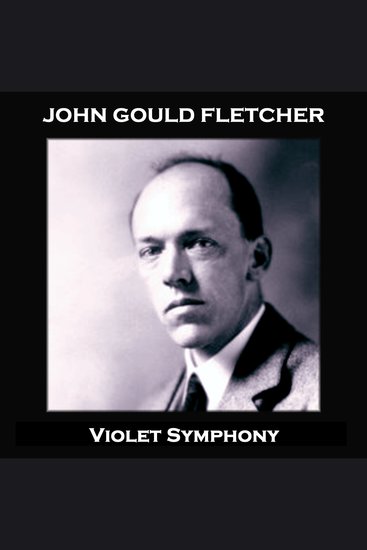
John Gould Fletcher was born in Little Rock, Arkansas on 3rd January 1886 to a socially prominent family. He was educated at Phillips Academy, Andover before advancing to Harvard University which he attended from 1903 to 1907, before dropping out after his father's death. As a young man Fletcher spent many years in England where he became part of the influential Imagist group of poets together with Amy Lowell and Ezra Pound. His first marriage came from a resumed relationship with the now married Florence Emily ‘Daisy’ Arbuthnot. Her adultery with Fletcher was the grounds for her divorce from Malcolm Arbuthnot. They married on 5th July 1916 but later divorced. Fletcher first published in 1912, with ‘The Dominant City’ too much praise and admiration and followed this with other well-regarded volumes such as ‘Irradiations: Sand and Spray’, and ‘Goblins and Pagodas’. In the late 1920s and 1930s Fletcher became increasingly active with a group of Southern writers and poets known as the Southern Agrarians. They published the classic ‘I'll Take My Stand: The South and the Agrarian Tradition’. Although he was highly regarded as a poet he was not very prolific. However, such was the undoubted quality that in 1939 he received the Pulitzer Prize for his work ‘Selected Poems’. He was the first poet from the south to receive such an accolade. Fletcher’s other passion and pursuit was as an authority on modern painting, a subject on which he also published. A second marriage followed in 1936 to the children’s author, Charlie May Simon. They built ‘Johnswood’, a residence on the bluffs of the Arkansas River and travelled frequently to New York for shots of modern culture and intellectual stimulation as well as to the American West and South for the climate after Fletcher developed chronic arthritis. In 1937 he wrote his autobiography, ‘Life is My Song’. His developing passion for his roots and background resulted in the writing of a history of his State and published in 1947; ‘Arkansas’. By now Fletcher was suffering from bouts of depression and on 10th May 1950, he committed suicide by drowning himself in a pond near his home in Little Rock, Arkansas.Zum Buch