Begleiten Sie uns auf eine literarische Weltreise!
Buch zum Bücherregal hinzufügen
Grey
Einen neuen Kommentar schreiben Default profile 50px
Grey
Jetzt das ganze Buch im Abo oder die ersten Seiten gratis lesen!
All characters reduced
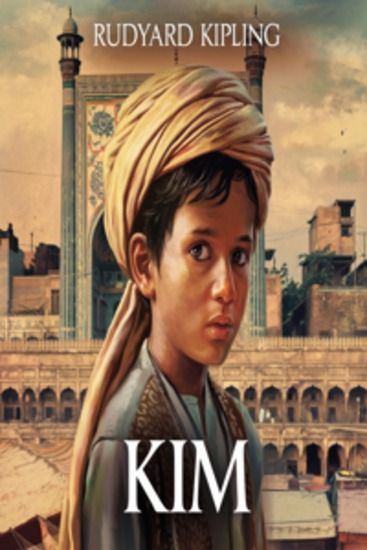
Kim (illustrated) - cover

Kim (illustrated)

Rudyard Kipling

Verlag: Swish

  • 0
  • 0
  • 0

Beschreibung

"Kim" by Rudyard Kipling is a captivating tale of adventure, identity, and espionage set in British-ruled India. First published in 1901 and now in the public domain, this classic novel follows the journey of Kimball O'Hara, an orphaned boy, as he navigates the vibrant streets of India, embraces multiple identities, and becomes involved in the "Great Game" of international espionage. This ebook has been formatted for an enhanced digital reading experience, preserving the richness of Kipling’s timeless prose. Perfect for readers who appreciate classic literature, historical settings, and richly woven narratives.
Verfügbar seit: 08.12.2024.
Weitere Bücher, die Sie mögen werden

  • The Mayor of Casterbridge - cover

    The Mayor of Casterbridge

    Thomas Hardy

    • 0
    • 0
    • 0
    A shameful act of drunken impetuousness results in Michael Henchard losing his wife and daughter in an auction. This evil deed remains secret for years, during which time Henchard climbs the social ladder from working as a roving hay-trusser to becoming the upstanding Mayor of Casterbridge.
    
    An intricate tale of duplicity, comeuppance and regret, this novel puts its characters' principles to the test.
    Zum Buch
  • Foreordained - From their pens to your ears genius in every story - cover

    Foreordained - From their pens...

    Anthony Hope

    • 0
    • 0
    • 0
    Sir Anthony Hope Hawkins was born on 9th February 1863 in Clapton, London.  
    He was educated at St John's School, Leatherhead, Marlborough College and Balliol College, Oxford.  Hope trained as a lawyer and barrister and was called to the Bar by the Middle Temple in 1887. Despite what was thought to be a promising legal career he had literary ambitions and wrote in his spare time. 
    His early works appeared in various periodicals of the day but for his first book ‘A Man of Mark’ (1890), with no publisher interested, he published with his own resources.  
    More novels and short stories followed, including the mildly successful ‘Mr Witt's Widow’ in 1892. Hope even found time to run as the Liberal candidate for Wycombe in the election that same year but was unsuccessful. 
    His first major literary success came with ‘The Dolly Dialogues’, a collection of previously published magazine pieces followed very quickly by his instant classic, ‘The Prisoner of Zenda’. He now gave up the vestiges of his legal career to pursue writing full-time. 
    Despite never again reaching the same pinnacle of success he was popular and wrote prolifically across novels, plays and of course, short stories though his writing output rapidly diminished after the war. 
    In 1918 he was knighted for his contribution to propaganda efforts during World War I.  
    His short stories are delicate, mannered and often surprising with their wit, humour and interplay of characters who say one thing and usually mean another.  He was very definitely a writer of escapist rather than serious fare but they are no less enjoyable for that. 
    Anthony Hope died of throat cancer on 8th July 1933 at his country home, Heath Farm at Walton-on-the-Hill in Surrey. He was 70.
    Zum Buch
  • A Profitable Weakness - From their pens to your ears genius in every story - cover

    A Profitable Weakness - From...

    George Gissing

    • 0
    • 0
    • 0
    George Robert Gissing was born on November 22nd, 1857 in Wakefield, Yorkshire.  
    He was educated at Back Lane School in Wakefield. Gissing loved school. He was enthusiastic with a thirst for learning and always diligent.  By the age of ten he was reading Dickens, a lifelong hero. 
    In 1872 Gissing won a scholarship to Owens College. Whilst there Gissing worked hard but remained solitary. Unfortunately, he had run short of funds and stole from his fellow students. He was arrested, prosecuted, found guilty, expelled and sentenced to a month's hard labour in 1876. 
    On release he decided to start over.  In September 1876 he travelled to the United States. Here he wrote short stories for the Chicago Tribune and other newspapers. On his return home he was ready for novels. 
    Gissing self-published his first novel but it failed to sell.  His second was acquired but never published. His writing career was static.  Something had to change.  And it did. 
    By 1884 The Unclassed was published.  Now everything he wrote was published. Both Isabel Clarendon and Demos appeared in 1886. He mined the lives of the working class as diligently as any capitalist. 
    In 1889 Gissing used the proceeds from the sale of The Nether World to go to Italy. This trip formed the basis for his 1890 work The Emancipated. 
    Gissing's works began to command higher payments. New Grub Street (1891) brought a fee of £250.  
    Short stories followed and in 1895, three novellas were published; Eve's Ransom, The Paying Guest and Sleeping Fires. Gissing was careful to keep up with the changing attitudes of his audience.  
    Unfortunately, he was also diagnosed as suffering from emphysema. The last years of his life were spent as a semi-invalid in France but he continued to write. 1899; The Crown of Life. Our Friend the Charlatan appeared in 1901, followed two years later by The Private Papers of Henry Ryecroft. 
    George Robert Gissing died aged 46 on December 28th, 1903 after catching a chill on a winter walk.
    Zum Buch
  • The Game Of Logic - cover

    The Game Of Logic

    Lewis Carroll

    • 0
    • 0
    • 0
    The Game of Logic is a book written by Lewis Carroll, published in 1886. In addition to his well-known children's literature, Carroll was an academic mathematician who worked in mathematical logic. The book describes, in an informal and playful style, the use of a board game to represent logical propositions and inferences. Carroll incorporated the game into a longer and more formal introductory logic textbook titled Symbolic Logic, published in 1897. The books are sometimes reprinted in a single volume.
    Zum Buch
  • David Copperfield - cover

    David Copperfield

    Charles Dickens

    • 0
    • 0
    • 0
    First published in 1850, David Copperfield begins with avid the tragedy of David's brother dying when David is just a boy. After this episode, he is sent by his step-father to work in London for a wine merchant. When conditions worsen he decides to run away and embarks on a journey by foot from London to Dover. On his arrival, he finds his eccentric aunt, Betsey Trotwood who becomes his new guardian. Being witness to the formation of David's character is quite fascinating. David begins as a strong child whose only aspiration is a better life. On the way to his adulthood, David sees how people enter and leave his life. Romanticism takes its place in David’s life as he gets married to Dora Spenlow who is not long for this world. Will David ever find stability and happiness? And what of his wife? Dickens proves to be a master in creating an autobiographical work that is a captivating page-turner.Charles John Huffam Dickens FRSA was an English writer and social critic. He created some of the world's best-known fictional characters and is regarded by many as the greatest novelist of the Victorian era.
    Zum Buch
  • Russian Short Story The - Volume 1 - Alexander Pushkin to Nikolai Gogol - cover

    Russian Short Story The - Volume...

    Alexander Puschkin, Nikolai Gogol

    • 0
    • 0
    • 0
    The Russian novel has a reputation that is immense, both in narrative and in length.  Unquestionably though the ideas, themes and characters make many novels rightly revered as world class, as icons of literature. 
     
    Perhaps an easier way to enjoy a wider selection of the Russian heritage, with its varied and glorious literary talents, is with the short story.  These gems sparkle and beguile the mind with their characters and narrative, exploring facets of society and the human condition that more Western authors somehow find more difficult to navigate, or to explore, explain and relate to.   
     
    The Russian short story is, in many respects, in a genre of its own.  It is at its captivating best whether it’s an exploration of real-life experiences, through fantasy and fables and on to total absurdity. 
     
    In a land so vast it is unsurprising that it is a world almost unto itself. Cultures and landscapes of differing hues are packed together bound only by the wilful bonds and force of Empire. 
     
    The stories in this collection traverse the decades where one might be a serf under an absolute monarch, and the reality of that was pretty near to slavery, into an emancipation of sorts in the fields, or towns under the despotic will of landowners and the rich into the upheavals of Empire and then the overthrow of the ruling class and its replacement by the communists, who promised equality for all and delivered a society where the down-trodden remained the lowest yet vital cog of the state machine and its will.  
     
    Whilst Tolstoy, Gogol, Dostoevsky, Pushkin and Chekhov are a given in any Russian collection we also explore and include Andreyev, Korolenko, Turgenev, Blavatsky and many others to create a world rich and dense across a sprawling landscape of diverse people, riddled with the class and unfairness in perhaps some of the most turbulent times that Russia has ever experienced. 
     
    01 - The Russian Short Story - Volume 1 - An Introduction 
    02 - The Queen of Spades by Alexander Pushkin 
    03 - The Stationmaster by Alexander Pushkin 
    04 - The Blizzard by Alexander Pushkin 
    05 - The Coffin Maker by Alexander Pushkin 
    06 - The Shot by Alexander Pushkin 
    07 - St Johns Eve by Nikolai Gogol 
    08 - The Cloak by Nikolai Gogol also known as 'The Overcoat' 
    09 - Old Fashioned Landowners by Nikolai Gogol 
    10 - The Nose by Nikolai Gogol
    Zum Buch