Join us on a literary world trip!
Add this book to bookshelf
Grey
Write a new comment Default profile 50px
Grey
Subscribe to read the full book or read the first pages for free!
All characters reduced
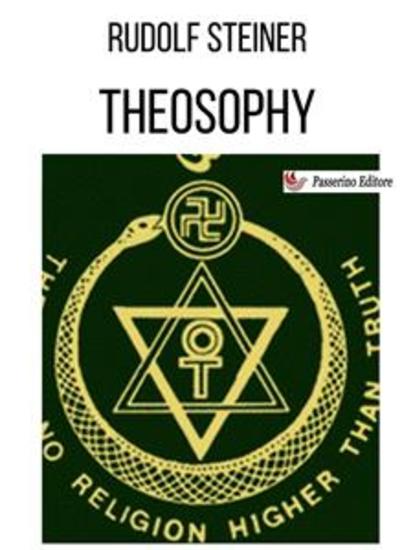
Theosophy - cover

Theosophy

Rudolf Steiner

Publisher: Passerino

  • 0
  • 1
  • 0

Summary

Theosophy is a philosophical and spiritual movement that was founded in the late 19th century by Helena Petrovna Blavatsky, Henry Steel Olcott, and others. Theosophy is derived from the Greek words "theos" (God) and "sophia" (wisdom), and it seeks to uncover the underlying spiritual principles that are believed to exist behind all religions and philosophies. Rudolf Steiner initially became involved with the Theosophical Society in the early 20th century, and he quickly rose to become one of its leading figures. However, Steiner's views diverged significantly from those of the Society's leadership, particularly with regard to his emphasis on individual spiritual development and his rejection of the Society's hierarchical structure.

Steiner eventually founded his own organization, the Anthroposophical Society, which promoted his own unique spiritual teachings and practices. This led to his expulsion from the Theosophical Society in 1913.

Theosophy- An Introduction to the Spiritual Processes in Human Life and in the Cosmos, published in 1904, was Steiner's first major work on Theosophical ideas.
It explores the nature of the human being, the spiritual realms, and the processes of reincarnation and karma.

Rudolf Steiner (1861-1925) was an Austrian philosopher, social reformer, and spiritual teacher who founded the spiritual movement known as Anthroposophy. Steiner was born in what is now Croatia and grew up in Austria. He studied science, mathematics, and philosophy at university, and later became a noted literary critic and writer.
Available since: 03/09/2023.

Other books that might interest you

  • Imperialism and Its Legacy - The Long-Term Effects of Empire Building on Modern Nations - cover

    Imperialism and Its Legacy - The...

    Arlo Holders

    • 0
    • 0
    • 0
    Imperialism, a term that evokes both grandeur and controversy, refers to the practice of extending a nation's power and dominion over foreign territories, often through conquest, colonization, or economic and political influence. At its core, imperialism involves the domination of one country over another, typically to exploit resources, expand markets, or spread cultural and political ideologies. While the history of imperialism stretches back to ancient civilizations, the modern form of imperialism emerged during the Age of Exploration, when European powers began to seek new trade routes and expand their influence across the globe. 
    The roots of imperialism are deeply entwined with the economic, political, and cultural motivations of the imperial powers. From an economic perspective, nations sought to secure access to valuable resources, such as gold, silver, spices, and agricultural products, which were crucial for their economic growth. The industrial revolution further fueled this desire for resources, as new technologies created an insatiable demand for raw materials and new markets to sell finished goods. Politically, imperialism was driven by the need for strategic dominance, with nations eager to expand their influence and prevent rivals from gaining power. Cultural and ideological motives, such as the belief in the superiority of one’s own civilization and the desire to “civilize” and Christianize indigenous peoples, were also significant driving forces behind imperial expansion. 
    The rise of modern imperialism coincided with the emergence of powerful European states, including Britain, France, Spain, Portugal, and later Germany and Italy, who sought to expand their empires across Africa, Asia, and the Americas.
    Show book
  • Integrity in Actions - The Honest Practice - cover

    Integrity in Actions - The...

    Esther Jameson

    • 0
    • 0
    • 0
    Integrity is often regarded as one of the most essential virtues, yet its true meaning is far more complex than many assume. At its core, integrity is the alignment of one's actions with their values, beliefs, and principles. It is the foundation of trust, and without it, relationships—both personal and professional—are built on fragile ground. Integrity goes beyond just telling the truth; it involves living authentically and consistently, regardless of external pressures or consequences. It is about doing what is right, even when no one is watching, and staying true to one's principles, even when the path seems difficult. 
    To truly understand integrity, it’s important to distinguish it from honesty. While honesty is certainly a component of integrity, the latter involves a deeper commitment to ethical living. Honesty refers to the act of telling the truth, whereas integrity encompasses the broader commitment to act in a way that reflects personal moral values and societal expectations. Someone with integrity not only speaks the truth but also lives truthfully. This practice manifests in how a person carries themselves through their decisions, actions, and behaviors, and is a constant process of self-checking to ensure they remain in alignment with their ethical principles. 
    The importance of integrity in daily life cannot be overstated. In a world full of distractions and temptations, staying grounded in integrity can be a challenge. Yet, it is through consistent, small acts of integrity that we build our character. These small decisions may seem insignificant at the time but accumulate over a lifetime to define who we are and how others perceive us. Integrity impacts not just personal satisfaction but also how we are seen in the eyes of others. People are drawn to those who exhibit strong moral character, and trust grows in environments where integrity is consistently practiced.
    Show book
  • Let It Go - How Forgetting Heals Mind And Soul - cover

    Let It Go - How Forgetting Heals...

    Brian Gibson

    • 0
    • 0
    • 0
    Let It Go: How Forgetting Heals Mind and Soul is a groundbreaking exploration of one of the most overlooked yet powerful tools of emotional well-being: the ability to forget. 
    Blending psychological insight, neuroscience, and emotional depth, this book takes readers on a transformative journey through the science and soul of forgetting. Each chapter unpacks how intentionally and selectively letting go of certain memories can pave the way to healing, clarity, and inner peace.Discover the psychological and emotional rationale for forgetting and how it supports mental resilience.Selective Retrieval of Memory and Think/No-Think. Techniques explore the mechanisms that allow us to shape what we remember and what we choose to leave behind.Gain insight into Control Over Memories, learning to regulate the intrusive thoughts that hold us back.Understand the deep links between memory and mood in Depressive Disorders and how forgetting becomes a vital ally in recovery.Explore how the brain uses Top-Down Control to influence what we recall and how that process can be optimized for healing. 
    Rooted in science yet rich with emotional intelligence, Let It Go provides readers with information, practical frameworks, and empowering strategies. Whether you're seeking to overcome past trauma, manage mental clutter, or simply find peace in the present, this book offers a compassionate, research-backed roadmap to a lighter, freer mind. If you've ever felt trapped by your memories, Let It Go is your invitation to heal—not by holding on, but by learning the art and science of letting go.
    Show book
  • Sins Of Love - cover

    Sins Of Love

    Fay Leta Crawford

    • 0
    • 0
    • 0
    Sins of Love is a collection of poems written solely by myself. Sins of Love is my interpretation of love and heartbreak in correlation with the stages of death and dying. I have taken my experiences and the experiences of others and categorized them into five stages. This book is a walk through the side of love most people don’t want to talk about. This conversation is necessary in order to heal, grow and find the love meant for you. 
    Follow me as we trail through my denial, my anger, my bargaining, my depression and my acceptance in my Sins of Love. 
    Special thanks to my amazing Producer & Engineer Extraordinaire, Kenechi Ubani 
    Special thanks to my Cover Art Designer, Emmanuel Baligad
    Show book
  • No Scrap Left Behind - My Life Without Food Waste - cover

    No Scrap Left Behind - My Life...

    Teralyn Pilgrim

    • 0
    • 0
    • 0
    Teralyn Pilgrim had no idea the environmental and economic impact of food waste, or that she could save $100 a month by being waste free. But when a story of hungry children fills her with unbearable guilt, she decided to make a change to the way her family approached mealtime. Despite finicky kids and a skeptical husband, Pilgrim turned her feelings of guilt into action and created a zero-food waste kitchen. 


    Pilgrim began her journey by defining food waste with Rule #1: the Hungry Kid Test—would you throw something edible away with a hungry child watching? If the answer is yes, it can go in the compost. If the answer is no, then it's time to get creative. 


    Narrating her trials and errors—emphasis on errors—Pilgrim invites listeners to her table, where leftover food is a personal challenge to reduce waste, save money, and guard against squandering natural resources. Things get tricky when she discovers a five-year-old fish in her freezer, accidentally buys the grossest fat-free cookies in the world, and finds her dog is as picky as the kids. Addressing myths about how being waste-free is too hard (it's not) and whether expiration dates mean anything (they don't), Pilgrim teaches listeners clever ways to be resourceful while also offering a broader look at why food waste matters and the global effects of this massive problem.
    Show book
  • ATOMIC HABITS 10-Minute Summary - An Easy & Proven Way to Build Good Habits and Break Bad Ones - cover

    ATOMIC HABITS 10-Minute Summary...

    James Cleary

    • 0
    • 0
    • 0
    This book by James Clear offers an approach rooted in neuroscience, psychology, and sociology to help people build positive habits and eliminate negative ones. Its core premise is that habits are the foundation of success, and that small, incremental changes can lead to significant improvements in one’s life. 
    Beyond their personal impact on identity and success, Atomic Habits also raises broader questions about the role habits play in shaping societies and cultures. While Clear focuses on individual development, his principles can be applied collectively. For example, what would happen if governments, businesses, or communities intentionally designed environments that encourage good habits at scale? Behavioral architecture is already in use in some areas—like walkable city design or waste reduction through nudging strategies—but its full potential remains largely untapped. 
    Another underexplored aspect is how digital technology affects habit formation. In a world where algorithms influence what we see, read, and buy, our habits are no longer purely personal choices—they’re shaped by systems designed to maximize our engagement. This raises a critical question: how can we regain control over our behavior in such a hyperconnected environment? 
    Habits are valuable when they fit the context, but what happens when that context changes? A habit that’s beneficial today might become irrelevant—or even harmful—tomorrow. Real mastery isn’t just about building habits; it’s also about knowing when to adapt or let them go. 
    Ultimately, the book reminds us that the power to change lies in our hands—not in sweeping decisions, but in the small, consistent actions we take each day. Over time, those actions shape who we become and what we achieve. 


    Show book