Begleiten Sie uns auf eine literarische Weltreise!
Buch zum Bücherregal hinzufügen
Grey
Einen neuen Kommentar schreiben Default profile 50px
Grey
Jetzt das ganze Buch im Abo oder die ersten Seiten gratis lesen!
All characters reduced
The Spiritual Guidance of Man and of Mankind - cover

The Spiritual Guidance of Man and of Mankind

Rudolf Steiner

Verlag: e-artnow

  • 0
  • 0
  • 0

Beschreibung

The Spiritual Guidance of Man and of Mankind is a work by Rudolf Steiner. It portrays the spiritual leadership of ancient India, Egypt, and Greece while diving into their beliefs and ceremonial proceedings.
Verfügbar seit: 01.12.2023.
Drucklänge: 176 Seiten.

Weitere Bücher, die Sie mögen werden

  • Speaking in Tongues - cover

    Speaking in Tongues

    Mariana Dimópulos, J. M. Coetzee

    • 0
    • 0
    • 0
    Language, historically speaking, has always been slippery. Two dictionaries provide two different maps of the universe: which one is true, or are both false? Speaking in Tongues—taking the form of a dialogue between Nobel laureate novelist J. M. Coetzee and eminent translator Mariana Dimópulos—examines some of the most pressing linguistic issues that plague writers and translators well into the twenty-first century. 


    The authors inquire if one can truly love an acquired language, and they question why certain languages, like Spanish, have gender differences built into them. They examine the threat of monolingualism and ask how we can counter, if at all, the global spread of the English language, which seems to maraud like a colonial power. They question whether it should be the duty of the translator to remove morally objectionable language. And in the conclusion, Coetzee even speculates whether it's only mathematics that can tell the truth about everything. 


    Drawing from decades of experience in the craft of language, both Dimópulos and Coetzee face the reality that when it comes to self-expression, some things will always get lost in translation. Speaking in Tongues finally emerges as an engaging and accessible work of philosophy, shining a light on some of the most important linguistic and philological issues of our time.
    Zum Buch
  • History of Quebec: A Captivating Guide to the Largest Province in Canada and Its Impact on French History - cover

    History of Quebec: A Captivating...

    Captivating History

    • 0
    • 0
    • 0
    Quebec’s political struggle for autonomy, independence, and the protection of its language, culture, and heritage is shrouded in ambiguity. Let us shed some light on the subject for you. 
    Why have the province’s linguistic and cultural tensions dragged on for nearly four hundred years? In what ways does it differ from the rest of Canada? Did indigenous peoples play a key role in shaping the province’s identity and culture? For what reasons did Quebec’s two sovereigntist referendums fail? And what was the Quiet Revolution?  
    The historic rivalry between Britain and France was an intense, long-standing geopolitical struggle. Relations between the empires cooled at the dawn of the modern age. Today, the nations are close allies, but the embers of Franco-Anglo strife still burn at the core of Quebec society. While Francophone nationalists stress the importance of enacting linguistic and cultural protection laws, Quebecois Anglophones and other non-Francophones claim to be increasingly marginalized by the laws and ideologies of a society ravaged by mass cultural anxiety.  
    So, what is the truth? This audiobook seeks to untangle the storied history and complexities of Canada’s rebel province. It attempts to make sense of how a province of one of the world’s most progressive countries continues to ignite conflict between its French- and English-speaking communities. 
    Some of what this audiobook examines includes the following: The early indigenous civilizations and their rapid transformations after establishing European contact;The rise of the cod and fur trade and the eventual integration of the Americas into European trade networks; 
    If you’d like to discover more about Quebec and make sense of Quebecois society, scroll up and click the “add to cart” button!
    Zum Buch
  • Lourdes - The Famous Roman Catholic Shrine - cover

    Lourdes - The Famous Roman...

    Kelly Mass

    • 0
    • 0
    • 0
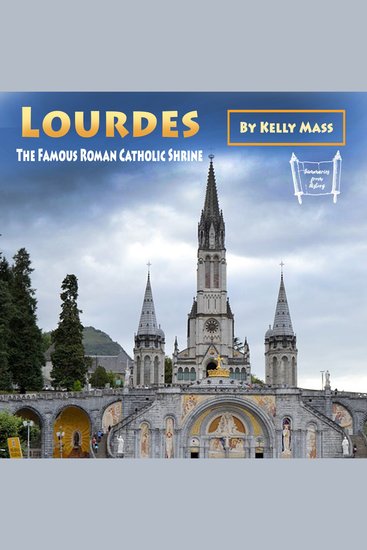
    You may have heard of Lourdes, a town in France where millions of people go every year, either as a tourist to take pictures or see what the hype is all about, or real believers who think that the town has a sanctity to it and can somehow cure them, help them, or inspire them through divine means. Whatever the reason for the many visitors is, it is undeniably an interesting historical heritage, something worth exploring. 
    To be precise, Lourdes is a small market town nestled in the Pyrenees' foothills. It is in the Occitanie area of southern France and is a part of the Hautes-Pyrénées department. Prior to the mid-nineteenth century, the town was well-known for the Château fort de Lourdes, a prepared castle set down atop a rocky cliff in the town's heart. 
    Today, I invite you to explore the background and historicity of this town with me, to form your own opinion, and to be open-minded to the story beneath the surface, buried in the past and brought to light in the many narratives the presenters at the site tell. Perhaps you will have the opportunity to visit it sometime yourself, and if or when you do, you will be equipped with more knowledge than the majority of the visitors. Perhaps that way, it will touch you more.
    Zum Buch
  • Formation of the Federal Reserve The: The Early History of America’s Central Banking System - cover

    Formation of the Federal Reserve...

    Editors Charles River

    • 0
    • 0
    • 0
    Debates over paper money and banking are older than the United States of America itself. 18th and 19th century Americans were deeply ambivalent about paper money and central banks, and political fights over these issues were among the bitterest in American history. In fact, controversies over the country’s central bank birthed both the first (1792-1824) and second (1828-1852) party systems; frequently, policymakers crafted responses to the crisis at hand, and as a result they implemented policies that were inadequate to the challenges the country faced in the future.  
    Indeed, the early administrations' ambivalence toward central banking and paper money, combined with the ad hoc nature of policymakers’ responses, caused severe problems. These issues came to a head during the Panic of 1907, which provoked a major reassessment of America’s banking system. Progressive Era reformers like President Woodrow Wilson walked a tightrope, balancing fears of centralized wealth with the undeniable need for a rational mechanism to help govern the country’s economy. The system they created represented half a loaf, its many compromises and weaknesses corrected by the response to two other crises: the Great Depression and the Cold War. The Federal Reserve System that has existed since the Accord of 1951 has cooled the passionate conflict over central banking and rendered obsolete many of the monetary questions that so animated Americans in previous centuries. 
    Zum Buch
  • Purple Crayons - The Art of Drawing a Life - cover

    Purple Crayons - The Art of...

    Ross Ellenhorn

    • 0
    • 0
    • 0
    In this joyous and inventive rereading of the beloved children’s book Harold and the Purple Crayon, the author of How We Change (And Ten Reasons Why We Don’t) celebrates our inherent “sacred originality” and establishes a new framework for self-reliance. 
    In 1955, Crockett Johnson introduced one of the world’s most beloved and enduring young adventurers, Harold and his purple crayon. Today, we need Harold and his penchant for creative solutions more than ever. In Purple Crayons, Ross Ellenhorn looks to Johnson’s classic for insights and answers that can help us understand our current condition and point the way towards solutions for healing. Purple Crayons tells a story about America then and now, about living one’s life as art; about the powers that block us from doing so, about the pull and perils of conformity; about serious play and too much seriousness, about what it means to feel alive inside and what deadens our existence. It’s also about 1955 in America, all that lay before and—presciently—all that lay ahead, as each of us struggles to draw meaningful and resilient existences on the blank pages—the future yet unlived—of our lives. 
    This delightful, provocative adventure is a gift of kindness and love that encourages us and gives us hope. As he traces Harold’s journey, Ellenhorn offers insights into our “sacred originality”—the idea that each of our unique inner lives are worth nurturing and protecting, and the perseverance, courage, connection, and community necessary to sustain them. Engaging, thoughtful, wise—Purple Crayons transcends the current divides separating us, reminding us that our fulfillment rests on tapping into what is original about ourselves, finding ways to express our originality, and understanding that doing so is rooted in who we are as Americans.
    Zum Buch
  • Urban Poverty and Inequality - Analysis and Solutions - cover

    Urban Poverty and Inequality -...

    Lyric Vale

    • 0
    • 0
    • 0
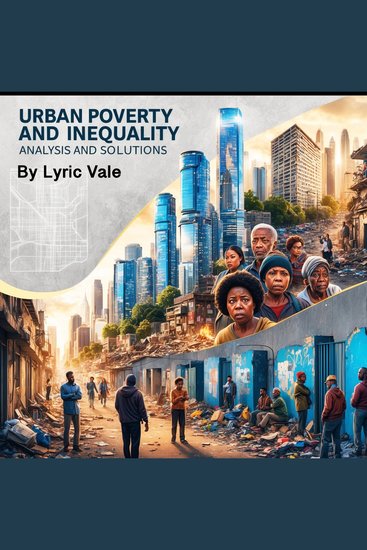
    Urban poverty is a pervasive issue that affects millions of people living in cities worldwide. As cities continue to grow at an unprecedented rate, the number of urban poor continues to rise, with large portions of the population living in conditions of extreme deprivation. The term "urban poverty" refers to the situation where individuals and families in urban areas experience a lack of access to basic resources, such as adequate housing, healthcare, education, and employment opportunities. Despite being situated in areas of economic activity and growth, urban poor populations face numerous challenges that contribute to their ongoing struggle for survival and upward mobility. 
    The growth of cities and urban centers has been accompanied by an increasing divide between the wealthy and the poor. While urban areas are often seen as hubs of opportunity, economic growth, and development, they also tend to highlight social and economic inequalities. Rapid urbanization, coupled with limited resources, leads to overcrowded slums, informal settlements, and a lack of infrastructure in many parts of cities. In such environments, the poor face challenges such as high unemployment rates, limited access to education, and poor healthcare services. These conditions create a cycle of poverty that is difficult to escape. 
    In addition, the urban poor are often excluded from key economic and social systems that would help alleviate their poverty. The concentration of wealth in urban centers disproportionately benefits the middle and upper classes, while marginalized communities remain on the periphery, unable to fully participate in the economic, political, and social life of the city. This growing inequality between different social classes exacerbates poverty and leaves the urban poor trapped in a cycle of disadvantage.
    Zum Buch