Begleiten Sie uns auf eine literarische Weltreise!
Buch zum Bücherregal hinzufügen
Grey
Einen neuen Kommentar schreiben Default profile 50px
Grey
Jetzt das ganze Buch im Abo oder die ersten Seiten gratis lesen!
All characters reduced
Big Book of West Virginia Ghost Stories - cover

Big Book of West Virginia Ghost Stories

Rosemary Ellen Guiley

Verlag: Rowman & Littlefield Publishers

  • 0
  • 0
  • 0

Beschreibung

This “fantastic collection of the Mountain State's ghostlore . . . takes readers into the legends and the phenomena like no one else can” (Jeff Belanger, author of The World’s Most Haunted Places). Rich in history and natural splendor, West Virginia also boasts a wealth of unexplained mysteries. In this volume, noted paranormal researcher Rosemary Ellen Guiley delves into more than one hundred accounts of hauntings from across the state.   From the restless spirits of the Hatfields and McCoys to John Brown’s ghost at Harper’s Ferry, Guiley shows that the region’s history is still very much with us. She also explores lesser-known mysterious places such as Droop Mountain, where headless spectors roam, and the Trans-Allegheny Lunatic Asylum, a site replete with tortured phantoms. Around the campfire or tucked away on a dark and stormy night, this big book of ghost stories is a hauntingly good read.
Verfügbar seit: 14.06.2023.
Drucklänge: 293 Seiten.

Weitere Bücher, die Sie mögen werden

  • Accidentally Wes Anderson: Adventures - cover

    Accidentally Wes Anderson:...

    Wally Koval, Amanda Koval, Wes...

    • 0
    • 0
    • 0
    Adventure awaits in this new visual odyssey from Accidentally Wes Anderson, taking readers on stunning trips to every continent and sharing oddly moving human tales along the way. For lovers of travel, design, and exploration, AWA presents a brand-new collection of real-world places that seem plucked from the films of Wes Anderson, and the stories that bring each location to life. You’ll venture to Antarctica through the treacherous Drake Passage, make a stop in lesser-known Jincumbilly, Australia (where platypuses outnumber people), discover the bridge in Wisconsin that went to nowhere, and drop into the most peculiar umbrella shop in London. But adventure means nothing without someone to tell the tale.    You’ll meet the father of American skydiving, who created the officially-sanctioned center of Earth—a California town with a population of two. You’ll visit the “post office at the end of the world”—and meet its mustachioed letter carrier, who runs an anarchist island nation in his free time. And you’ll travel to a town in the Arctic Circle where cats are prohibited, humans may not be buried, and doomsday vaults hold all we need to survive an apocalypse—including the secret recipe for the Oreo cookie.    Authorized by the legendary filmmaker himself, Accidentally Wes Anderson Adventures reminds us that the world is ours to explore.
    Zum Buch
  • The Kingdom of Kush - Nubian Kings and the Black Pharaohs of the Nile - cover

    The Kingdom of Kush - Nubian...

    Rolf Hedger

    • 0
    • 0
    • 0
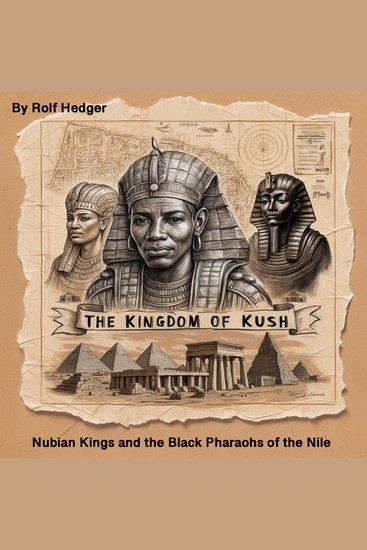
    The Kingdom of Kush, an ancient African civilization, flourished along the Nile River in what is now modern-day Sudan. This powerful kingdom played a crucial role in the history of northeastern Africa, often interacting with its northern neighbor, Egypt. The land of Kush was known for its rich natural resources, strategic location, and unique cultural identity, which set it apart from other civilizations of the time. 
    Geographically, Kush was centered in the region known as Nubia, a stretch of land between the first and sixth cataracts of the Nile. This location provided fertile lands for agriculture, supported by the annual flooding of the river. Unlike Egypt, which relied heavily on the predictable flooding of the Nile, the Kushites also adapted to drier conditions, developing irrigation techniques to sustain their crops. The region was abundant in valuable resources such as gold, ivory, ebony, and exotic animal skins, making it an important trade hub in the ancient world. These resources attracted merchants from Egypt, the Mediterranean, and even as far as the Middle East, contributing to the kingdom's economic strength. 
    Kushite civilization was heavily influenced by its relationship with Egypt, but it also maintained distinct cultural and political traditions. Early Kushite settlements date back to around 2500 BCE, and by the time of the Egyptian Middle and New Kingdoms, Kush had grown into a formidable power. Egyptian pharaohs often sought control over Nubia due to its wealth, leading to periods of conquest and integration. However, Kush was not merely a passive recipient of Egyptian influence. It developed its own identity, blending Egyptian religious beliefs with native Nubian traditions, which would later be reflected in Kushite art, architecture, and burial practices.
    Zum Buch
  • Big Book of New York Ghost Stories - cover

    Big Book of New York Ghost Stories

    Cheri Revai

    • 0
    • 0
    • 0
     Hauntings lurk and spirits linger in the Empire State—from Manhattan’s Ear Inn to the Seneca Hill Ghost in Oswego.   Reader, beware! Turn these pages and enter the world of the paranormal, where ghosts and ghouls alike creep just out of sight. Author Cheri Farnsworth shines a light in the dark corners of New York and scares those spirits out of hiding in this thrilling collection. From apparitions and objects that fly off of tables at the Manhattan Bistro, to a specter that stalks Pulpit Rock in Lake Placid, there’s no shortage of bone-chilling tales to keep you up at night. Around the campfire or tucked away on a dark and stormy night, this big book of ghost stories is a hauntingly good read.  “Whether you’re an armchair ghost enthusiast or prefer to visit haunted locales, this book, excellently organized for both, is a perfect guide and companion.” —Tamara Thorne, author of Old Wives’ Tales
    Zum Buch
  • The Borderless Heart - cover

    The Borderless Heart

    Reece Davis

    • 0
    • 0
    • 0
    In a world defined by borders, what connects us runs far deeper than what divides. 
    In The Borderless Heart, acclaimed traveler and storyteller Reece Davis shares a series of vivid, true encounters from his years on the road — moments of unexpected humanity that transcend language, culture, and geography. From sharing tea with a Kurdish shepherd to joining a village wedding in the mountains of Nepal, Davis reveals how kindness, laughter, and shared vulnerability can bridge even the widest of divides. 
    Each story becomes a testament to our shared pulse — the unspoken understanding that beneath the passports and politics, we are all part of the same human journey. 
    Warm, wise, and profoundly moving, The Borderless Heart reminds us that the world isn’t made of borders — it’s made of people.
    Zum Buch
  • Travel your way - Rediscover the world on your own terms - cover

    Travel your way - Rediscover the...

    Nathan James Thomas

    • 0
    • 0
    • 0
    Travel is the opposite of prejudice; it is curiosity, openness and connection. When our world is in flux, travel matters more than ever. It is the only way to go beyond the narratives that are fed to us, and understand the world through your own experience. 
    Understanding does not automatically come from travel. You have to work for it. And with barriers and restrictions coming and going at a dizzying rate, now is the time to learn how to eke the most out of whatever travel opportunities we are able to seize. Travel Your Way is your guide to going beyond the narratives fed to us, and experiencing the world directly. Inside, you’ll find practical techniques for breaking out of your comfort zone, smashing the language barrier, dodging the tourist trail and understanding the real story of everywhere you go. 
    Whether you’re stuck at home, dashing off on a business trip, or slinging your backpack over your shoulders for a year of intrepid wandering, Travel Your Way will help you rediscover the world on your own terms.
    Zum Buch
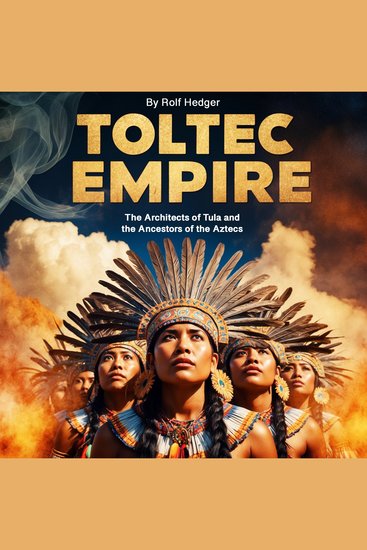
  • Toltec Empire - The Architects of Tula and the Ancestors of the Aztecs - cover

    Toltec Empire - The Architects...

    Rolf Hedger

    • 0
    • 0
    • 0
    The Toltec civilization emerged in central Mexico following the decline of Teotihuacan, one of the most powerful and influential cities of ancient Mesoamerica. With Teotihuacan’s fall around the 7th or 8th century, the region experienced a power vacuum, creating an opportunity for new societies to rise. Among them were the Toltecs, a people who would shape the political, military, and cultural landscape of Mesoamerica for centuries to come. 
    The origins of the Toltecs remain a subject of scholarly debate, but many sources trace their roots to northern Mexico, possibly the arid regions of modern-day Zacatecas or the deserts beyond. By the 10th century, they had established themselves in the Valley of Mexico, where they founded their capital, Tula. The early rulers of the Toltecs, including the semi-legendary Mixcoatl, are credited with uniting various groups under a centralized government and fostering a warrior-based society that would come to dominate the region. Mixcoatl's son, Ce Acatl Topiltzin Quetzalcoatl, is one of the most famous figures in Toltec history. Said to be both a king and a priest, he promoted the worship of Quetzalcoatl, the feathered serpent deity, and encouraged a cultural shift away from excessive militarism and human sacrifice. However, his reign was met with opposition from factions who favored more warlike practices, leading to his eventual exile. His departure, shrouded in myth, would later influence Aztec beliefs and the idea of a prophesied return. 
    Tula, the heart of the Toltec Empire, reflected the ambitions and architectural ingenuity of its people. Expanding over several square miles, the city featured impressive pyramids, colonnaded halls, and massive stone warriors that stood as sentinels over its ceremonial centers. The city's strategic location allowed the Toltecs to control trade networks that extended as far as the Yucatán Peninsula and beyond.
    Zum Buch