Begleiten Sie uns auf eine literarische Weltreise!
Buch zum Bücherregal hinzufügen
Grey
Einen neuen Kommentar schreiben Default profile 50px
Grey
Jetzt das ganze Buch im Abo oder die ersten Seiten gratis lesen!
All characters reduced
Wrecked by the Stranger - cover

Wrecked by the Stranger

Rose Rough

Verlag: Rose Rough

  • 0
  • 0
  • 0

Beschreibung

She's gone to her cabin to relieve some stress. But who knew that taking off a for a rejuvenating vacation to the woods for a few days could lead to her darkest fantasies coming true in the form of a rough stranger who comes to her in the dark? 

 
Verfügbar seit: 14.11.2022.

Weitere Bücher, die Sie mögen werden

  • Life in Ten Chapters - cover

    Life in Ten Chapters

    Stewart Scott

    • 0
    • 0
    • 0
    This series of stories address everyday issues sympathetically and with excellent character development whilst depicting people which many readers will identify with as the storylines are creatively and skillfully intertwined. This eclectic collection of stories expresses all of the human emotions of the characters with great sensitivity and with pathos.
    Zum Buch
  • The White Ship - cover

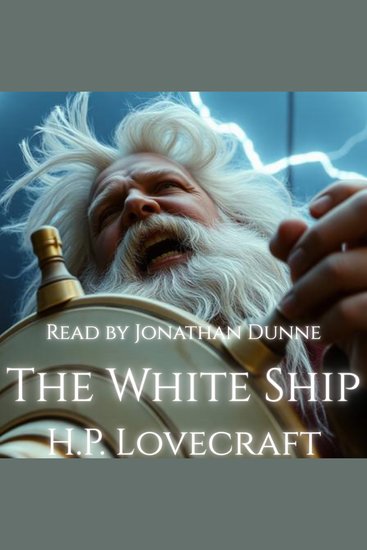
    The White Ship

    H. P. Lovecraft

    • 0
    • 0
    • 0
    More classic horror narrations on Jonathan's YouTube channel: https://www.youtube.com/@JonathanDunneHorrorAudiobooks 
    Title: The White Ship 
    Author: H. P. Lovecraft 
    Narrator: Jonathan Dunne 
    Original Publication: 1919 
    Public Domain: Yes 
    Series: Timeless Terrors 
    Number: 102 
    Description: 
    The White Ship is a haunting and dream-laden voyage into realms beyond mortal reckoning, where longing becomes both compass and curse. Set upon a lonely headland overlooking an ancient sea, the tale follows Basil Elton, a solitary lighthouse keeper who is summoned by a mysterious white vessel to sail toward lands of impossible beauty and perilous promise. Each shore he visits offers visions of wonder, knowledge, and transcendence—yet beneath their splendor lies a growing sense of cosmic inevitability and loss. 
    In this early masterwork, H. P. Lovecraft crafts a lyrical meditation on aspiration, illusion, and the fragile boundary between dream and waking ruin. The prose drifts with hypnotic elegance, yet carries an undercurrent of dread, as each paradise reveals itself to be but another veil before ultimate disillusionment. Themes of yearning, forbidden wisdom, and the indifferent vastness of the cosmos echo throughout the voyage, culminating in a revelation as stark and unforgiving as the sea itself. 
    Narrated by Amazon-bestselling horror author Jonathan Dunne, this performance captures the story’s ethereal beauty and creeping melancholy, drawing listeners into a reverie where hope and hubris sail hand in hand. The White Ship endures as a timeless exploration of the human hunger for transcendence—and the devastating cost of pursuing realms never meant for mortal souls.
    Zum Buch
  • The Bull - cover

    The Bull

    Saki Saki

    • 0
    • 0
    • 0
    In "The Bull" by Saki, the story revolves around two half-brothers, Tom and Laurence Yorkfield, who embody contrasting lifestyles and values. Tom is a practical farmer, proud of his small herd and particularly of a vigorous young bull named Clover Fairy, which he believes is a valuable asset. In contrast, Laurence is an aspiring artist who paints animals, including bulls, but feels superior due to his artistic pursuits.
    Zum Buch
  • The Mockingbird - From their pens to your ears genius in every story - cover

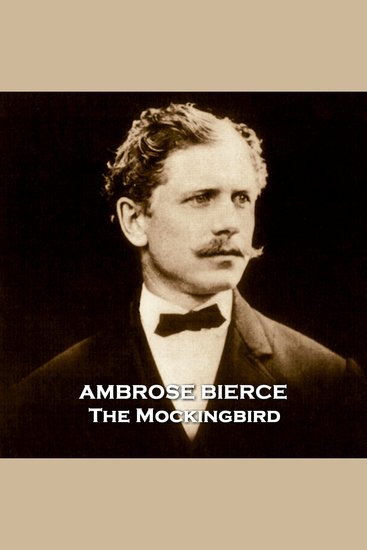
    The Mockingbird - From their...

    Ambrose Bierce

    • 0
    • 0
    • 0
    Ambrose Gwinnett Bierce was born on 24th June 1842 at Horse Cave Creek in Meigs County, Ohio. His parents were poor but they introduced him to literature at an early age, instilling in him a deep appreciation of books, the written word and the elegance of language.  
    Growing up in Koscuisko County, Indiana poverty and religion were defining features of his childhood, and he would later describe his parents as “unwashed savages” and fanatically religious, showing him little affection but always quick to punish. He came to resent religion, and his introduction to literature appears to be their only positive effect. 
    At age 15 Bierce left home to become a printer’s devil, mixing ink and fetching type at The Northern Indian, a small Ohio paper. Falsely accused of theft he returned to his farm and spent time sending out work in the hopes of being published. 
    His Uncle Lucius advised he be sent to the Kentucky Military Institute. A year later he was commissioned as an Officer.  As the Civil War started Bierce enlisted in the 9th Indiana Infantry Regiment.  
    In April 1862 Bierce fought at the Battle of Shiloh, an experience which, though terrifying, became the source of several short stories. Two years later he sustained a serious head wound and was off duty for several months. He was discharged in early 1865.  
    A later expedition to inspect military outposts across the Great Plains took him all the way to San Francisco. He remained there to become involved with publishing and editing and to marry, Mary Ellen on Christmas Day 1871.  They had a child, Day, the following year.  
    In 1872 the family moved to England for 3 years where he wrote for Fun magazine. His son, Leigh, was born, and first book, ‘The Fiend’s Delight’, was published.  
    They returned to San Francisco and to work for a number of papers where he gained admiration for his crime reporting. In 1887 he began a column at the William Randolph Hearst’s San Francisco Examiner.  
    Bierce’s marriage fell apart when he discovered compromising letters to his wife from a secret admirer. The following year, 1889 his son Day committed suicide, depressed by romantic rejection. 
    In 1891 Bierce wrote and published the collection of 26 short stories which included ‘An Occurrence at Owl Creek Bridge’.  Success and further works including poetry followed.  
    Bierce with Hearst’s resources helped uncover a financial plot by a railroad to turn 130 million dollars of loans into a handout. Confronted by the railroad and asked to name his price Bierce answered “my price is $130 million dollars. If, when you are ready to pay, I happen to be out of town, you may hand it over to my friend, the Treasurer of the United States”.  
    He now began his first foray as a fabulist, publishing ‘Fantastic Fables’ in 1899.  But tragedy again struck two years later when his second son Leigh died of pneumonia relating to his alcoholism.  
    He continued to write short stories and poetry and also published ‘The Devil’s Dictionary’.  
    At the age of 71, in 1913 Bierce departed from Washington, D.C., for a tour of the battlefields where he had fought during the civil war. At the city of Chihuahua he wrote his last known communication, a letter to a friend. It’s closing words were “as to me, I leave here tomorrow for an unknown destination,” Ambrose Bierce then vanished without trace.
    Zum Buch

  • Forgotten Authors The - Women - Volume 3 - Beatrice Heron-Maxwell to Rina Ramsay - cover

    Forgotten Authors The - Women -...

    Beatrice Heron-Maxwell, Eliza...

    • 0
    • 0
    • 0
    Throughout the long centuries of human history is the want, and the need, to share information, to exchange ideas and for that knowledge and experience, for curiosity and learning, to be the basis of a civil society. 
    In literature the ambition is much narrower.  In order to be known, to be popular, you had to be published.  And for that people had to know you existed and your ideas worth reading.  Obviously for most of humanity’s time people couldn’t read and texts couldn’t be published in any great number. 
    In the 15th Century Gutenberg’s printing press began the revolution to address the second and by the 19th century had gathered pace with startling speed and mass distribution.  Education for the many was brought in to help people understand more of their world and, with new skills, how to have a better place within it.  Now, if the powers that owned the presses and means of distribution agreed an audience would now be able to avail themselves of your ideas, your printed words.  
    All too often the talents of women have been scorned, mocked and laughed at.  In reality that was more usually by those who’s own talents were hardly fit to even grace their shadows.   
    But society in general still connived and set women to one side in almost everything that men considered their rightful territory.  And literature was one such territory.  Remarkably resilient as well as talented these women strove to be published, to show themselves as equals.  The results more often than not proved that they were.   
    Sadly, in the thirst for the new, the recent and the past fell from sight, relegated to dark corners and dusty shelves.    
    But the printed word is rarely without someone, somewhere busying themselves through piles of papers and books rediscovering what a good story is, whatever its age. 
    In this volume we offer up a small selection of talents whose time has now come again.
    Zum Buch
  • Demons in my bloodstream - cover

    Demons in my bloodstream

    Candace Nola

    • 0
    • 0
    • 0
    Award-winning Author Candace Nola' s debut collection, Demons in my Bloodstream, is a fiendishly woven tapestry of short fiction. These nightmarish tales include a mobsters bucket list, a neighborhood gardening competition gone wrong, a serial killer patiently waiting for one last kill, and a colorblind man that finally cures what ails him. Six blood-soaked tales of terror for your own demon to feast upon.
    Zum Buch