Begleiten Sie uns auf eine literarische Weltreise!
Buch zum Bücherregal hinzufügen
Grey
Einen neuen Kommentar schreiben Default profile 50px
Grey
Jetzt das ganze Buch im Abo oder die ersten Seiten gratis lesen!
All characters reduced
Love to be Forced - cover

Love to be Forced

Rose Rough

Verlag: Rose Rough

  • 0
  • 0
  • 0

Beschreibung

Three rough stories filled with hard men and the women they desire so much that they just can't stop themselves! Stories included: Forced at the Truck Stop, Forced in the Forest, Bridesmaid Forced at the Wedding
Verfügbar seit: 02.05.2022.

Weitere Bücher, die Sie mögen werden

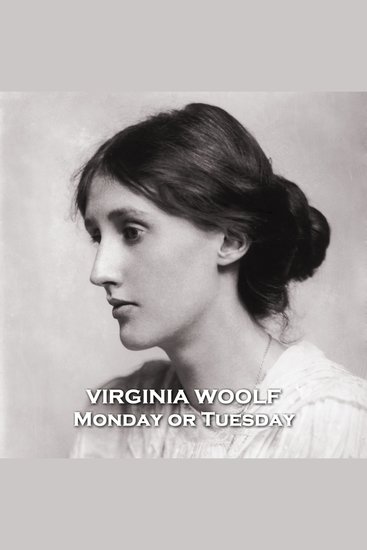
  • Monday or Tuesday - From their pens to your ears genius in every story - cover

    Monday or Tuesday - From their...

    Virginia Woolf

    • 0
    • 0
    • 0
    Adeline Virginia Woolf was born on the 25th January 1882 in South Kensington in London. 
    Although lauded as a founder of modernist writing with such classics as ‘Orlando’, ‘Mrs Dalloway’ and ‘To the Lighthouse’ and, of course, many classic short stories, her background is filled with elements of tragedy that she somehow overcame to become such a revered writer.   Her mother died when she was 13, her half-sister Stella two years later and with it her first of several nervous breakdowns.  Appallingly it was later found that three of her half-brothers had sexually abused her so darkness must have seemed ever present.   
    She began writing professionally at age 20 but her father’s death two years later brought a complete mental collapse and she was briefly institutionalised.  Somehow she found within herself a literary career and with it great innovations in writing; she was a pioneer of “stream of consciousness”.    
    Her tight circle of friends were the founders of the Bloomsbury Group, a movement whose legacy still influences across the arts and society in many way to this day.   
    Whilst the dark periods continued to interrupt her emotional state her rate of work never ceased.  Until, on 28th March 1941, Woolf put on her overcoat, filled up its pockets with stones, and walked into the River Ouse, in Lewes, East Sussex and drowned herself.  Her body was not recovered until the 18th April.  She was 59. 
    She left behind a note which read in part “Dearest, I feel certain that I am going mad again.  I feel we can't go through another of those terrible times.  And I shan't recover this time.  I begin to hear voices, and I can't concentrate.  So I am doing what seems the best thing to do”.
    Zum Buch
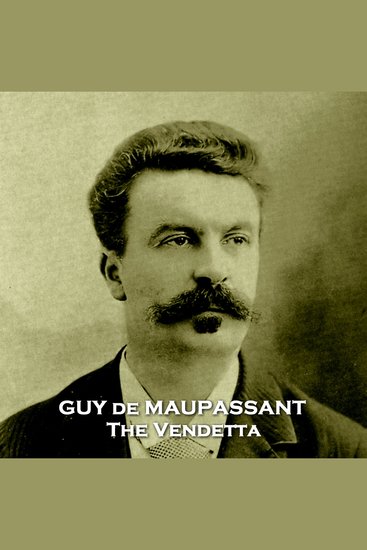
  • The Vendetta - From their pens to your ears genius in every story - cover

    The Vendetta - From their pens...

    Guy de Maupassant

    • 0
    • 0
    • 0
    Henri René Albert Guy de Maupassant was born on August 5th, 1850 near Dieppe in France.  
    Maupassant’s early life was badly torn when at age 11 (his younger brother Hervé was then five) his mother, Laure, a headstrong and independent-minded woman, risked social disgrace in order to obtain a legal separation from her husband. 
    After the separation, Laure kept custody of her two boys. With the father now forcibly absent, Laure became the most influential and important figure in the young boy's life.   
    Maupassant’s education was such that he rebelled against religion and other societal norms but a developing friendship with Gustave Flaubert began to turn his mind towards creativity and writing. 
    After graduation he volunteered for the Franco-Prussian war. With its end he moved to Paris to work as a clerk in the Navy Department.  Gustave Flaubert now took him under his wing.  Acting as a literary guardian to him, he guided the eager Maupassant to debuts in journalism and literature.  For Maupassant these were exciting times and the awakening of his creative talents and ambitions. 
    In 1880 he published what is considered his first great work, ‘Boule de Suif’, (translated as ‘Dumpling’, ‘Butterball’, ‘Ball of Fat’, or ‘Ball of Lard’) which met with a success that was both instant and overwhelming.  Flaubert at once acknowledged that it was ‘a masterpiece that will endure.’ Maupassant had used his talents and experiences in the war to create something unique.  
    This decade from 1880 to 1891 was to be the most pivotal of his career.  With an audience now made available by the success of ‘Boule de Suif’ Maupassant organised himself to work methodically and relentlessly to produce between two and four volumes of work a year.  The melding of his talents and business sense and the continual hunger of sources for his works made him wealthy. 
    In his later years he developed a desire for solitude, an obsession for self-preservation, and a fear of death as well as a paranoia of persecution caused by the syphilis he had contracted in his youth.  
    On January 2nd, 1892, Maupassant tried to commit suicide by cutting his throat.  Unsuccessful he was committed to the private asylum of Esprit Blanche at Passy, in Paris.  It was here on July 6th, 1893 that Henri René Albert Guy de Maupassant died at the age of only 42.
    Zum Buch
  • And Thus He Came - cover

    And Thus He Came

    Cyrus Townsend Brady

    • 0
    • 0
    • 0
    These short stories, perhaps we might call them modern parables, are not the usual fare of warm and fuzzy Christmas stories (pleasing as those are) but rather life events and crises triggered by Christmas, present or imminent.  Brady was a journalist, historian, adventure writer, and Episcopal priest. - Summary by Wikipedia and David Wales
    Zum Buch
  • Campfire Stories to Tell in the Dark - Psychological Horror Stories for Those Who Crave Fear and Mystery - cover

    Campfire Stories to Tell in the...

    Jay Nero

    • 0
    • 0
    • 0
    What brought you here? A spark of curiosity? A whisper? Or something you can’t quite name? 
    And what if it wasn’t by chance—that detail that made you stop? 
    Some stories aren’t meant to be stumbled upon. They find you. They wait for you. 
    They take you where you didn’t want to go… but where you needed to be. 
    Campfire Stories to Tell in the Dark is a whispered invitation to step into the cracks, where appearances crumble, and normality quietly breaks, making room for the unexpected. 
    It’s a slow, silent descent into the shadowy corners of psychological horror, where fear doesn’t scream, but slips in. 
    Where every story starts with something familiar… then twists, silently shedding its skin before your eyes. 
    And just when you think you’ve figured it out… 
    The ending will take you by surprise. 
    What you’ll find inside: 
    🕯️ 7 original tales filled with unease, mystery, and mounting tension 
    🕯️ Final twists that turn everything you thought you knew upside down 
    🕯️ Short but intense stories, crafted to be read in low light 
    🕯️ A perfect balance of atmosphere and shock 
    🕯️ Subtle storytelling, where the real threat often hides in plain sight 
    🕯️ Themes like trauma, isolation, guilt, the inescapable—and unspeakable secrets 
    Turn off the noise. Keep just a little light with you. 
    The stories you’re about to listen demand it. 
    Let Stories to Tell in the Dark call you in. Let the journey begin. 
    But don’t look back… if you hear something moving behind you.
    Zum Buch
  • Photography Extraordinary - From their pens to your ears genius in every story - cover

    Photography Extraordinary - From...

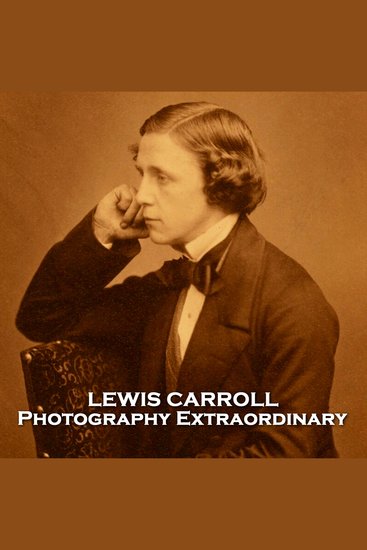
    Lewis Carroll

    • 0
    • 0
    • 0
    Lewis Carroll was born Charles Lutwidge Dodgson on the 27th January 1832 at Daresbury, Cheshire, the eldest boy and the third child.  Another eight followed. 


    When Dodgson was 11, his cleric father moved his family to Croft-on-Tees in the North Riding of Yorkshire.  Although his father was active and highly conservative his son was ambivalent with those values and with the Church as a whole. 


    In his early years Dodgson was educated at home and by age 7 he was reading the likes of ‘The Pilgrim's Progress’.  He also spoke with a stammer which he called his ‘hesitation’. 


    At 12 he was dispatched to Richmond Grammar School in North Yorkshire and then on to Rugby.  He sailed through the curriculum.  He was accepted at Christ Church, Oxford but two days after arriving he was summoned home: his mother had died of ‘inflammation of the brain’ at only 47. 


    Dodgson was exceptionally gifted and, when not distracted, achievement came easily to him.  He remained at Christ Church studying and teaching in various capacities until his death. 


    In March 1856, he published the romantic poem ‘Solitude’ as by ‘Lewis Carroll’. 


    That same year he took up the new art of photography.  He soon excelled and became a well-known gentleman-photographer, and even toyed with the idea of making a living out of it.  When he ceased photography in 1880, he had his own studio and had created around 3,000 images. 


    He enjoyed moderate success with his early poems and short stories but had an array of other interests in the pre-Raphaelite circle, Psychical Research and even ordained in the Church of England in 1861. 


    In July 1862 he told a young Alice Liddell the story that would become his first and greatest success.  Alice begged him to write it down, and eventually he did and later presented her with a handwritten and illustrated ‘Alice's Adventures Under Ground’.  The publisher Macmillan agreed to publish it as ‘Alice's Adventures in Wonderland’ by Lewis Carroll. 


    It was a huge and sensational life-changing success.  Royalties quickly accumulated as did fan mail. 


    In 1871, the darker themed sequel ‘Through the Looking-Glass, and What Alice Found There’ was published.  A half decade later came ‘The Hunting of the Snark’, a fantastical nonsense poem, as nine tradesmen and a beaver set off to find the snark.  It was another enormous success. 


    He also loved to invent such delights as a writing tablet ‘the nyctograph’ that allowed note-taking in the dark as well as many word games, such as the precursor to ‘Scrabble’, and alternative systems of parliamentary voting.  Within the discipline of mathematics, he worked in geometry, linear and matrix algebra, mathematical logic, recreational mathematics and wrote nearly a dozen books on the subject. 


    Lewis Carroll died of pneumonia following influenza on 14th January 1898 in Guildford, Surrey.  He was 65.
    Zum Buch

  • To Never Say Goodbye - cover

    To Never Say Goodbye

    Mike DeFrench

    • 0
    • 0
    • 0
     I didn’t want to do the holograms. I never did. 
    I reiterated this fact, to myself, as I saw her standing there, beautiful as ever. My sweet Mollie. She even was wearing that blue dress that she loved so much (I loved it even more, if that was possible—she looked so good in it!) And even from where I was standing, ten feet away, I could see the curls in her blonde hair bounce as she turned her head. I could see her blue eyes. Vibrant. Real. So real... 
    But they were not real. 
    I knew this. Of course. I held Mollie’s hand as she passed. I looked her in the eyes as we shared one last moment. I heard her last breath leave her lips as she gave up the ghost. But now her ghost is with me. It is so real. But it is not real. And I can’t let her go. 
     
    Zum Buch